Affordable Tiny Homes
The Honest Guide to Owning More Life for Less Money
There is a version of the tiny home story that gets told a lot. It usually involves a couple who sold everything, built a 200-square-foot house on wheels for under 30,000 dollars, and now lives debt-free on a mountainside somewhere, drinking coffee and looking at a view. It is a beautiful story. It is also, for most people, not quite the reality they are going to encounter when they start seriously researching affordable tiny home ownership.
The actual tiny home market is more complicated, more varied, and in many ways more interesting than that idealized version suggests. There are genuinely affordable options out there. There are also products that use the word “affordable” while delivering something that is neither well-built nor particularly cheap once you factor in the full cost of ownership. There are pathways to tiny home ownership that work beautifully for certain buyers and would be a disaster for others. And there is a growing body of real-world experience from people who have been living in tiny homes for years that tells a much richer story than any lifestyle blog could capture.
This guide is written for people who are genuinely considering an affordable tiny home purchase and want to understand the landscape clearly before they commit. Not to talk you into it. Not to talk you out of it. To give you the information you need to make a decision that actually fits your life.
Why the Affordable Housing Conversation Has Shifted Toward Tiny Homes
Ten years ago, tiny home living was a niche interest. The people pursuing it were mostly motivated by lifestyle philosophy, an attraction to minimalism, a desire to reduce their environmental footprint, or a genuine love of compact, well-designed spaces. The economics were a secondary consideration for most of them.
That has changed significantly. The affordable housing crisis that has developed across the United States over the past decade has brought a completely different population into the tiny home conversation. People who are not particularly interested in minimalism as a philosophy but who are very interested in being able to own property without spending thirty years paying a mortgage that consumes the majority of their income. People who have watched home prices in desirable areas move so far beyond what their income can support that traditional homeownership has become a theoretical aspiration rather than a realistic plan. People who are trying to find a way to build financial stability rather than just surviving month to month in the rental market.
For these buyers, affordable tiny homes are not a lifestyle choice so much as a practical solution to a real problem. And the market has responded. The range of products available, the quality of construction at various price points, the legal frameworks for placement in many states, and the financing options accessible to buyers have all improved substantially as the market has matured and broadened.
The result is a genuinely diverse market that serves genuinely diverse buyers, and understanding where you fit within that market is the first step toward making a good decision.
What Affordable Actually Means in the Tiny Home Market
The range of what gets called an “affordable tiny home” in the current market is wide enough to be genuinely confusing. At one end, you have very basic THOW builds or simple park model units that can be purchased for 40,000 to 60,000 dollars. At the other end, you have custom designed, premium material, professionally built tiny homes that land at 150,000 dollars or more and call themselves affordable because they are cheaper than a traditional house in an expensive market.
Both of those things can be true simultaneously. A 150,000 dollar custom tiny home is genuinely more affordable than a 600,000 dollar traditional home in San Francisco or Miami. And a 50,000 dollar basic park model unit is genuinely affordable by almost any standard when purchased outright. But they are very different products serving very different needs, and being clear about which category you are actually shopping in will save you a lot of confusion.
The most useful way to think about affordability in the tiny home market is not as an absolute price point but as a total cost of ownership calculation. A 45,000 dollar tiny home that requires 10,000 dollars in repairs and upgrades in the first two years, sits in a community with 900 dollar monthly lot rent, and carries high insurance costs because of inadequate wind engineering is not a more affordable option than a 75,000 dollar home with solid construction, lower ongoing maintenance, and a community with 450 dollar monthly lot rent. The sticker price is only part of the story.
The variables that matter most to the total cost calculation are the quality of the initial construction, the ongoing costs of the community or land situation you place the home in, the insurance cost driven largely by the home’s engineering standards, and the maintenance burden over the first several years of ownership. Getting clear on all four of those variables before you make a purchasing decision is what separates buyers who are genuinely happy with their tiny home investment from those who feel misled by the promise of affordability.
The Main Types of Affordable Tiny Homes and What Each Delivers
The affordable tiny home market includes several distinct product categories, and they differ in meaningful ways that affect everything from where you can place the home to how you can finance it.
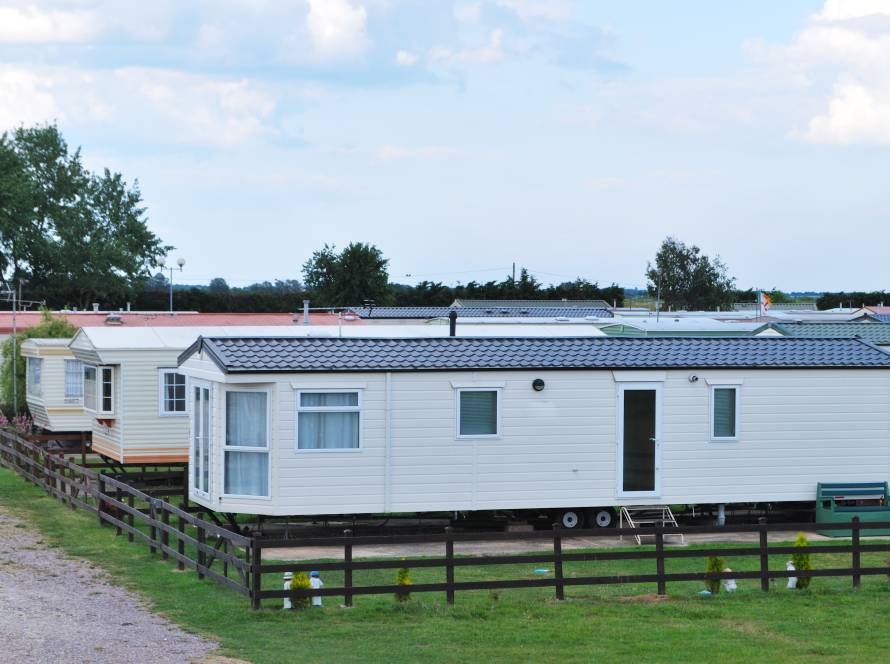
Park model homes are factory-built units classified as recreational vehicles under the ANSI A119.5 standard. In most states they can be up to 400 square feet, and in Florida the limit extends to 499 square feet. They are built in controlled factory environments, transported to their destination, and connected to utilities. Because of their RV classification, they can be legally placed in RV parks and resort communities throughout most of the country without the regulatory complexity of site-built construction. They are the most accessible entry point into affordable tiny home ownership for buyers who need simplicity in the placement process and want to benefit from an established community infrastructure.
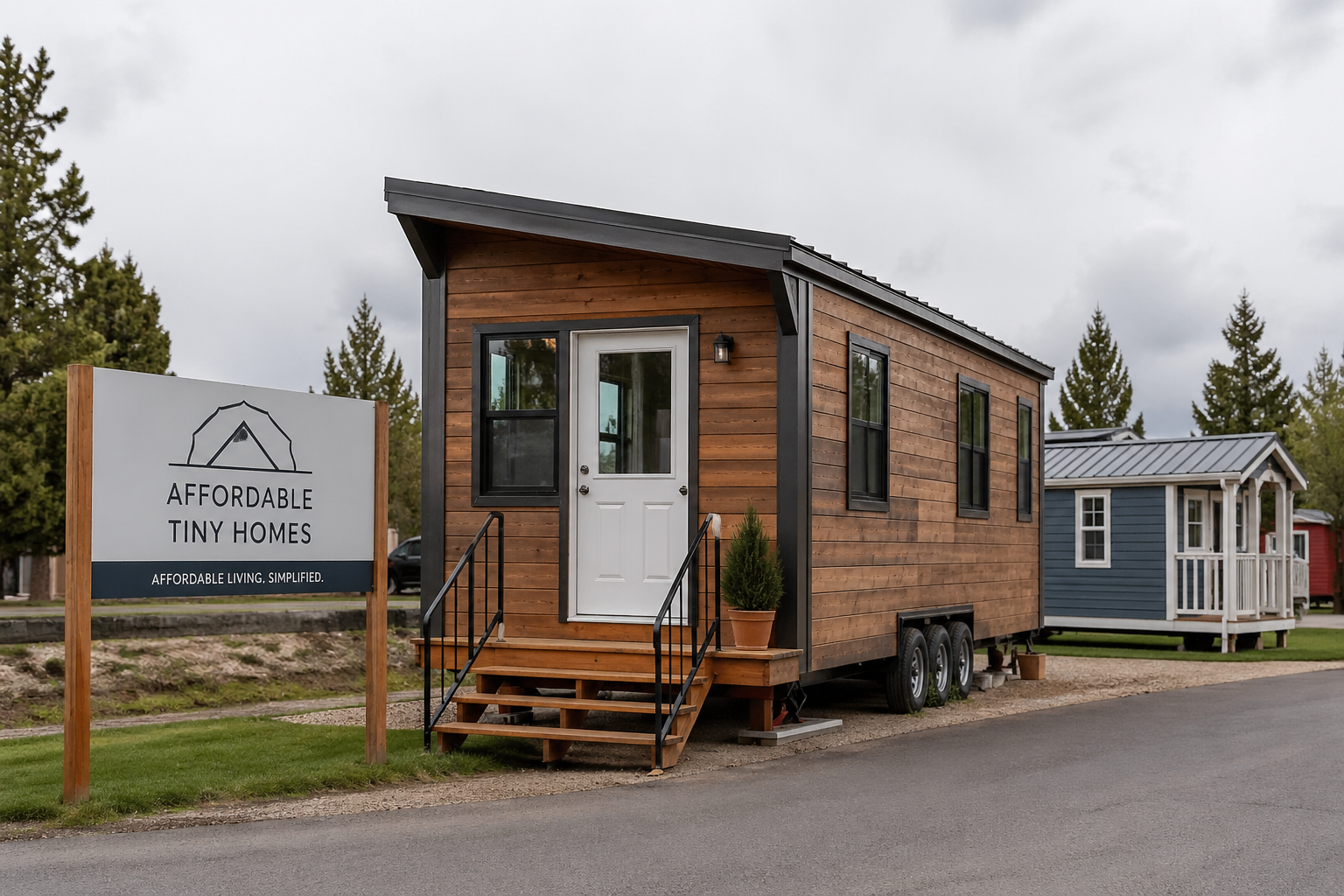
Tiny homes on wheels, commonly called THOWs, are built on trailer chassis and are designed to be towable. They offer maximum flexibility and mobility, which is a genuine advantage for buyers whose lives require or value the ability to relocate. The tradeoff is that placement options are more restricted than park models in many areas. Not every RV park or community that welcomes park models will welcome THOWs, and the rules around where you can legally park and live in a THOW vary significantly by jurisdiction. THOWs are also harder to finance through conventional channels, which means most buyers are working with cash, personal loans, or specialty financing products.
Modular tiny homes built to traditional building codes sit in a different legal category from park models and THOWs. They are placed on permanent foundations, treated more like traditional homes from a regulatory standpoint, and in many cases eligible for conventional mortgage financing that is simply not available for RV-classified units. They can be placed on privately owned land in appropriately zoned areas, which opens up options that park model and THOW buyers do not have. The tradeoffs are higher overall cost and greater regulatory complexity in the siting and permitting process.
Container homes, A-frame kits, dome structures, and other alternative construction types occupy the fringes of the affordable tiny home conversation. Some of them deliver genuinely interesting and cost-effective housing. Many of them come with regulatory, financing, and practical challenges that make the ownership experience significantly more complicated than what a well-established park model or THOW product offers. For buyers who value simplicity and accessibility, these options generally require more homework and more tolerance for navigating non-standard situations than most first-time buyers want to take on.
Building vs Buying: The Real Math
One of the most common questions that comes up in the affordable tiny home conversation is whether it is cheaper to build your own home or to buy a factory-built unit. The honest answer is that it depends enormously on your skills, your time, and what you are actually trying to achieve.
The DIY THOW build has become a cultural touchstone of the tiny home movement, and the success stories are real. People with construction skills and significant time to invest have built beautiful, functional tiny homes for 30,000 to 50,000 dollars in materials. For someone who has those skills, enjoys the building process, and has the time to manage a multi-month construction project, this can be a genuinely cost-effective path.
For most people, the actual math works out differently. Building a tiny home without professional construction experience routinely takes longer than planned and costs more than budgeted. The learning curve on construction, systems, and code compliance is real. Mistakes in a tiny home are proportionally more expensive than in a larger build because there is no unused space to absorb them. And the opportunity cost of the time spent building, which can easily stretch to a year or more for a first-time builder working on nights and weekends, is a real factor that rarely appears in the enthusiastic DIY budget breakdowns.
Factory-built park models and professionally constructed THOWs offer a different value proposition. You are paying for expertise, efficiency, and warranty coverage that a DIY build cannot provide. The best factory builders produce homes of genuinely high quality in controlled environments that result in better fit and finish, more consistent systems performance, and lower maintenance issues in the first years of ownership than most owner-built homes achieve. For buyers who do not have construction skills or who value their time highly, the factory-built option is almost always the better value even at a higher initial price.
The Construction Quality Variables That Matter Most
Within the factory-built affordable tiny home market, construction quality varies enormously and the differences have real consequences for the ownership experience. Understanding what to look for makes the difference between buying well and buying blind.
Frame material is one of the most significant quality variables, particularly for buyers in climate-challenged regions. Traditional wood framing is the norm in most affordable tiny home construction because it is familiar, widely available, and less expensive as a material. It is also vulnerable to moisture intrusion, biological degradation, and structural movement over time in ways that alternative materials are not. In humid climates, in coastal environments, or anywhere termites are a consideration, wood framing carries real long-term risks that show up as maintenance costs and structural issues after the initial excitement of ownership has faded.
Steel framing addresses most of those vulnerabilities directly. A galvanized steel frame does not absorb moisture, does not warp, does not rot, and does not provide anything for termites to consume. Under wind loading it maintains its structural integrity in ways that wood framing cannot match. The initial cost is higher than wood, but the long-term performance advantage in challenging climates is substantial enough that the total cost of ownership calculation often favors steel even at a higher purchase price. For buyers in hurricane-prone, high-humidity, or coastal environments, all-steel construction is worth specifying specifically rather than accepting whatever the standard option happens to be.
Insulation quality directly affects both comfort and ongoing energy costs in ways that are easy to underestimate at the time of purchase. A tiny home with inadequate insulation in a hot climate is going to be uncomfortable to live in and expensive to cool. A tiny home with excellent insulation performs dramatically better on both counts. R-values for walls, roof, and floor assemblies, and the quality of window and door sealing, are worth asking about specifically rather than assuming they meet any particular standard.
Wind rating certification matters in any region subject to significant storms, and it matters a great deal in places like Florida, the Gulf Coast, and other hurricane-exposed markets. A tiny home with documented wind rating certification from a recognized third-party testing organization is a different product from one that simply claims to be built to withstand wind without the engineering documentation to back it up. In markets where wind events are real risks, that documentation is the difference between a home that survives and one that does not.
Financing an Affordable Tiny Home: What Your Options Actually Are
Financing is one of the areas where first-time tiny home buyers most frequently encounter surprises, and understanding your options before you start shopping will prevent a lot of frustration.
Conventional mortgage financing is generally not available for park model homes or THOWs classified as RVs. The standard Fannie Mae and Freddie Mac backed mortgage products that most homebuyers use require permanent foundation installation, minimum square footage that most tiny homes do not meet, and real property classification that RV-titled units do not have. If you are planning to finance a park model or THOW purchase, you are working in a different lending landscape than traditional home buyers.
Chattel loans, sometimes called personal property loans or manufactured home loans, are the most common financing vehicle for park model home purchases. These are loans secured by the home itself rather than by real estate. Interest rates on chattel loans are typically higher than conventional mortgage rates, reflecting the lender’s assessment of the collateral and the buyer profile. Terms are often shorter as well, which means monthly payments can be higher than buyers expect on a relatively modest purchase price. Shopping multiple chattel loan lenders before committing is worth the effort, as rates and terms vary meaningfully across providers.
Personal loans are another option that some buyers use, particularly for lower-priced units where the loan amount is manageable within personal loan limits. Interest rates on personal loans are typically higher than chattel loans, but the simplicity of the process and the absence of collateral requirements can make them attractive for buyers who want speed and simplicity over optimal interest rates.
Cash remains the most common payment method in the tiny home market, which tells you something about the buyer profile and also about the financing gap that the market has not fully addressed. For buyers who have savings, retirement accounts, or equity in other assets they can access, cash purchase eliminates interest cost entirely and simplifies the buying process substantially.
Modular tiny homes placed on permanent foundations and built to traditional building code standards open up conventional mortgage financing that is simply not available for RV-classified alternatives. For buyers who need traditional mortgage access and can navigate the additional regulatory complexity of modular construction on owned land, this is a meaningful advantage that changes the economics of ownership significantly.
Finding the Right Community or Land Placement
The question of where your affordable tiny home is going to sit is at least as important as the question of what you are going to buy. The placement situation determines your ongoing costs, your legal rights, your quality of life, and in many cases the long-term value of your investment.
Established RV parks and resort communities are the most accessible placement option for park model home buyers. The utility infrastructure is in place, the legal framework is sorted out, and the process of moving in is relatively straightforward. The tradeoffs are ongoing lot rent that represents a significant and indefinite cost, community rules that constrain how you use your space, and the absence of land ownership equity that traditional homeownership provides.
Dedicated tiny home communities are a growing option in many states. These communities are purpose-built for small home living rather than adapted from traditional RV parks, and they tend to attract residents who are genuinely committed to the lifestyle rather than simply passing through. The community culture in dedicated tiny home communities is often more cohesive and intentional than in general purpose RV parks, which matters a great deal to the quality of the living experience.
Privately owned land is the placement option that most closely replicates traditional homeownership, but it comes with the most regulatory complexity. Zoning rules for tiny homes on private land vary enormously by jurisdiction. Some counties and municipalities have embraced small home living and created clear pathways for it. Others maintain minimum dwelling size requirements or other restrictions that effectively prohibit it. Researching the specific rules in your target area before you commit to a land purchase or a home purchase is essential.
A small but growing number of tiny home communities offer lot ownership rather than lot rent. In these developments, buyers purchase both the home and the land it sits on, which provides equity accumulation and protection from rent increases that lot rent arrangements cannot offer. These opportunities are still uncommon but they represent the most complete version of affordable tiny home ownership, combining small home economics with genuine real property rights.
What Life Actually Looks Like in an Affordable Tiny Home
The lifestyle reality of tiny home living is something that is hard to fully appreciate until you have experienced it, and the honest accounts from long-term tiny home residents are worth paying attention to before you make a purchase decision.
The space constraint is real and it affects daily life in ways that both help and challenge you. The help comes from the discipline that limited space enforces. You cannot accumulate things you do not need because there is nowhere to put them. Cleaning takes a fraction of the time it would in a larger home. The financial pressure of maintaining and heating and cooling a large space disappears. Many long-term tiny home residents describe a genuine sense of relief at the simplicity that living small enforces, a feeling that their space finally matches their actual life rather than aspirations they are not sure they ever had.
The challenge comes from the moments when space is genuinely insufficient for what you are trying to do. Working from home in a tiny home without a dedicated workspace is difficult. Having guests for extended stays is genuinely complicated. Hobbies that require physical space or equipment storage become harder to pursue. People who cook elaborate meals frequently may find tiny home kitchens frustrating regardless of how cleverly they are designed. These are not dealbreakers for most people, but they are real tradeoffs that are worth thinking through honestly before you commit.
The community dimension of tiny home living is something that surprises many buyers in a positive way. Living in a smaller space in a community of people who have made similar choices tends to produce more natural social connection than traditional suburban living generates. Neighbors are closer, shared spaces encourage interaction, and the shared experience of living differently creates common ground that many tiny home residents describe as one of the unexpected pleasures of the lifestyle.
Making the Decision That Is Right for You
Affordable tiny homes work extremely well for a specific set of buyers and situations. They work best for people who have genuinely thought through the space tradeoffs and are comfortable with them. For people who have a clear plan for where the home will be placed and have done the research to confirm that plan is legally and practically feasible. For people who are buying quality construction rather than the cheapest available option. And for people who have run the full cost of ownership numbers rather than just comparing the purchase price to a traditional home.
They work less well for people who are drawn primarily by the aesthetic appeal of tiny homes without having thought carefully about the daily reality of living in one. For people who need flexible financing and have not confirmed that workable options exist for their situation. And for people who are treating tiny home living as a temporary experiment rather than a genuine lifestyle commitment, because the transaction costs of buying and selling a tiny home mean that short-term ownership rarely makes financial sense.
The affordable tiny home market has matured enough that genuinely good options exist at a range of price points and for a range of situations. The information to make a good decision is available. The builders producing quality work are identifiable. The communities that support comfortable long-term living are established and findable. What the market still requires from buyers is the willingness to do real research rather than buying into a story, and the honesty to match the product they choose to the life they are actually living rather than the life that looks good in photographs.
For the buyers who approach it that way, affordable tiny home ownership delivers exactly what it promises. A smaller footprint. A lighter financial load. And for many people, a quality of life that turns out to be substantially better than what they had before they made the leap.