What’s the Difference Between a Tiny Home and a Park Model?
Walk into any conversation about alternative housing and within five minutes someone will use “tiny home” and “park model” interchangeably. It’s an understandable mistake. Both are small. Both are built in factories. Both appeal to people who are done paying for space they don’t actually use. But they are genuinely different products — built to different standards, regulated under different codes, financed through different channels, and suited to different lifestyles.
The confusion costs people real money and real time. Buyers who don’t understand the distinction end up placing the wrong product on the wrong site, running into zoning problems they didn’t anticipate, or discovering after the fact that their financing option doesn’t apply to what they bought. Getting this straight from the beginning is one of the most practical things anyone serious about small-home living can do.
So let’s go through it properly — not in the vague way most articles handle it, but with enough specificity to actually be useful.
The Labels Are Messier Than They Look
Here’s where it starts: “tiny home” is not a legal or regulatory term. It’s a cultural one. It describes a lifestyle movement, a set of values, and a loose category of housing types that includes several very different products. When someone says they want a tiny home, they might mean a wheeled THOW (tiny house on wheels), a small site-built cottage, a converted shipping container, a prefab ADU, or a park model. The label doesn’t tell you what code it was built to, how it’s titled, or whether it can legally sit on a given piece of land.
“Park model,” on the other hand, is a defined term. It refers to a specific product category regulated under the ANSI A119.5 standard and, in most cases, also certified by the Recreation Vehicle Industry Association (RVIA). That certification matters in ways that affect financing, insurance, placement, and resale — which we’ll get into.
The first thing to understand, then, is that a park model is a type of tiny home in the cultural sense — but not every tiny home is a park model. These categories overlap without being the same thing.
How Tiny Houses on Wheels Are Built and Regulated
The most common thing people picture when they hear “tiny home” is a tiny house on wheels, or THOW. These are structures built on a trailer chassis — typically a gooseneck or bumper-pull trailer — and designed to be towable from one location to another. They’re framed with standard residential-style construction techniques, often by a small builder or even by the homeowner, and they’re usually built to IRC (International Residential Code) standards or to no formal code at all, depending on the builder and the state.
This is where the regulatory gap becomes significant. THOWs don’t fit cleanly into any single regulatory category at the federal level. They’re too small and mobile to be treated as site-built homes, but they’re not built to the same manufacturing standards as HUD-code manufactured homes or RVIA-certified RVs. In practice, this means that where you can legally place a THOW, how you can finance it, and how it will be insured are all questions with inconsistent answers that vary by state, county, and municipality.
In Florida, this regulatory patchwork is particularly relevant. The state has been actively working through its approach to tiny houses, and local zoning authorities have significant discretion over where and how THOWs can be placed. Some counties are welcoming. Others are effectively closed. Staying current with local regulations is not optional — it’s essential, and the landscape continues to shift heading into 2026 and 2027.
How Park Models Are Built and Regulated
Park models take a different path entirely. They’re factory-built under controlled conditions, inspected during the manufacturing process, and certified to the ANSI A119.5 standard before they leave the production facility. Most are also RVIA certified, which means they carry a certification plate that tells lenders, insurers, campgrounds, and land-lease communities exactly what they’re dealing with.
The ANSI A119.5 standard specifically covers recreational park trailers — which is the formal term for what most people call park models. The standard defines maximum primary loft size, structural requirements, mechanical system specifications, and other construction parameters. Building to this standard is not optional for certified manufacturers; it’s a condition of the certification itself.
This matters enormously in practice. When a park model buyer pulls into a Florida land-lease community with an RVIA plate on their unit, the community manager knows what they’re looking at. When a lender receives a loan application for a certified park model, they have a recognized product category to underwrite against. When an insurer receives a coverage request, they have actuarial data for that product type. None of this is available in the same way for a one-off THOW from a builder no one has heard of.
The factory construction process itself also produces measurable quality advantages. Climate-controlled production environments eliminate the weather-related variables that affect stick-built construction. Assembly-line processes and trained crews produce more consistent results than individual site builders working through daily variation. Materials are purchased at volume, inspected before installation, and tracked through the build. For buyers who care about quality and durability — and over a ten-year ownership horizon, everyone does — these things matter.
The Size Question: Closer Than You’d Think, Different in What It Means
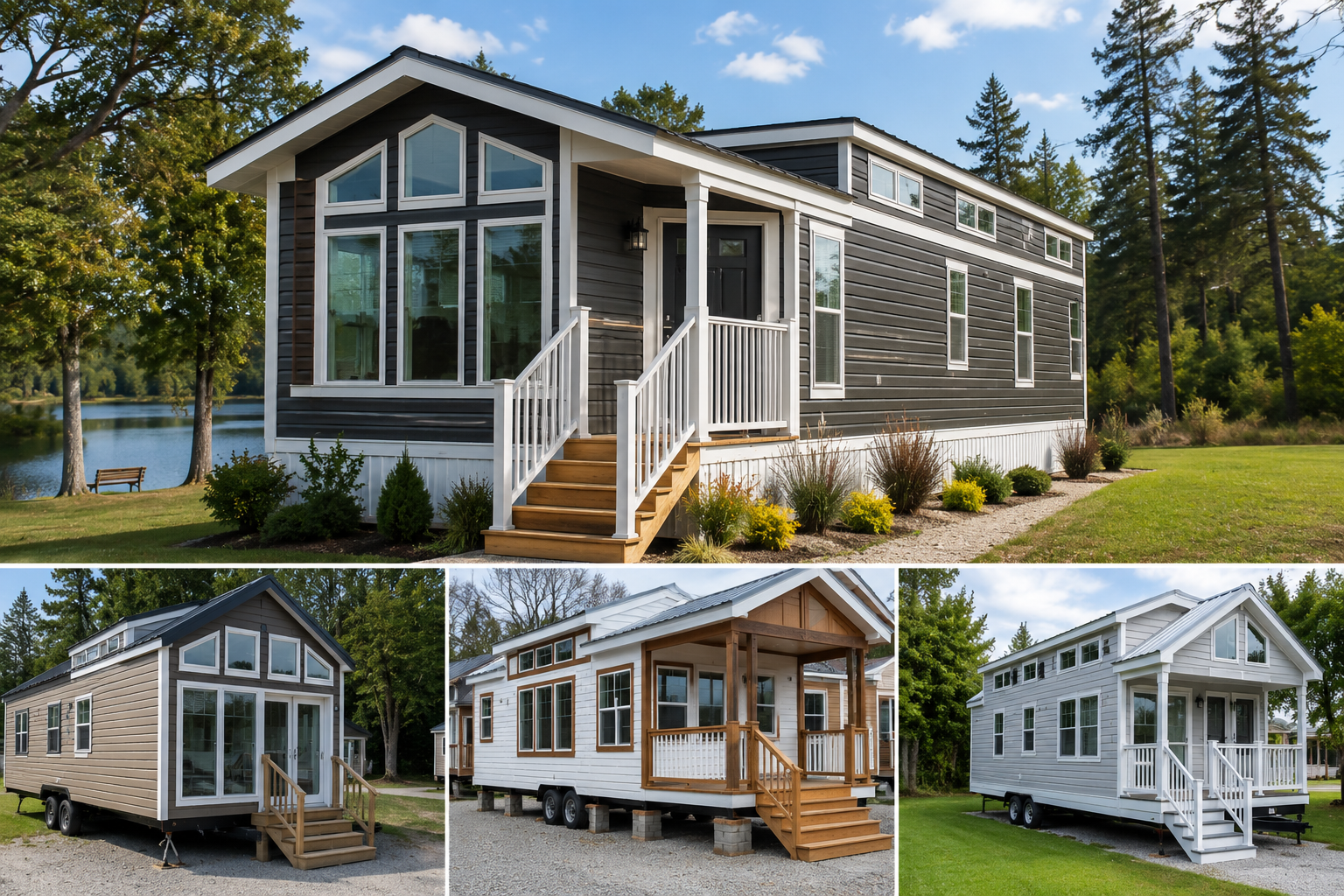
Both categories are small. A typical tiny house on wheels runs between 150 and 400 square feet of living space on the trailer bed, with lofted sleeping areas often adding additional usable square footage above that. Park models, under the ANSI A119.5 standard, are limited to 400 square feet of primary floor space, with loft space allowed on top of that.
So the raw square footage numbers are similar. What differs is how that space is configured and how permanent the setup tends to be.
THOWs are built with mobility as a primary design consideration. The structural approach, the placement of windows, the selection of appliances and fixtures — all of it is influenced by the expectation that the unit will move. Park models, while technically transportable (they travel on a trailer to their destination), are designed with semi-permanent placement in mind. The construction is heavier, the finish level is typically higher, and the interior layout assumes that the unit will stay where it’s put for an extended period.
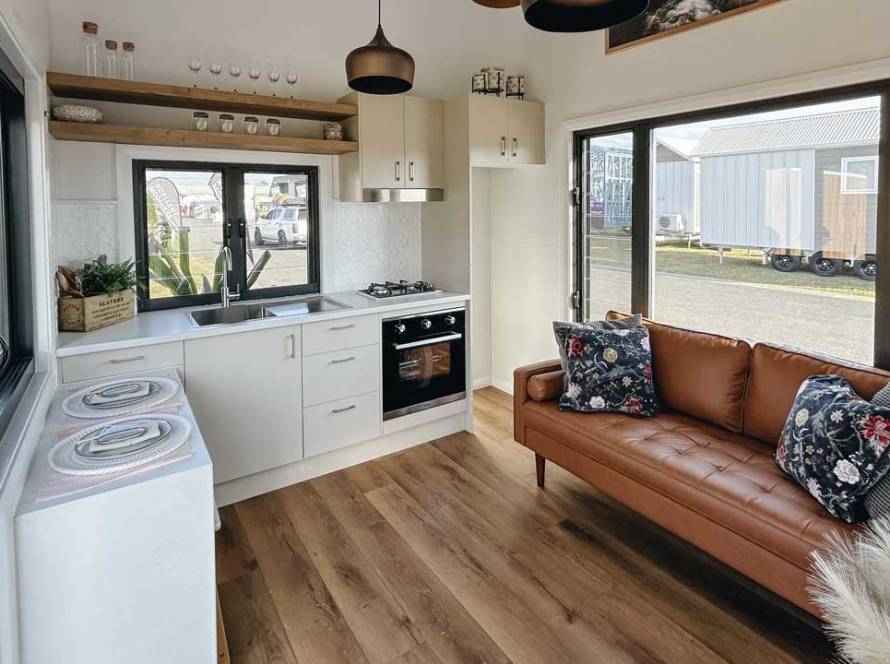
This shows up in livability in ways that are hard to quantify but easy to feel. Park models tend to have full-height ceilings in the main living area, full-size appliances, real bathroom fixtures, and a spatial quality that reads as cottage rather than vehicle. A well-designed park model from EcoLife Homes, for example, doesn’t feel like a compromise — it feels like a house that happens to be efficient with space.
Placement: Where Each Type Can Go
This is arguably the most practically important difference, and it’s where a lot of buyers make expensive mistakes.
Tiny houses on wheels exist in a legal gray area in most jurisdictions. They’re not RVs under the federal definition. They’re not manufactured homes. They’re not site-built structures. In many Florida counties and municipalities, there is no explicit zoning category that accommodates them, which means they may technically be prohibited by default even in areas where no one is actively enforcing the restriction. Placement on private land often requires negotiation with local officials, variance applications, or the creative use of accessory dwelling unit regulations that weren’t designed with THOWs in mind.
Park models have a clearer path. They’re an established product type that hundreds of Florida land-lease communities are specifically built to accommodate. RV parks, manufactured home communities, resort communities, and dedicated park model developments all have well-defined processes for accepting certified park models. You know what the lot rent covers. You know what the rules are. You know what utilities are available. There’s a predictability to the placement process that is genuinely valuable.
For buyers who own rural land and want to place a unit on their property, the picture is more nuanced in both categories. But even there, a certified park model typically has a more navigable path than an uncertified THOW, because it has a recognized regulatory identity that local officials can work with.
Financing: The Gap Is Significant
Financing a tiny house on wheels is genuinely difficult. Most traditional lenders don’t have a product that fits. Conventional mortgages require real property — a THOW is personal property. FHA and VA loans have similar issues. The options that do exist tend to be personal loans at higher interest rates and shorter terms, or specialty lenders who treat THOWs like RVs — which works for some units but not all, depending on how they were built and certified.
Park models in 2026 have a broader financing ecosystem. Chattel loans — personal property loans similar in structure to vehicle financing — are widely available from specialty lenders and some credit unions, with terms ranging from 15 to 23 years and down payments typically in the 10% to 20% range. RVIA-certified park models also qualify for RV financing through lenders who specialize in that category. Some buyers use home equity from an existing property. Others bring cash from the sale of a larger home.
The point is that the options exist and are reasonably well-established. A buyer going through the park model process in 2026 or 2027 isn’t navigating entirely unmapped territory — there are lenders who have done this thousands of times and can move efficiently.
Insurance: Same Pattern
Insuring a THOW is possible but requires effort to find the right carriers. Standard homeowner’s policies don’t fit the product. Standard RV policies may or may not apply depending on whether the unit was built to RVIA standards. Some specialty insurers have developed products specifically for the THOW market, but coverage terms and pricing vary widely and the category hasn’t yet produced the underwriting depth that comes with decades of data.
Park models, again, benefit from a clearer regulatory identity. RVIA-certified park models are insured under established RV and park model policy frameworks that have been refined over many years. Replacement value coverage, liability protection, contents insurance, and storm coverage are all available and competitively priced through carriers familiar with the product. In Florida — where wind and flood exposure are real considerations — having access to established insurance products from carriers who understand park models is not a minor convenience.
Resale Value and Marketability
Both categories have active secondary markets, but they’re structured very differently.
Used tiny houses on wheels trade peer-to-peer — through marketplaces, social media groups, and specialty listing sites. Pricing is highly variable and often negotiated without the benefit of comparable sales data or standardized condition frameworks. A THOW’s resale value depends heavily on who built it, how well it was constructed, how it was used, and how much the next buyer wants that particular unit. There’s no NADA guide for THOWs.
Park models have a more established secondary market. Used park models trade within communities, through dealers, and through established listing platforms. NADA guides exist for park models and provide valuation reference points that give both buyers and sellers a starting framework. Lenders can finance used park models against those valuations. The market isn’t as liquid as traditional real estate, but it’s far more structured than the THOW secondary market.
A park model from a reputable manufacturer, maintained well, and placed in a desirable Florida community holds its value in a reasonably predictable way. That predictability matters to buyers who are thinking about their investment over a five- or ten-year horizon — and most serious buyers are.
Community and Lifestyle: The Culture Around Each
Tiny house on wheels culture is deeply DIY in its DNA. The movement grew out of a rejection of mainstream consumer housing and carried with it a strong ethic of self-sufficiency, sustainability, and personal expression. Many THOW owners built their own units. Many live off-grid by choice. The community is passionate, creative, and genuinely diverse in how it approaches small living.
Park model living has a different cultural texture. It’s more established, more community-oriented in a formal sense, and often skews toward specific life stages — retirees and semi-retirees who want a simplified lifestyle without roughing it, remote workers who want an affordable Florida base, investors who want a turnkey short-term rental property. The park model community is less ideologically unified around a single ethos and more practically unified around the appeal of efficient, affordable, quality living.
Neither culture is better — they serve different people at different life stages with different priorities. But it’s worth being honest about which one you’re actually joining, because the day-to-day reality of living in a land-lease community is quite different from the reality of being a THOW nomad.
What Florida Buyers Specifically Need to Know
Florida presents some specific considerations that buyers anywhere else in the country don’t face in the same way.
First, the weather. Florida’s hurricane exposure means that structural integrity, proper anchoring, and appropriate insurance coverage are not optional considerations — they’re baseline requirements. Park models built to ANSI A119.5 and installed with hurricane tie-downs meet the structural expectations of Florida’s wind zones in ways that some THOWs simply don’t. This isn’t a small distinction when a major storm is making landfall.
Second, the community infrastructure. Florida has one of the most developed land-lease community ecosystems in the country. There are hundreds of established communities — retirement-oriented, family-friendly, vacation-focused, mixed-use — that are specifically set up to receive and support park models. The infrastructure, the social programming, and the amenity packages at these communities reflect decades of refinement. That ecosystem doesn’t exist for THOWs at the same scale.
Third, the investment angle. Florida’s tourism economy continues to make short-term rental properties an interesting investment category in 2026 and 2027. A certified park model in the right location — near natural attractions, water access, or in a resort community — can generate meaningful rental income with a relatively modest all-in investment. The combination of an established product type, financing availability, and a proven rental market makes park models a more accessible investment entry point than almost anything else in Florida real estate right now.
So Which One Is Right for You?
The answer depends entirely on what you’re actually trying to accomplish.
If you want maximum freedom to move, a deeply personal relationship with your home’s construction, and you’re comfortable navigating regulatory ambiguity, a tiny house on wheels may be a genuine fit. The lifestyle it enables — true mobility, off-grid capability, radical minimalism — is real, and for the right person it’s transformative.
If you want a quality-built, code-compliant, financeable, insurable home that you can place in an established community or on your own land with a clear regulatory path, a park model is almost certainly the better choice. It delivers the scale and simplicity of small-home living without asking you to pioneer your way through every step of the process.
At EcoLife Homes, every unit we build falls into the park model category because we believe that quality, compliance, and livability aren’t things buyers should have to compromise on. The floor plans are thoughtfully designed. The construction is solid. The process from first conversation to move-in day is as clear as we can make it.
The tiny home movement opened a lot of people’s eyes to the possibility of living differently. Park models give those people a mature, proven, practical way to actually do it.
The Bottom Line
Tiny homes and park models share a philosophy — live with less, spend less, own your space outright — but they’re different products built to different standards for different applications. Understanding the distinction before you start shopping saves you from expensive surprises and puts you in a position to make a decision that actually fits your life in 2026 and beyond.
If you want to see what a well-built park model looks like and talk through which floor plan makes sense for your situation, EcoLife Homes is a good place to start that conversation.