How Do Park Models Compare to RVs?
How Do Park Models Compare to RVs? An Honest Look at Two Very Different Lifestyles
If you have spent any time researching tiny homes, downsized living, or affordable Florida getaways, you have probably noticed something strange. Park models and RVs keep showing up in the same conversations, the same forums, even the same product categories on dealer websites. The federal government technically classifies them both as recreational vehicles. Yet anyone who has actually lived in one and visited the other will tell you they are about as similar as a beach cottage and a road trip.
Going into 2026 and 2027, more Floridians than ever are weighing these two options. Hurricane recovery, rising rents, retirement planning, vacation property dreams, short term rental investments, and the simple desire for a slower pace are all pushing people toward smaller dwellings. Before you put a deposit on either one, it helps to understand exactly what you are choosing between.
The Confusion That Started It All
The reason park models and RVs get tangled together comes down to one regulatory technicality. Park models are built to a standard called ANSI A119.5, which falls under the recreational vehicle umbrella. This classification keeps them under 400 square feet of living space, exempts them from the HUD code that governs manufactured homes, and gives them a different titling process than traditional houses.
So in the eyes of the federal government, a park model is an RV. In every practical sense though, a park model is closer to a custom built cottage that happens to arrive on wheels. The wheels are essentially a delivery mechanism. Once a park model lands on its lot, those wheels usually never turn again.
A motorhome or travel trailer is built around the idea of movement. A park model is built around the idea of staying put. Everything else flows from that single difference.
What a Park Model Actually Is
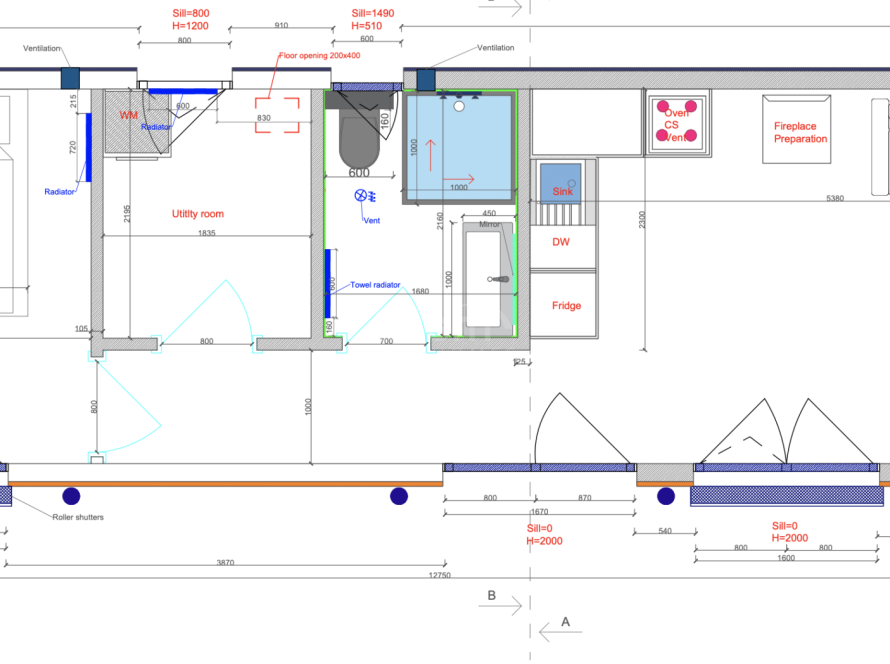
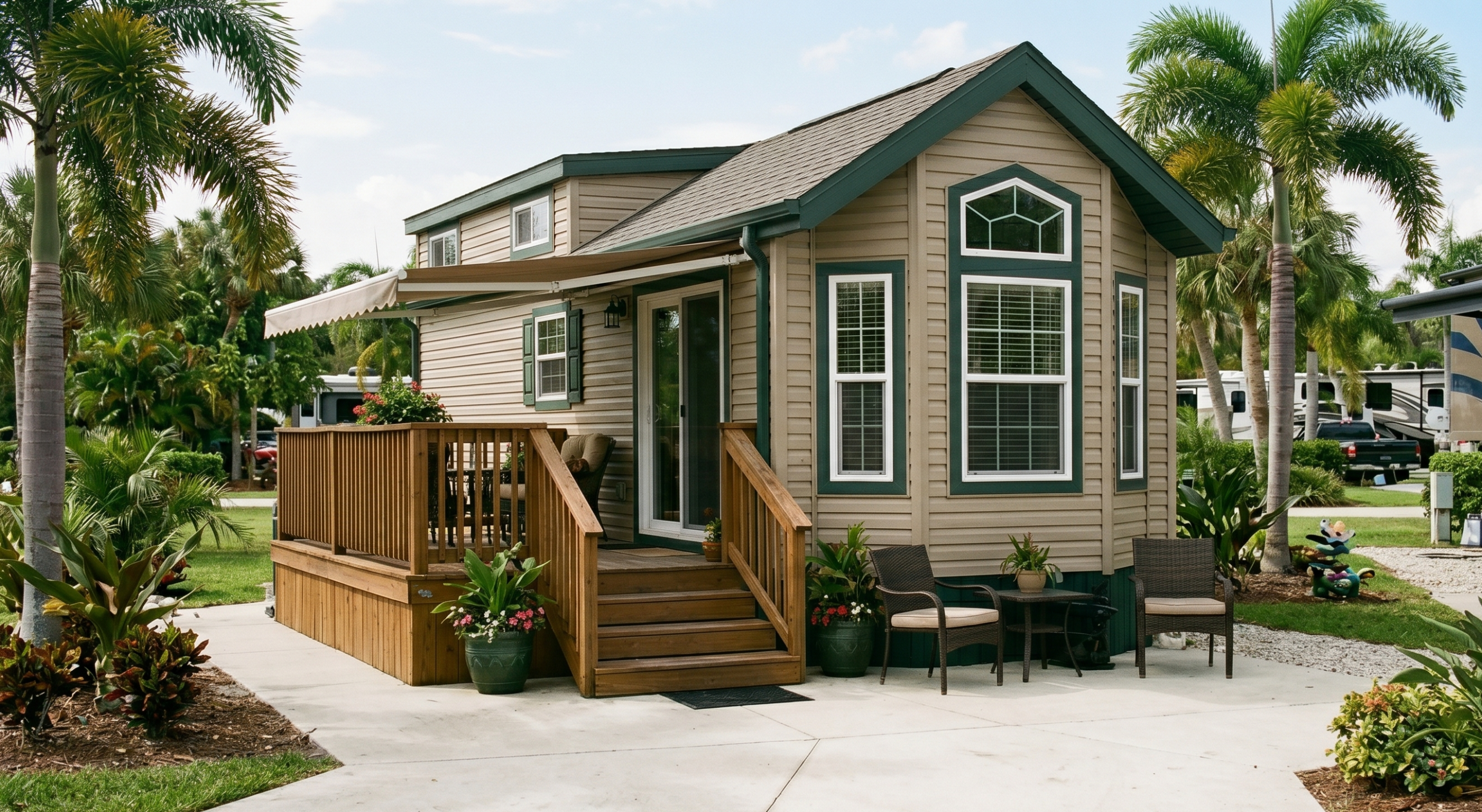
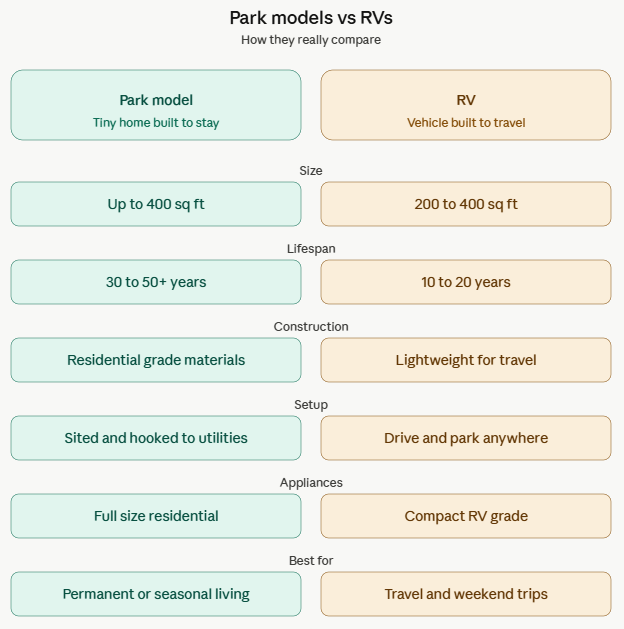
A modern park model is a single level, factory built home roughly the size of a one bedroom apartment. Most measure between 11 and 13 feet wide and 35 to 40 feet long. The interior height usually reaches eight or nine feet, which gives the space a real residential feel rather than the compressed ceiling clearance you find in many RVs.
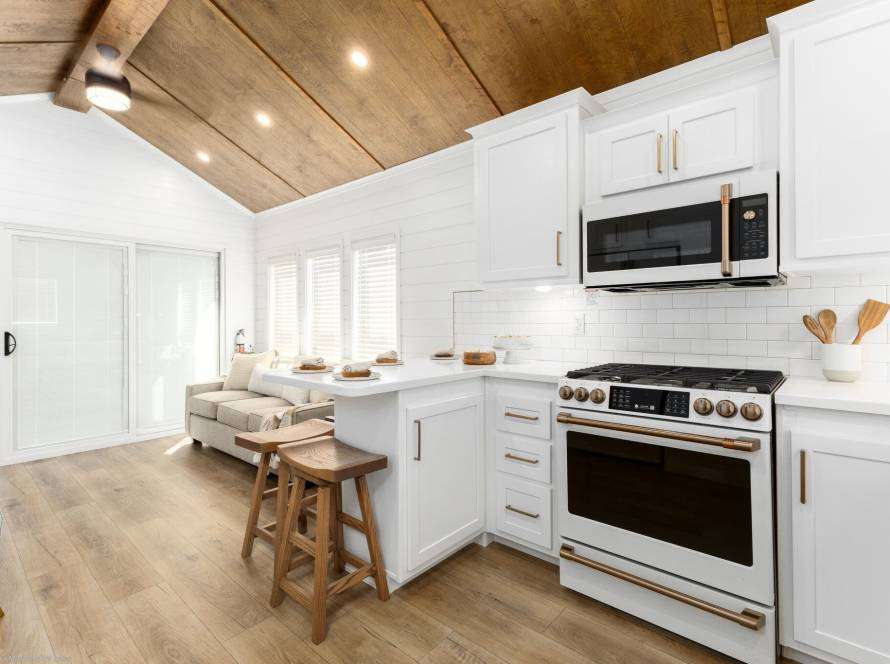
The construction is closer to site built housing than to anything you would tow behind a pickup. Two by four or two by six wood framing, real residential drywall in many models, vinyl or fiber cement siding, asphalt shingles or metal roofing, and full size residential windows. Kitchens come with apartment scale appliances rather than the compact RV versions, meaning a real refrigerator, a standard range, often a dishwasher, and cabinetry built to last decades rather than seasons.
At EcoLife Homes we build our park models in Florida specifically for the Florida buyer. That means insulation that takes humidity seriously, structural reinforcements that meet the wind load realities of this state, and HVAC systems sized for summer heat rather than for occasional weekend use.
What an RV Actually Is
An RV is engineered for the open road first and for living second. Whether you are looking at a Class A motorhome, a fifth wheel, a travel trailer, or a smaller Class C, every design decision is shaped by the need to roll down the highway at 65 miles per hour.
Weight matters enormously. Every cabinet, every appliance, every wall panel has to be as light as possible. That is why RV cabinetry is often hollow, RV refrigerators are compact, RV ceilings are lower, and RV plumbing systems rely on tanks rather than continuous water and sewer connections. The build standards prioritize crash safety, towing dynamics, and aerodynamics.
Modern Class A motorhomes can certainly feel luxurious. Some push past 45 feet and include heated tile floors, residential refrigerators, and washer dryer combos. They are still, fundamentally, vehicles built to move.
Size, Space, and the Way You Actually Live
Square footage is where the gap becomes obvious. A 399 square foot park model with a full porch added can easily live like 500 plus square feet. Add a screened lanai and you have a Florida room that essentially doubles your usable space ten months out of the year.
A 35 foot travel trailer, by contrast, typically delivers around 200 to 250 square feet of interior space, much of which is taken up by sleeping areas that fold and shift. Slide outs help, but they still leave you with a footprint designed for two or three nights at a time, not for full season living.
Storage is the other dimension people underestimate. Park models include real closets, pantry space, and often a small utility area. RVs squeeze storage into every conceivable cavity, which is clever engineering but also means you spend a lot of time opening compartments to find things. For anyone planning to spend their winter in Florida from November 2026 through April 2027, the difference between living out of an RV and living in a park model becomes apparent within the first month.
How They’re Built and Why It Matters in Florida
Florida tests construction in ways that no other state quite does. Humidity, salt air on the coasts, sudden temperature swings, intense UV exposure, and the obvious reality of hurricane season all add up to a brutal environment for any structure.
Park models built for Florida are engineered with this in mind. The roof systems are typically rated for higher wind exposure than the federal minimum, the framing is reinforced at key load points, and tie down systems for the foundation are designed to meet the requirements of zones that include Miami Dade and Broward counties. Anchoring requirements in Florida park communities are taken very seriously, and a properly installed park model can ride out tropical storms and lower category hurricanes far better than most people assume.
RVs, even high end ones, are not engineered for sustained exposure to Florida conditions. The seals around slide outs degrade in the sun. The roof membranes can fail when subjected to constant heat cycling. The lightweight construction that makes them towable also makes them vulnerable in high winds. Most insurance companies will not write a standard policy on an RV expected to ride out a hurricane in place. Florida park owners typically require RV residents to evacuate during named storms, while park model owners are often allowed to shelter elsewhere and return to a structure that is still standing.
The Mobility Question
Here is where people often realize what they actually want. Ask yourself honestly how often you plan to move.
If the answer is multiple times per year, every weekend, or any version of cross country travel, you want an RV. Park models can be relocated, but the process involves a transport permit, an escort vehicle in many cases, removal of any porches or skirting, disconnection of utilities, and a destination that is already prepared with proper site work. The total cost of moving a park model within Florida typically runs from $3,500 to $7,500 in 2026, depending on distance and site preparation needs. Most park models move once in their lifetime, from the factory to the lot.
If your answer is that you plan to stay put for years, possibly decades, then a park model gives you everything you actually need without the engineering compromises required for mobility.
Some buyers find a middle path by using their park model as a stationary home base in Florida and keeping a smaller travel trailer for actual road trips. That combination is becoming popular among retirees who have established a winter community in places like Ocala, Sebring, Lakeland, or the Keys but still want flexibility for summer travel north.
Real Costs in 2026 and What to Expect in 2027
Pricing for both categories has shifted significantly over the past few years, and looking ahead through 2027, the differences are sharpening.
A new park model in Florida currently ranges from about $65,000 for a basic model to $145,000 or more for a fully customized unit with high end finishes, larger covered porches, and upgraded HVAC. Most of our EcoLife Homes buyers in 2026 land somewhere between $85,000 and $115,000 for a setup they are genuinely proud of.
New RVs cover a wider range. A modest travel trailer suitable for full time living starts around $40,000. A well equipped fifth wheel runs $75,000 to $130,000. Class A motorhomes start near $150,000 and climb past $500,000 for the top end diesel pushers. The sticker price is only part of the picture though.
RVs depreciate aggressively. A motorhome can lose 20 to 30 percent of its value in the first year and 50 percent or more within five years. Park models hold value far better because they function as housing rather than as vehicles. In hot Florida park communities, a five year old park model in good condition often sells for 80 to 90 percent of its original price, and in some markets has even appreciated when land lease terms are favorable.
Maintenance costs follow the same pattern. RVs require constant attention to roof seals, slide out mechanisms, hydraulic systems, tires, batteries, and engine or chassis components if motorized. Annual maintenance budgets of $2,000 to $5,000 are realistic for full time RV living. A park model typically costs less than $1,000 per year to maintain once properly set up, comparable to a small house.
Florida Zoning, Permits, and Where You Can Place Each
This is the section that surprises most buyers, and it is the section that determines whether your dream even gets off the ground.
Florida counties handle these two categories very differently. Park models are permitted in licensed park model and RV communities throughout the state, and in many rural counties they can also be placed on private land as accessory dwelling units, agricultural worker housing, or primary residences depending on local zoning. Counties like Citrus, Levy, Marion, Sumter, Polk, Hernando, and parts of Lake County have become particularly welcoming to park model placement on private acreage in 2026, with several considering further zoning updates for 2027.
Coastal counties are more restrictive. Miami Dade, Broward, Palm Beach, and Pinellas generally limit park model placement to licensed communities and approved RV resorts. The good news is that there are hundreds of such communities across the state, many of them with lot rentals or lot sale options.
RVs face a different set of rules. Most Florida counties prohibit using an RV as a permanent residence on private land outside of an approved community. Some allow short term occupancy during construction of a primary home. Others restrict RV occupancy to fewer than 180 days per year. The patchwork is complex enough that it pays to verify with your specific county before committing.
The practical takeaway for 2026 and 2027 is that park models offer significantly more placement flexibility for permanent or seasonal living in Florida, while RVs work best within established RV resorts, campgrounds, and snowbird communities.
Financing, Insurance, and Titling
Financing reflects the same identity confusion that surrounds these structures. Park models are typically financed through specialty lenders that offer terms ranging from 10 to 20 years, often with rates a couple of points above conventional mortgage rates. Some lenders treat them more like RVs with shorter terms, while others treat them more like manufactured homes with longer amortization. Working with a lender who specifically understands park model financing in Florida saves a lot of frustration.
RV loans usually run 10 to 15 years for newer units, with rates that fluctuate based on whether the unit is classified as a motor vehicle or a towable. Refinancing options are limited, and most RV loans are personal property loans rather than real property loans.
Insurance follows similar lines. Park model policies are available from carriers familiar with the manufactured housing and park model space, and they typically cover the structure, contents, liability, and named storm damage when the unit is properly anchored. RV insurance is structured more like auto insurance with comprehensive and collision components, and full timer endorsements available for those using the RV as a primary residence.
Titling is handled through the Florida Department of Highway Safety and Motor Vehicles for both, but the documentation differs. Park models receive a certificate of title that often gets converted or surrendered when the unit is permanently affixed to a lot, while RVs maintain their vehicle titles throughout their useful life.
Daily Living: Utilities, Climate Control, and Storms
The everyday experience of living in each is where preferences usually crystallize.
A park model connects to permanent utilities the way a small house does. Water enters through a single supply line at residential pressure. Waste exits through standard plumbing into either a community sewer system or a private septic. Electrical service is typically 200 amp residential service. Internet runs through the same fiber or cable lines that serve regular Florida neighborhoods. The HVAC system is a residential mini split or central air system sized for Florida summers.
An RV operates on a different model. Fresh water comes from a tank or a pressure regulated connection. Waste goes into black and gray tanks that require periodic dumping. Electrical service typically runs at 30 or 50 amps, which limits how many appliances can run simultaneously. The HVAC is built for the vehicle, often a rooftop unit that struggles to cool the entire interior during July and August in central Florida.
When a hurricane approaches, the gap widens further. Park model residents typically have time to secure their property, evacuate if their community requires it, and return to a structure that is firmly anchored. RV residents have to either drive their unit out of the storm path or leave it exposed, often with limited insurance coverage for storm damage if they remain in a designated evacuation zone.
Resale Value and Rental Income Potential
For buyers thinking about the investment side, park models have a meaningful edge. Established Florida park model communities have seen consistent appreciation through 2025 and into 2026, with well kept units in desirable locations holding their value or gaining modestly each year. The combination of low purchase price relative to traditional housing and high demand from retirees, snowbirds, and short term vacation renters keeps the market healthy.
Short term rental performance for park models in Florida vacation areas can be impressive. A nicely furnished park model in a coastal area or near a popular attraction can generate $1,800 to $3,500 per month in net rental income during peak season, with shoulder seasons adding meaningful additional revenue. This pencils out to annual yields that compare favorably to traditional vacation rental properties.
RVs do not perform the same way as long term assets. They are vehicles that depreciate, and while some owners successfully rent them through peer to peer platforms, the operational complexity is significant. The asset is moving, exposed to driver risk, and constantly aging.
Who Should Pick Which
The honest answer comes down to lifestyle.
Choose an RV if you genuinely love to travel, if your retirement vision involves seeing the country, if you want to spend winters in Florida and summers in the mountains, and if you accept that the unit itself is a tool for living rather than an investment.
Choose a park model if you want a real home that happens to be small and affordable, if you have found a Florida community or piece of land where you want to settle, if you value space and storage and standing room, and if you want a structure that will hold its value and possibly even appreciate over the next decade.
Many buyers we work with at EcoLife Homes through 2026 are people who tried the RV life first, enjoyed the travel chapter, and then realized they wanted something that felt more like home. The transition from full time RV living to park model living is one of the most common stories in our showroom.
Both park models and RVs deserve respect for what they actually are. An RV is one of the great inventions of American mobility, and there is nothing quite like the freedom of pulling up to a new view every week. A park model is something different entirely. It is the modern answer to the question of how to live well in a small footprint, in a place you love, without taking on the cost and complication of a traditional home.
Heading into 2027, the choice between them has never been clearer. Define how you want to live, then pick the structure that supports that life. Florida has room for both, and the right answer is whichever one lets you wake up tomorrow morning feeling like you made the right call.
If you are ready to see what a properly built Florida park model actually looks and feels like, the EcoLife Homes team would be glad to walk you through the options.