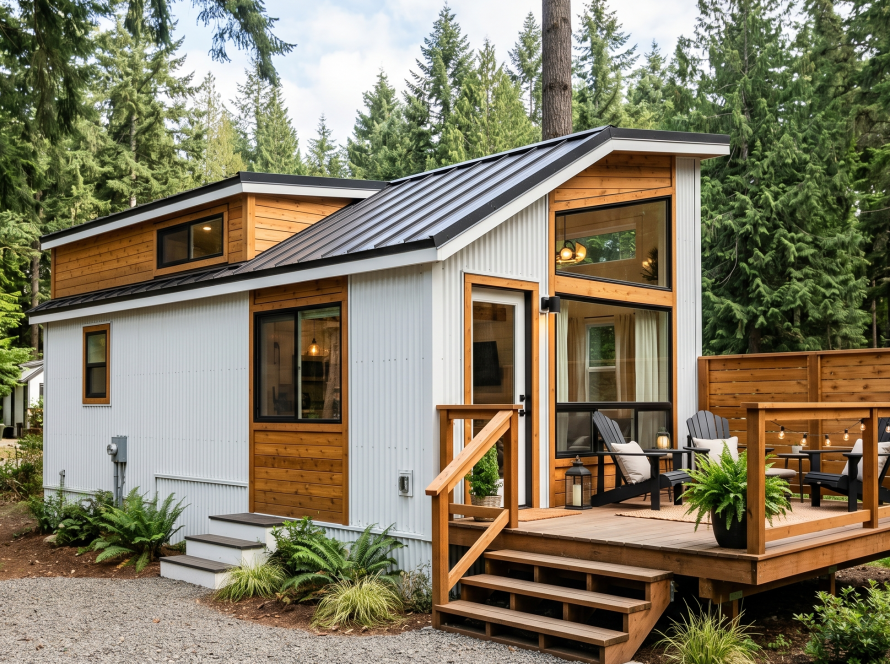
Glamping Park Model Homes: The Future of Outdoor Living Is Already Here
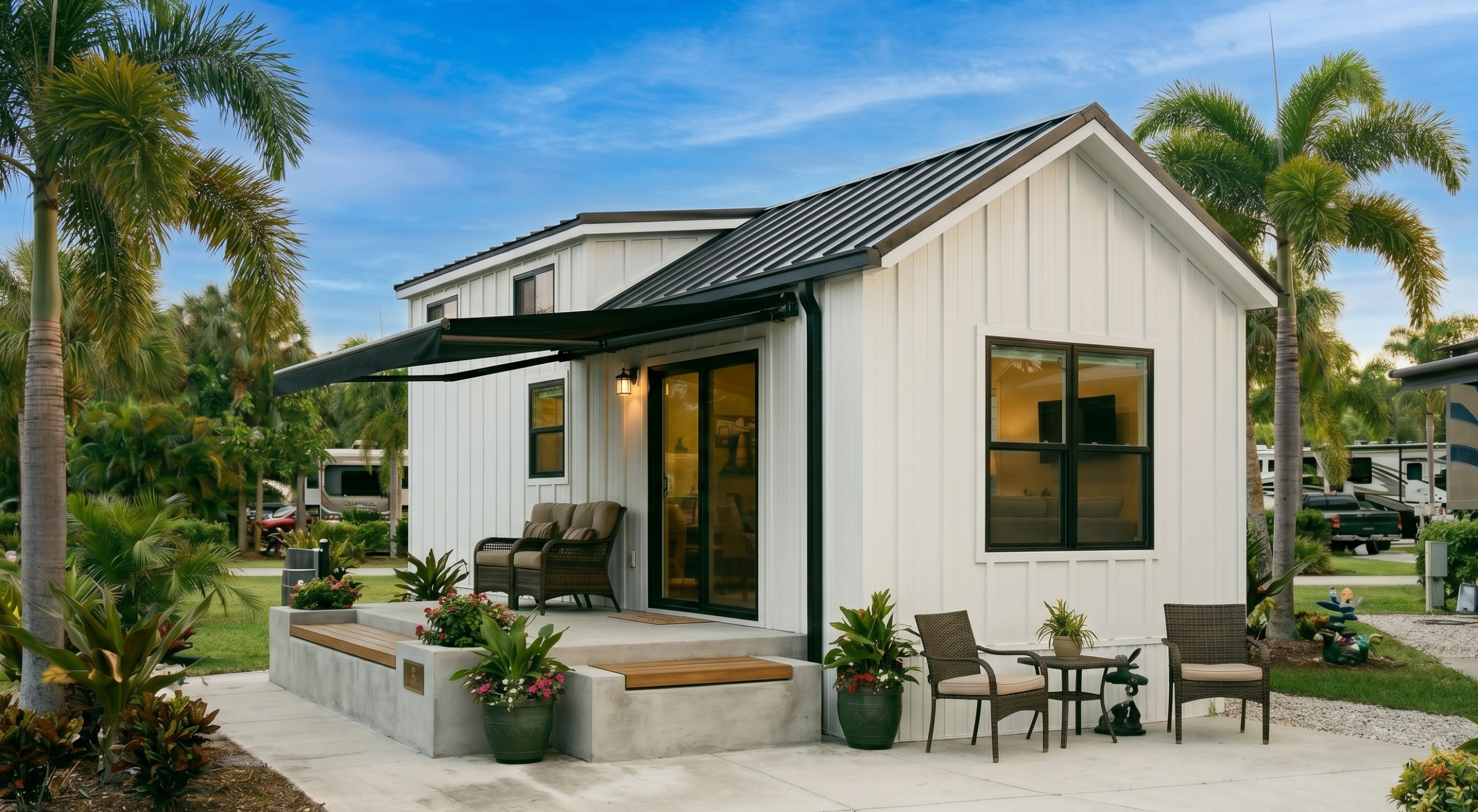
The Night That Changed Everything
There’s a specific kind of moment most outdoor lovers know well. You’re lying in a tent, the ground is harder than you remembered, something is crawling near your sleeping bag, and you’re thinking: I love nature, but I don’t love this. You want the stars overhead. You want the morning air and the sounds of the woods. You just don’t want to sacrifice a good night’s sleep to get there.
That tension is exactly what gave birth to glamping. And that same tension is now fueling one of the fastest-growing segments in both hospitality and residential real estate: the glamping park model home.
At EcoLife Homes, we’ve been watching this shift happen in real time across Florida and the broader Southeast. What started as a niche trend has turned into something genuinely transformative, a new way people think about where they live, how they vacation, and what “home” can mean when it doesn’t have to be a 2,500-square-foot structure on a permanent foundation.
What Glamping Actually Means in 2026
The word has been overused enough that it’s worth grounding it. Glamping, a blend of “glamorous” and “camping,” started appearing in mainstream conversations around 2016, mostly in the context of upscale tents and safari-style lodges. By 2026, it has evolved well beyond that origin story.
Today, glamping describes any outdoor lodging experience that delivers the emotional connection of being in nature while providing the physical comfort of a well-appointed home. Hot showers. Real beds. Air conditioning. A kitchen where you can actually cook. A porch where you can sit with a cup of coffee and watch the sun come up without wearing a headlamp to find your shoes first.
The numbers behind this shift are worth paying attention to. The global glamping market was valued at roughly $4.8 billion in 2023 and is projected to surpass $6.5 billion by 2027, driven in large part by millennial and Gen Z travelers who prioritize experiences over possessions but who also have no interest in roughing it. Closer to home, Florida’s outdoor hospitality industry has seen consistent double-digit growth in glamping bookings between 2024 and 2026, with campground operators across the state reporting higher occupancy rates and longer average stays at glamping-designated sites compared to traditional tent or RV hookup spots.
The reason park model homes fit so naturally into this picture comes down to something simple: they deliver everything glamping promises, built into a structure that’s durable, code-compliant, and designed for long-term use.
What Is a Park Model Home, Exactly?
This is a question we answer often, and it’s worth being precise because the terminology gets muddled in online searches.
A park model home, also called a Park Model RV or PMRV, is a single-unit dwelling built on a chassis with wheels, with a total footprint that typically falls under 400 square feet. They’re classified under ANSI A119.5 standards and are registered as recreational vehicles, which means they can be placed on campground pads, RV parks, rural land, and private properties in ways that traditional manufactured or modular homes cannot.
Despite the RV classification, a park model home bears almost no resemblance to a travel trailer or fifth wheel. There are no slide-outs, no flimsy laminate surfaces, no sense that the whole thing is held together with optimism and aluminum rivets. A well-built park model home is, in every practical sense, a small house with real insulation, proper HVAC systems, full-size appliances, a functional bathroom, and a layout designed for actual daily living rather than weekend survival.
EcoLife Homes builds park model homes in Florida specifically engineered for Florida’s climate and building environment. That means impact-rated windows and doors, materials selected for high humidity resistance, roofing designed to shed heavy rain rather than collect it, and foundation options suited to Florida’s soil conditions. A park model home that works beautifully in the Appalachian mountains may be a maintenance headache in Central Florida three years in. Our units are built to last in the environment where they’ll actually live.
The Glamping Connection: Why Park Model Homes Are the Ideal Unit
If you’re a campground owner or outdoor resort operator in Florida reading this, you’ve probably already explored glamping additions to your property. Maybe you’ve looked at safari tents, or treehouse-style platforms, or converted Airstreams. All of those have their place, but park model homes offer a combination of advantages that’s genuinely hard to match.
First, they’re permanent enough to provide real guest comfort but mobile enough to reposition as your operation evolves. The chassis and wheels aren’t decorative, they’re functional. If your best glamping sites shift over time, or if you want to reconfigure your layout, the units move. This flexibility matters enormously when campground operators are making capital investment decisions.
Second, the return on investment timeline for glamping park model units is favorable in ways that stick-built cabins or seasonal tents often aren’t. A well-placed park model glamping unit in a Florida outdoor resort can generate nightly rates between $175 and $350 depending on location, seasonality, and amenity level. At those rates, and with Florida’s extended outdoor hospitality season, a single unit can generate meaningful revenue within the first two years of operation.
Third, and this is the piece that often gets overlooked, guests who stay in park model glamping units book longer stays and return more often. They’re not just camping; they’re having a vacation experience with a real bed and a kitchen, which means they’re more likely to stay four nights instead of two, and more likely to come back next year. That repeat booking pattern is what campground operators are really after, and park model homes deliver it consistently.
Park Model Homes as Personal Residences: The Other Half of the Story
Glamping isn’t only about commercial campgrounds. A growing segment of the park model market in 2026 is individual buyers: people who want a permanent or semi-permanent residence on rural land they own, a vacation retreat on a lakefront lot, or a downsizing solution that doesn’t feel like a compromise.
Florida has seen significant interest from this buyer group across multiple demographics. Retirees on fixed incomes who own acreage and want a comfortable full-time home without a large mortgage. Younger buyers priced out of the traditional housing market who are exploring alternative paths to ownership. Snowbirds who want a dedicated Florida home without the year-round carrying costs of a full-sized house. Remote workers who’ve relocated from northern states and want a smaller footprint that still delivers quality of life.
For all of these buyers, the glamping aesthetic of a park model home, with warm materials, thoughtful design, and a connection to the outdoors through porches and large windows, is a feature rather than an afterthought. They’re not settling for a smaller home. They’re choosing a different kind of home intentionally, and the park model format is what makes that choice possible at a price point that works.
The distinction between a park model “tiny home” and a park model “glamping house” is largely cosmetic at this point. The same structure, the same build quality, the same design philosophy. What changes is who’s buying it and why. Campground operators buy them to generate revenue. Individual buyers purchase them to live in, vacation in, or pass down to family. EcoLife Homes serves both groups, and we’ve found that the design priorities actually align quite closely between them.
Florida-Specific Considerations for 2026 and 2027
Florida’s regulatory environment for park model homes has continued to evolve, and buyers entering the market in 2026 should have a current-picture understanding of what that means practically.
County-level zoning remains the primary variable. Florida’s 67 counties do not have uniform rules about where park model homes can be sited, what utility hookups are required, and what permitting process applies. In some rural counties, particularly in North and Central Florida, park model homes on private land require only a basic building department notification and utility connection. In others, the process is more involved. EcoLife Homes works with buyers to navigate county-specific requirements, and we’ve developed familiarity with the zoning landscape across Florida’s major markets.
The manufactured housing tax treatment that applies to park model homes in Florida creates a meaningful financial advantage over site-built homes. Because PMRVs are classified as recreational vehicles at the state level, they’re typically taxed on a personal property basis rather than as real estate, which can translate to substantially lower carrying costs for buyers on rural parcels who aren’t planning to convert the land designation.
One development worth watching through 2026 and into 2027 is the ongoing legislative discussion around alternative dwelling classifications in Florida. Several county commissions and state legislative proposals have addressed the question of how to classify and regulate park model homes that function as primary residences, a category that existing zoning codes were not designed to handle cleanly. For buyers considering a park model home as a full-time residence, staying current with these regulatory developments is worthwhile, and it’s something we actively track for our clients.
What to Look for in a Park Model Home Builder
The park model home industry has grown fast, and not all builders have grown their quality standards at the same pace. If you’re evaluating park model homes for either commercial glamping use or personal residence, the due diligence questions are worth being explicit about.
Florida climate engineering matters. A park model home built to general ANSI standards will meet code, but it won’t necessarily hold up well over multiple hurricane seasons, against sustained high humidity, or in the specific soil and drainage conditions of Florida’s geography. Ask any builder where their units have been sited in Florida, how they perform after two or three years, and what their warranty coverage looks like for weather-related issues.
Interior finish quality is visible but sometimes underestimated. The glamping aesthetic requires more than surface-level design. Real wood cabinetry, quality plumbing fixtures, HVAC systems sized correctly for a small Florida space: these details separate a park model home that feels like a retreat from one that feels like a nicely decorated garden shed. Insist on seeing completed, occupied units rather than just floor plan renderings.
Utility hookup flexibility is practical but important. Park model homes placed on rural land often connect to well and septic rather than municipal utilities. Not all units are configured equally well for this scenario, and the connection quality affects everything from water pressure to long-term maintenance costs.
At EcoLife Homes, we build our park model homes in Florida, which means our team understands these variables from direct experience rather than theory. We’re not shipping units from the Midwest and hoping they perform well in Tampa or Ocala or Gainesville. Our builds start with Florida in mind, and they finish that way too.
The Design Language of Glamping: Why It Matters
One of the things we think about at EcoLife Homes that doesn’t always come up in sales conversations is design coherence. Glamping park model homes work, emotionally and experientially, when the design communicates something intentional. When the materials and layout and color palette say: you’re somewhere that was made with care, somewhere worth being.
This is harder than it sounds in a small space. The challenge in under 400 square feet is to create a home that feels spacious without feeling cramped, warm without feeling dark, simple without feeling sparse. The best park model homes accomplish this through a combination of high ceilings (lofts help enormously), generous windows that pull the outdoors in, natural material choices that age well rather than looking tired after a few seasons, and functional layout thinking that puts every square foot to work.
The outdoor connection is especially important in Florida. A park model home with a well-designed covered porch, properly screened for Florida’s insect reality, extends the livable square footage meaningfully and creates the outdoor-indoor relationship that makes the glamping experience what it is. You’re not just looking at nature through glass. You’re sitting in it with a proper chair and a cold drink and, ideally, no mosquitoes.
We design our units with Florida living in mind: porches that are functional year-round and not just in October, windows positioned to capture prevailing breezes and reduce cooling loads, and rooflines that provide shade rather than reflecting heat directly into the living space.
Looking Ahead: Park Model Homes in 2027 and Beyond
The trend lines all point in a consistent direction. Housing affordability pressures are not resolving quickly, and alternative housing models, park model homes prominent among them, will continue to attract serious buyers rather than just curious browsers. The glamping industry is expanding, and campground operators looking to differentiate their properties will increasingly turn to permanent, high-quality structures that deliver real return on investment rather than seasonal tent setups that require replacement every few years.
Florida specifically is positioned to be one of the strongest markets for both the commercial glamping and private residence segments of the park model industry through 2027. The combination of year-round outdoor living climate, a large and growing retirement demographic, high housing costs in coastal markets pushing buyers inland, and a strong short-term rental market in tourist corridors creates an unusually favorable environment for park model homes across multiple use cases.
EcoLife Homes is building for that future. Our current model lineup covers the range from compact single-occupancy units suited for individual buyers to larger multi-sleeping configurations designed for glamping revenue optimization. Every unit is built in Florida, for Florida, with the attention to detail that the climate and the market require.
If you’re a campground owner thinking about your 2026 or 2027 glamping strategy, or a buyer exploring what owning a park model home in Florida actually looks like in practice, we’d welcome the conversation. This isn’t a small decision, and we don’t treat it like one.
The best glamping park model homes are the ones you don’t want to leave. That’s the standard we build to, and it’s the experience we want every EcoLife Homes owner and guest to have, every time.