How Long Does It Take to Deliver a Park Model Home?
A Real Timeline From Decision to Move In
Almost every conversation we have with a serious buyer eventually arrives at the same question. How long until I can actually move in?
It is a fair thing to ask. People are usually asking it because they have a goal in mind. They want to be settled before the snowbird season starts. They have a closing on their primary home coming up. They want a vacation rental ready before tourist season. They are retiring on a specific date and want their next chapter waiting for them.
The honest answer is that delivering a park model in Florida usually takes somewhere between three and seven months from the day you sign a contract to the day you spend your first night in the home. That range is wide on purpose. Several factors push that timeline shorter or longer, and most of them are within your control if you understand them ahead of time.
Heading into 2026 and looking toward 2027, the timing picture has shifted from what buyers experienced during the supply chain chaos of the early 2020s. Things are smoother now, but Florida specific factors like permitting and hurricane season still shape the calendar in important ways. Here is what to expect at each stage and where time tends to disappear.
The Honest Starting Point
A park model project does not begin on the day a truck shows up at your lot. It begins on the day you walk into a showroom or call a builder and start defining what you actually want. Many buyers underestimate how much of the total project time happens before any manufacturing begins.
The decision phase itself can take a week or it can take six months. Some buyers know exactly what they want, choose a floor plan, sign a contract, and put down their deposit within a single visit. Others want to compare manufacturers, visit multiple showrooms, walk through communities, talk to current owners, secure financing, and finalize their site before they commit. Neither approach is wrong. The buyers who move fastest tend to have done their homework before they ever stepped into our showroom.
For 2026 buyers who want to be settled by a specific date, working backward from that target date with a realistic builder is the single most useful conversation you can have. A target of winter 2027 move in is very achievable if you start the conversation by spring of 2026.
Phase One: Designing What You Actually Want
Once you select a builder, the design and configuration phase usually takes two to four weeks. This is where you choose your floor plan, finalize dimensions, select interior finishes, decide on porch and lanai configurations, pick exterior colors, and confirm appliance packages.
This phase moves faster when buyers come prepared. Saved photos of styles you like, a rough idea of how you plan to use the space, a clear understanding of how many people will live or stay in the home, and any specific requirements like accessibility features all speed the design conversations significantly.
The phase slows down when buyers are still working through major decisions during the design meetings. Wondering whether you want one bedroom or two, debating whether to add a loft, going back and forth on whether to include a dishwasher, all of this is normal but it adds days or weeks if not resolved before commitments are made.
A useful rule of thumb is that the design phase ends when you can hand a builder a finalized configuration sheet and not change your mind about anything significant. Changes after this point are possible but they cost time and sometimes money.
Phase Two: Contract, Deposit, and Production Slot
After design comes the formal commitment. Signing a contract, putting down a deposit (typically 20 to 30 percent of the total price), and being placed in the production queue happens fairly quickly once you are ready. Most builders can complete this paperwork within a week.
The important part of this phase is the production slot you receive. In 2026, factory schedules for quality Florida park model builders run two to twelve weeks out depending on the time of year and the manufacturer. Spring and early summer tend to be busier as buyers prepare for snowbird season. Late summer and fall sometimes have shorter wait times because production capacity catches up.
Your production slot is the date your unit actually enters the build queue at the factory. It is not your delivery date. The gap between these two is the actual manufacturing time, which typically runs six to ten weeks for most park model configurations. Highly customized units, larger models with porches and lofts, or units with extensive upgrades sometimes run twelve weeks or longer.
Reputable builders will give you a realistic production date in writing as part of your contract. If a builder is vague about timing or promises something dramatically faster than industry norms, that is worth questioning. The factories that produce quality park models cannot be rushed without compromising the result.
Phase Three: Site Preparation Happens in Parallel
While your unit is being built at the factory, you should be preparing your site. This is a critical step that buyers sometimes leave too late. If your site is not ready when your unit is built, your park model will sit at the factory or in a storage yard, which can add weeks of delay and sometimes storage fees.
Site preparation depends on where you are placing the unit. In an established park model community, site prep is usually minimal. The lot already has utility connections, a pad, and infrastructure ready to go. Coordination with the community manager about your delivery date is usually the main task, and it can be handled within a few weeks.
On private land, site preparation is more involved. You may need to clear the area, establish a pad or foundation, run utility lines, install a septic system if no sewer is available, prepare a driveway for delivery trucks, and obtain any necessary permits. Depending on the complexity, site prep on raw land can take anywhere from four weeks to several months. This is the single most common source of timeline surprises for buyers placing units outside established communities.
A practical tip for 2026 buyers planning private land placement is to begin site preparation discussions with local contractors at the same time you sign your park model contract. The two processes should run in parallel so they finish at roughly the same time.
Phase Four: Florida Permitting Reality
Permitting is the wild card in any Florida park model timeline. The good news is that placement in established park communities usually requires minimal permitting beyond the standard community approval process. The community handles most of the regulatory side, and your timeline is largely about coordinating with their staff.
Placement on private land in Florida is a different story. Each county handles park model permitting differently, and even within a single county, individual building departments can vary in how quickly they process applications.
Some counties in Florida have streamlined processes for park model placement and can issue permits within two to four weeks. Counties like Citrus, Levy, and parts of Marion have generally been responsive to park model applications through 2026. Larger urban counties tend to take longer, sometimes six to ten weeks, particularly when special variances or zoning interpretations are involved.
Permits typically required include a placement or setup permit, electrical permit, plumbing permit, and sometimes a separate permit for the foundation or anchoring system. Septic permits are handled separately through the Florida Department of Health and can add their own timeline of four to eight weeks if a new system is required.
Buyers can speed permitting by working with installers who have established relationships with the local building department, providing complete and accurate documentation on the first submission, and following up regularly rather than assuming everything is moving on its own.
Phase Five: Manufacturing Inspection and Release
Once your unit is built at the factory, it goes through a final inspection process before being released for delivery. Quality builders inspect the unit thoroughly, document any issues, address them on the spot, and only release the unit when it meets standards.
This inspection and release process usually takes a few days. Some buyers choose to do their own pre delivery inspection at the factory before shipment, which is a smart practice for high value units or when buyers want to verify specific details. Adding a buyer inspection extends this phase by a few days to a week depending on scheduling.
Your unit may also need to wait for an available transport slot. Specialized transport companies that move park models are not always immediately available, and routing logistics from the factory to your site can take several days to coordinate.
Phase Six: Transport to Your Site
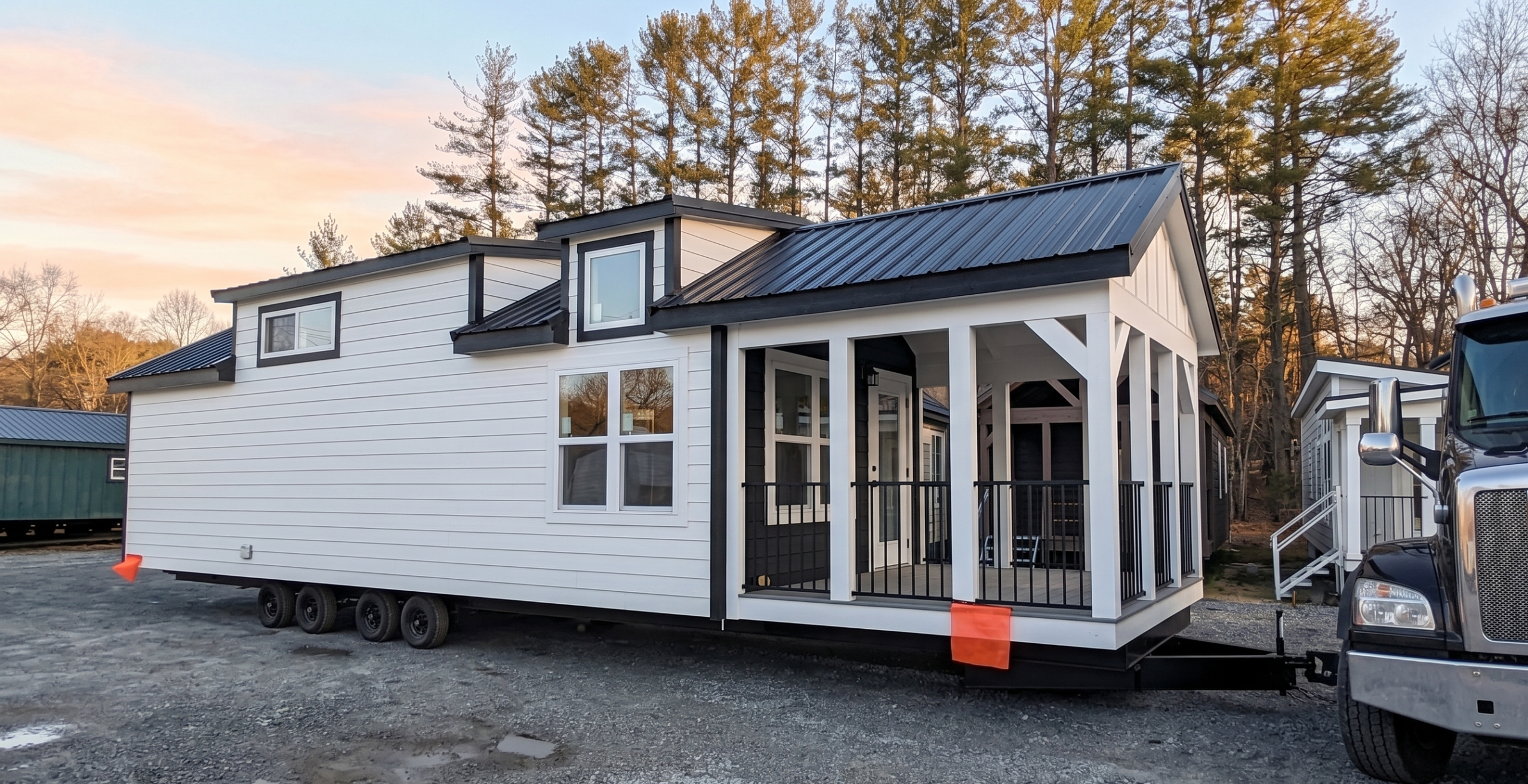
Park model transport in Florida is a specialized service. The unit travels on its own chassis using temporary axles and wheels, escorted in many cases by pilot vehicles, and routed along approved roads that can accommodate its size.
Transport time itself is usually one to three days depending on distance, route, and any required overnight stops. Florida transports rarely cross state lines, but units coming from out of state manufacturers sometimes do, which extends transport time and cost.
Weather plays a role. Transport companies will not move units in severe weather, and during hurricane season warnings or active storms can delay shipments by days or sometimes a week or more. Buyers planning deliveries between June and November should build some buffer into their timeline.
Phase Seven: Setup, Anchoring, and Installation
This is where your park model transitions from being a vehicle to being a home. Setup typically takes three to seven days depending on complexity. The installation crew positions the unit on its prepared pad or piers, levels it carefully, installs the anchoring system, completes any skirting work, and prepares the unit for utility connections.
In Florida, the anchoring step deserves special attention. The Florida Building Code requires specific tie down configurations based on wind exposure zone. Properly installed anchoring protects your investment during hurricane season, and reputable installers document the process for both your records and insurance purposes.
If your unit includes add ons like a covered porch, a screened lanai, or a carport, these are typically installed in the days following the main setup. Lanai installation often runs an additional week, and more complex add ons can take two or three weeks. Some buyers stage these as a second phase to allow move in to happen sooner, with the lanai completed shortly after.
Phase Eight: Utility Connections
Connecting utilities is one of those steps that sounds simple but often introduces unexpected delays. Water, sewer or septic, electrical, propane (if applicable), and internet all need to be connected and inspected.
In an established community, utility connections are usually straightforward and can be completed within a few days of setup. The community has tested infrastructure and experienced staff who know how to bring a new unit online quickly.
On private land, utility connections involve scheduling with utility companies, sometimes pulling additional permits, and waiting for inspections. Electrical service connections can take from a few days to several weeks depending on the utility provider and local demand. Internet and cable hookups vary widely based on local providers, and some rural Florida areas still have limited options.
Phase Nine: Final Inspections and Certificate of Occupancy
Before you can legally move into your park model on private land, you typically need final inspections from the building department. These verify that the installation, electrical work, plumbing, and anchoring all meet code requirements.
Final inspections in Florida are usually scheduled within a few days to two weeks after work is complete, depending on the local building department workload. Once inspections pass, a certificate of occupancy or its equivalent is issued, and you are cleared to move in.
In established park communities, this final inspection step is typically handled by community management rather than the county, which simplifies the process considerably.
The Realistic Full Timeline
Adding up the phases, here is what a typical 2026 Florida park model project looks like from start to finish.
A buyer placing a standard model in an established community might experience the following timeline. Design and configuration takes two weeks. Production queue wait runs four weeks. Manufacturing takes eight weeks. Transport and setup runs two weeks. Utility connections and final preparations take one week. Total elapsed time from contract signing to move in lands around seventeen weeks, or roughly four months.
A buyer placing a more customized unit on private land in a Florida county with moderate permitting times might see a longer timeline. Design and configuration takes three weeks. Production queue and manufacturing run twelve weeks combined. Site preparation and permitting, running in parallel, take ten to twelve weeks. Transport and setup run two weeks. Utility hookups and inspections add three weeks. Total elapsed time runs around twenty two to twenty four weeks, or about six months.
The fastest projects we see, with everything aligned and buyers prepared, can complete in about ninety days. The longest, usually involving extensive customization and complicated land use approvals, sometimes stretch to nine or ten months. The vast majority fall in the four to six month range.
What Speeds Things Up
Several factors consistently shorten timelines for park model buyers in 2026 and 2027.
Choosing a standard floor plan rather than a heavily customized one reduces manufacturing time and avoids back and forth on design decisions. Placing the unit in an established community rather than on private land eliminates most of the permitting and site preparation complexity. Working with a builder who has Florida specific experience and established installer relationships removes friction at every step. Having financing pre arranged before signing avoids delays during contract execution. Being decisive and responsive during the design phase keeps the project moving.
Buyers who treat the park model project like an active priority and check in regularly with their builder consistently move faster than buyers who go quiet between phases and expect everything to happen on its own.
What Slows Things Down
Delays usually trace back to a small set of common issues. Site preparation that starts too late and is not ready when the unit arrives creates the most common delay. Permit applications with missing documentation that bounce back from the building department add weeks. Custom design elements with long lead times like specific window orders or unusual cabinetry materials extend manufacturing time. Hurricane season disruptions to transport and installation can push deliveries by days or weeks. Financing issues that surface late in the process can stall everything until resolved.
Buyers can avoid most of these by addressing them proactively. Confirm site readiness milestones with installers. Verify permit application completeness before submission. Choose standard options when timing matters more than customization. Build calendar buffer around hurricane season for summer projects. Lock in financing before signing contracts.
Seasonal Considerations for 2026 and 2027
Florida seasons shape project timing in subtle but real ways. Late spring through early summer is typically the busiest period for orders, as snowbirds make decisions during their Florida visits and want delivery before the next winter. Production queues are longer during this period.
Hurricane season from June through November introduces weather risk to transport, setup, and inspections. Projects active during this period should build in some buffer.
Winter months from December through February are excellent for site preparation and installation, with mild Florida weather making outdoor work efficient. Production queues are sometimes shorter during these months because order volume is lower.
Spring of 2027 looks like a particularly active period based on current order pipelines and inquiries. Buyers targeting that timeframe for delivery would benefit from beginning conversations in the fall of 2026.
Working With the Right Partner
The timeline of a park model project ultimately reflects the quality of the people involved. A builder who communicates clearly, sets realistic expectations, and manages the process actively can deliver a complete project in four to five months without surprises. A builder who is vague about milestones, slow to respond to questions, and reactive rather than proactive can stretch the same project past nine months.
At EcoLife Homes, we have built our process around predictable timelines because we know how much it matters to buyers planning real life transitions. Retirements, relocations, vacation property dreams, and rental income strategies all depend on knowing when the keys are actually going to be in your hand.
If you are starting to think about your own park model project for 2026 or 2027 and want a realistic timeline based on your specific situation, location, and design preferences, the EcoLife Homes team would be glad to walk through it with you. The earlier the conversation starts, the more options you have for hitting the target date that actually matters to you.