Is a Park Model Home a Good Investment?
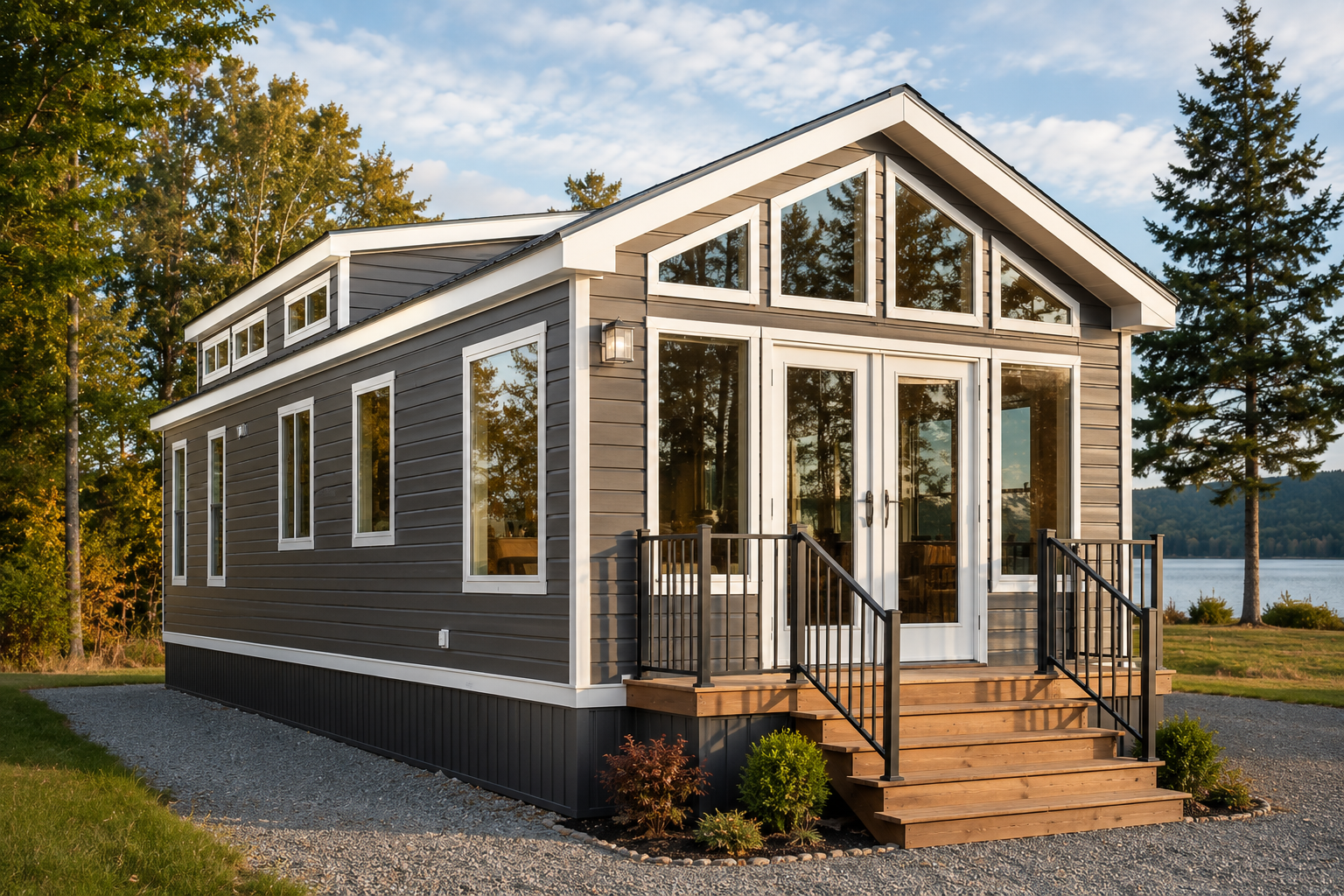
Most people come to park models through a lifestyle conversation — they want to simplify, spend less, live closer to nature, or stop throwing money at a mortgage that feels like it will never end. The investment angle is often secondary. But somewhere around the third or fourth time someone runs the numbers, the financial case for park models stops being a pleasant surprise and starts being the main reason they’re seriously looking.
The honest answer to whether a park model is a good investment is: it depends on what you’re trying to accomplish, where you’re placing it, and whether you’re approaching it with clear eyes about both the upside and the real-world limitations. This isn’t a post that’s going to tell you park models are a guaranteed path to passive income with no downsides. But it is going to walk through the actual financial mechanics — acquisition costs, revenue potential, operating expenses, appreciation dynamics, and strategic positioning — so you can make a genuinely informed decision.
Reframing What “Investment” Means Here
When most people think about real estate investment, they’re thinking about a model with two return streams: cash flow from rent and appreciation in property value over time. The traditional residential real estate playbook assumes both are working in your favor simultaneously, and in hot markets, they often are.
Park models operate on a somewhat different model, and being precise about that is important.
On the cash flow side, park models have a genuinely compelling story — particularly when used as short-term rental properties in high-demand markets like Florida. The revenue numbers are real, the operating costs are manageable, and the all-in investment is a fraction of what a comparable traditional vacation property would cost.
On the appreciation side, the picture is more nuanced. Park models are personal property, not real estate. They depreciate in a pattern more similar to vehicles than to land-secured homes, particularly in the early years of ownership. Over a longer hold period, a well-maintained park model in a desirable location can hold its value reasonably well — but expecting aggressive appreciation is not the right frame. The investment thesis here is primarily about cash flow, not capital gains.
Understanding that distinction upfront lets you evaluate park model investments on the right terms rather than comparing them unfavorably to an investment type they were never meant to replicate.
The Acquisition Cost Advantage
The single most powerful thing about park models as investments is what you’re not spending to get started.
A traditional vacation home in a desirable Florida market in 2026 — something near the Gulf Coast, near natural attractions, or in a well-located coastal community — is going to cost you $350,000 to $600,000 or more at the lower end of the market. A 20% down payment alone represents $70,000 to $120,000 in cash before you’ve paid a single utility bill, hired a property manager, or replaced a single appliance.
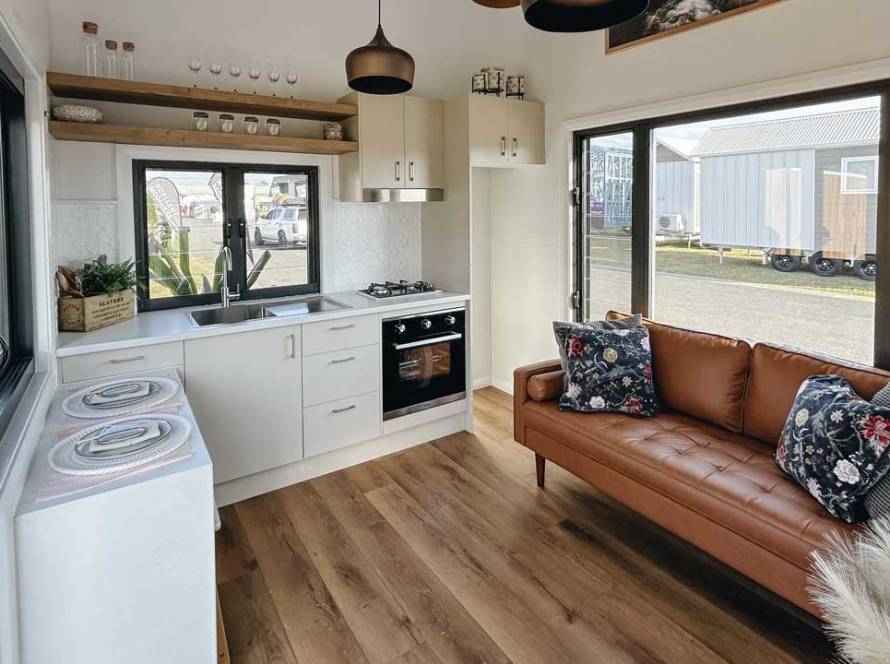
A quality park model from EcoLife Homes, fully set up and furnished at a well-located Florida site, represents a total all-in investment of $100,000 to $150,000 in most cases. That’s not a down payment — that’s the entire investment. And it positions you to generate income from day one without carrying a mortgage that requires strong occupancy just to break even.
The lower acquisition cost also means lower stakes for each individual investment decision. An investor with $300,000 to deploy could put it all into a single traditional vacation home and be highly concentrated in one asset, one location, and one set of market conditions. Or they could build a small portfolio of two or three park model properties in different locations, diversifying their revenue exposure without overextending their capital. The math for that kind of portfolio construction simply doesn’t exist in traditional vacation real estate at this price point.
Short-Term Rental Revenue: What the Numbers Actually Look Like
Florida’s short-term rental market is mature, well-documented, and — for well-positioned properties — still producing strong revenue numbers heading into 2026 and 2027. Tourism in Florida is not a boom-and-bust story. It’s a structurally consistent engine driven by year-round warm weather, an enormous variety of natural and developed attractions, and a visitor base that includes everyone from international tourists to domestic retirees to families on spring break.
A park model short-term rental in a well-chosen Florida location can realistically generate $25,000 to $55,000 in annual gross revenue. The range is wide because location, presentation, marketing quality, and management approach all affect results significantly. Let’s look at what drives performance at both ends of that range.
Properties at the lower end of the revenue range tend to be in locations with moderate seasonal demand, with basic but comfortable presentation, and managed by owners who are handling their own booking and guest communication without professional tools. They’re still cash-flow positive and producing returns that beat most traditional investment alternatives — but they’re not being optimized.
Properties at the upper end are in locations with strong year-round demand or very strong peak seasons, presented with professional photography and designer-quality interiors, listed on multiple platforms with dynamic pricing, and either managed by the owner with professional tools or by an experienced local property manager. These are properties where guests leave five-star reviews because the experience genuinely exceeded their expectations — and those reviews compound over time into higher rankings, higher occupancy, and the ability to charge premium nightly rates.
A concrete example: a well-finished two-loft park model in a Florida nature-adjacent community, priced at $120 per night with 70% occupancy, generates approximately $30,660 in annual gross revenue. Deduct a property management fee of 20% ($6,132), platform fees averaging 3% ($920), utilities ($1,800), insurance ($1,400), maintenance reserves ($1,500), and lot rent ($6,000 annually at $500 per month), and you’re looking at a net operating income of approximately $12,900. Against a total investment of $130,000, that’s a cash-on-cash return of just under 10%.
Now optimize that same property — stronger location, better presentation, higher nightly rate of $150, occupancy of 75% — and gross revenue climbs to $41,000. Same operating costs, improved NOI of approximately $22,000, and a cash-on-cash return approaching 17%. These are not fantasy numbers. They reflect what experienced park model investors in Florida are achieving in 2026 with properties that were set up thoughtfully from the beginning.
Operating Costs: The Real Picture
One of the things that makes park models attractive as investment properties — beyond the low acquisition cost — is a predictable and manageable operating cost structure. Understanding what you’re actually going to spend is essential for building a credible financial model.
Lot Rent
If your park model is placed in a land-lease community rather than on land you own, lot rent is your largest recurring fixed cost. Florida communities vary widely, but a reasonable planning figure for a quality community is $400 to $700 per month, or $4,800 to $8,400 per year. Some resort-style communities charge more; some rural communities charge less. This cost doesn’t disappear whether or not the unit is occupied, so it needs to be covered by your occupancy floor.
Property Management
If you’re not managing the property yourself, a local short-term rental manager will typically charge 20% to 30% of gross revenue. For investors who live at a distance or who simply don’t want to handle guest communication, cleaning coordination, and maintenance calls, this is money well spent. Factor it in from the start rather than discovering it reduces your margins after the fact.
Utilities
A well-insulated park model with an efficient mini-split HVAC system in Florida typically runs $80 to $150 per month in electricity during summer months. For a rental property where you’re also covering internet, water, and any propane costs, a reasonable annual utility budget is $2,000 to $3,000.
Maintenance and Reserves
Factory-built homes with quality mechanical systems have lower maintenance demands than older site-built properties, but they’re not maintenance-free. A reserve of 1% to 1.5% of the unit’s value per year is a prudent planning figure for ongoing maintenance and eventual replacement of appliances and systems. On a $100,000 unit, that’s $1,000 to $1,500 per year set aside — a manageable number that prevents budget surprises.
Furnishing and Setup
The initial cost of furnishing a park model for short-term rental is a real investment that doesn’t always show up in the purchase price headline. Budget $8,000 to $15,000 for quality furniture, bedding, kitchen equipment, décor, and outdoor furniture. This is a one-time cost that pays for itself quickly in the form of better guest reviews and the ability to charge higher nightly rates — but it needs to be in your total investment calculation.
The Land Ownership Alternative
Everything above assumes a land-lease structure. But some park model investors in Florida are buying land and placing their units on private property — an approach that changes the investment calculus meaningfully.
Owning the land eliminates the monthly lot rent, which improves cash flow significantly. In rural Florida counties where raw land is still accessible at reasonable prices — think interior counties away from the major coastal markets — small parcels suitable for park model placement can be acquired for $30,000 to $80,000 depending on size, location, and utility access.
This does increase total investment capital and adds the complexity of site preparation, utility installation, and potentially well and septic system development. All-in, a land-plus-park-model project might represent $180,000 to $230,000 in total investment. But the absence of ongoing lot rent, combined with potential land appreciation in growing Florida markets, creates a different long-term financial profile than the community placement model.
For investors with a longer horizon and the capital to handle the higher upfront cost, the land ownership path is worth analyzing seriously. For those who want faster deployment and simpler operations, community placement is usually the better starting point.
How Park Models Compare to Other Investment Options
To evaluate a park model investment honestly, it helps to put it in context with what else you could do with $100,000 to $150,000 of investable capital in 2026.
The stock market, in a diversified index fund, has historically returned around 7% to 10% annually over long periods. That’s passive, liquid, and requires no management. But it also produces no lifestyle benefit, no tangible asset, and no direct control over your outcome.
A traditional vacation rental in Florida at current prices requires either significantly more capital or significant leverage — both of which introduce risk that a cash-purchased park model avoids. A $400,000 property financed with 20% down has a mortgage payment that needs to be covered before any profit is made. A bad season or an extended vacancy creates real cash flow stress.
A short-term rental condo in a Florida tourist market can produce comparable revenue to a park model, but the acquisition cost is higher, the HOA fees are often substantial, and the owner has no control over association rules that can change dramatically — including rules around short-term rental itself.
A park model purchased for cash, placed in a well-chosen location, and managed competently produces returns in the 8% to 17% range with a modest management burden, no mortgage payment to worry about, and a tangible asset that has utility even if the rental market softens. That risk-adjusted profile is genuinely competitive with alternatives that require more capital or accept more volatility.
Risk Factors Worth Knowing
A serious investment analysis includes the risks, not just the upside.
Regulatory risk is real in the short-term rental market. Florida municipalities have varying levels of enthusiasm for short-term rentals, and regulations can change. Before placing a park model in any location with the intention of operating it as a short-term rental, verify what the current rules are and think about what the downside looks like if those rules tighten. Choosing a community that explicitly permits and supports short-term rentals is the most direct way to manage this risk.
Platform dependency is a factor for any short-term rental business. Revenue that relies heavily on one booking platform is exposed to that platform’s policy changes, fee increases, and algorithm shifts. Building a direct booking channel alongside platform listings is a best practice that experienced operators prioritize.
Seasonal demand variation in Florida is real, though less extreme than in northern markets. Summer occupancy in some inland Florida communities can be softer than the winter and spring seasons. Underwriting your investment against a realistic annual average, rather than against peak-season numbers, is essential for building a financial model that holds up year-round.
Community policy changes are a risk for land-lease placements. Lot rent can increase. Management can change. Community rules around rentals, guests, or property modifications can evolve. These risks are manageable through careful community selection, written agreements where possible, and the knowledge that — as discussed in our moving guide — a park model can be relocated if a community situation becomes untenable.
Depreciation bears repeating. A park model’s value will depreciate over time, and the rate of depreciation is steepest in the early years. The investment thesis needs to be built around cash flow, not the expectation of selling the asset for more than you paid. Investors who understand this from the start don’t get surprised.
The Portfolio Approach That’s Gaining Traction in 2026 and 2027
One of the more interesting developments in the Florida park model market heading into 2026 and 2027 is the emergence of small portfolio investors — individuals and small partnerships who are acquiring two, three, or four park models in different Florida locations and managing them as a cohesive short-term rental portfolio.
The logic is straightforward. A single park model generates meaningful income. Two or three generate the kind of monthly cash flow that makes a genuine difference in financial independence timelines for working professionals and early retirees. The capital requirements are accessible without institutional financing. The management systems that work for one unit — booking platforms, cleaning crews, dynamic pricing tools — scale efficiently to a small portfolio.
This is not a model that requires a real estate license or a property management company behind you. It requires the same thing any successful small business requires: clear goals, honest financial modeling, quality execution on the product and guest experience, and the patience to let occupancy and reviews build over time.
EcoLife Homes works with investors at every stage of this journey — from buyers purchasing their first park model as a personal-use property that doubles as a rental when they’re not there, to investors building out multi-unit portfolios with a clear income strategy from day one.
What Makes a Park Model Investment Work
After everything above, the answer to what separates a park model investment that performs well from one that underperforms comes down to a short list of decisions.
Location is first. A park model in the right location will always outperform an identical unit in the wrong one. Proximity to water, nature, tourist attractions, or retirement communities drives occupancy. Don’t compromise on location to save on lot rent.
Presentation is second. Guests who are paying $120 to $180 per night expect a beautiful, well-equipped, thoughtfully designed space. The investment in quality furnishings and intentional design pays for itself in reviews, repeat bookings, and the ability to hold premium pricing.
Honesty in the financial model is third. The investors who get into trouble are the ones who underwrote against optimistic occupancy numbers or forgot to account for management fees, lot rent, or maintenance reserves. Run the numbers conservatively and let the actual performance beat your projections.
Quality of the unit itself is fourth. A park model from a manufacturer who builds to a high standard will perform better over a decade of rental use than one built to a price point. The difference shows up in maintenance costs, guest reviews, and the condition of the unit when you eventually decide what to do with it.
The Verdict
Is a park model home a good investment? For buyers who approach it with clear eyes, realistic expectations, and a focus on cash flow rather than speculative appreciation — yes, it genuinely is. The acquisition cost is accessible, the revenue potential in Florida’s tourism market is well-documented, the operating cost structure is predictable, and the risk-adjusted return competes favorably with alternatives that require more capital or accept more volatility.
It’s not a get-rich-quick story. It’s a get-financially-stable story, and in 2026, that’s actually the more valuable thing. If you’re ready to run the numbers for your specific situation and location, EcoLife Homes is here to help you build a financial model that’s grounded in reality from the first conversation.