Why OEM-Engineered Trailer Foundations Make Tiny Homes Stronger and Safer

If you ask ten different tiny home builders what the most important part of a tiny home is, most will give the same answer: the foundation. And in the world of tiny homes, the “foundation” is not concrete, cinder blocks, or piers. It’s the trailer.
It carries the entire structure. It absorbs highway vibration, wind forces, weight loads, and long-term stress. It determines whether your tiny home feels solid for decades — or starts showing problems within months.
Yet surprisingly, many tiny homes today are still built on repurposed trailers, low-grade utility haulers, or frames that were never engineered for the unique weight distribution of a small house. They were designed to carry furniture, landscaping equipment, maybe a car — but not a structural building.
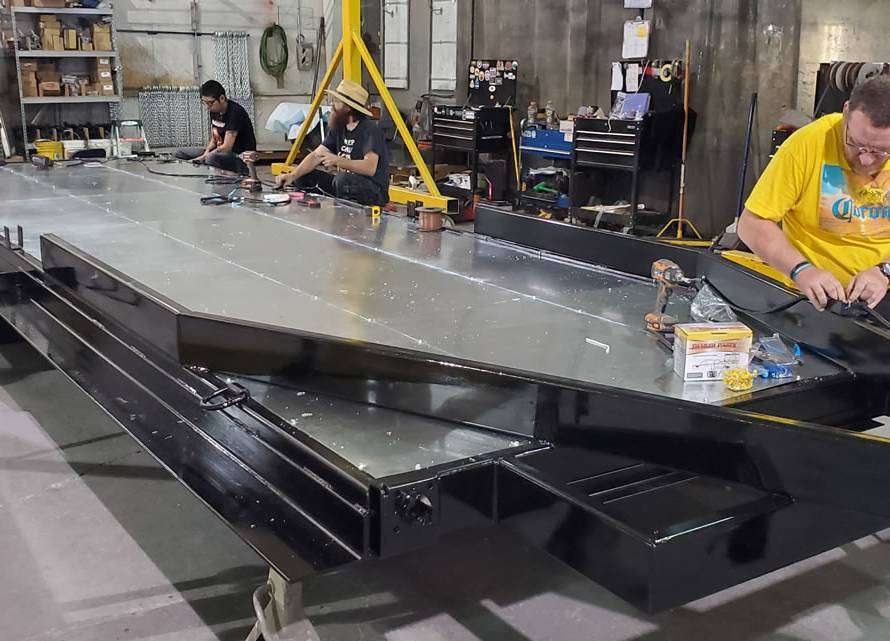
At EcoLife Homes, we chose a different path. Instead of relying on modified haulers, we build and deliver OEM-engineered tiny home trailer foundations, designed from the ground up exclusively for residential structures. And the difference between a general-purpose trailer and a purpose-built engineered foundation is enormous — in safety, performance, lifespan, and even insurance and financing.
This is the foundation of a truly permanent tiny home, and it sets the tone for everything built on top of it.
In this article, we’ll explore why OEM-engineered foundations matter so much, what makes them superior, and how they dramatically improve the longevity and security of a tiny home.
A Tiny Home Is Only As Strong As Its Trailer Foundation
Anyone who has towed a tiny home even once knows how much stress the frame experiences. You hit a bump on the highway and the entire structure feels the vibration. You take a turn too sharply and the weight load shifts. You park in a location with poor leveling and the frame flexes ever so slightly.
Over time, an under-engineered trailer begins to show signs of fatigue:
Welding joints crack.
The frame twists or warps.
Axles strain under uneven distribution.
Decking sags or weakens.
Moisture penetrates weak points.
But an OEM-engineered foundation does not suffer from these problems because it was built to anticipate them.
Our foundations are engineered specifically for the physics of a tiny home — a tall, heavy, top-loaded structure that places concentrated weight on specific zones rather than evenly across the surface. We model how wind loads hit the building at 60 mph towing speeds. We calculate how highway vibration affects welds. We design steel-tube superstructures that eliminate the flex that destroys a house over time.
This is what separates a temporary shelter from a generational home.
Precision Welding and Steel-Tube Superstructures: Built for Real Structural Loads
When people hear “steel trailer,” they often assume all steel frames are equal. In reality, the quality difference between low-budget mass-produced trailers and engineered foundations is massive.
Our foundation frames are constructed with:
Precision AWS D1.1 and D1.5 welding — the same standards used in structural steel buildings and bridges.
Closed steel-tube beams, not open C-channels that twist more easily.
Reinforced gussets at all stress points.
Balanced axle layout to match the tiny home’s center of gravity.
Integrated steel superstructure that becomes part of the home’s framing strength.
A typical hauler trailer is welded to carry horizontal loads. A tiny home, on the other hand, applies vertical, lateral, and torsional loads — all at once.
If you’ve ever stepped inside a poorly built tiny home that wobbles slightly as you walk, you’re feeling that structural mismatch.
A steel-tube superstructure engineered for tiny homes eliminates that issue entirely. The home feels solid underfoot, walls stay square, and doors don’t misalign after being towed multiple times.
Compliance With Strict National Safety Standards
Tiny home buyers often worry about certification:
Will my tiny home meet state requirements?
Can it be insured?
Will it pass RV or residential code checks?
Will a park, campground, or lender approve it?
Many of these approval processes begin with the foundation itself.
Our OEM foundations meet — and often exceed — the national benchmarks:
ANSI A119.5
Applies to “park model RV-type structures.” Ensures safety in electrical, plumbing, fire resistance, structure, and energy compliance.
NFPA 1192
Covers RV safety for fire hazards, electrical systems, and structural integrity.
These certifications matter because they prove that the underlying structure is safe, code-compliant, and trustworthy.
A tiny home built on a repurposed or uncertified trailer often fails inspections before buyers even get to the interior.
Brand-New Materials — Never Repurposed or Reconditioned
In the tiny home world, it’s surprisingly common for builders to start with used or repurposed trailers, then “retrofit” them into foundations by adding brackets, new axles, or patchwork reinforcements.
This approach leads to several major issues:
Unknown metal fatigue
Rust hidden inside aging steel
Welding repairs layered over old joints
Axles replaced without engineering review
Decking that wasn’t meant for long-term load-bearing
A tiny home is a house, not a piece of cargo.
It deserves a foundation built specifically for residential loads — not something cobbled together from old haulers.
EcoLife Homes uses only brand-new, purpose-engineered materials. Every trailer is built fresh, fabricated to spec, titled, and VIN-assigned like a manufactured home chassis.
This ensures:
No hidden weaknesses
No aging metal
No prior damage
No questionable load history
And most importantly — a much longer lifespan.
Lifetime Warranty: A Foundation You Never Have to Worry About
Tiny homes are a major investment. The last thing anyone wants is a structural issue with the foundation years down the road. For us, offering a lifetime warranty was an easy decision. If we engineer something correctly, stand behind it, and manufacture it in the USA with strict quality control, it should last far longer than the house itself.
The lifetime warranty applies to:
Steel frame integrity
Welding joints
Structural components
Foundation alignment
Frame performance under intended loads
No repurposed trailer could ever offer such a guarantee — the risk is simply too high.
But when something is engineered specifically for a tiny home, we have the confidence to support it for life.
A Foundation Designed for Modern Building Systems
Today’s tiny homes include far more than a few studs and some plywood. They include:
Heavy closed-cell foam insulation
Steel framing
Tile showers
European cabinets
Appliances
Solar systems
HVAC mini-splits
Battery banks
Standing seam metal roofs
The weight of these components can add up quickly, and the distribution is rarely symmetrical.
An OEM-engineered foundation is built with this in mind.
We design:
Axle spacing for optimal balance
Load paths from roof to frame
Outriggers to support cantilevered floor plans
Tie-down points used for highway safety
Reinforced perimeter beams for heavy cabinetry and bathroom systems
Structural thickness adjustments for specific floor plans
A traditional utility trailer was never designed for these kinds of structural realities.
Better Towing Stability and Safer Travel
Even if you only plan to tow your tiny home once — from the manufacturer to your property — the towing experience matters. Poorly designed trailer foundations can be dangerous:
Swaying
Porpoising
Axle overload
Uneven tire wear
Instability on downhill grades
Our engineered foundations address these challenges by:
Using balanced tandem or triple axles
Aligning load distribution with the home’s weight mapping
Improving tongue weight ratios
Adding proper braking systems
Integrating structural rigidity to reduce flex while towing
Customers often tell us that towing an EcoLife tiny home feels surprisingly smooth — almost like hauling a solid, one-piece structure rather than a flexible mobile shell.
This is exactly what an engineered foundation should provide.
A Better Foundation Makes the Entire Home Higher Quality
One thing most people don’t realize:
Building a tiny home on a superior foundation actually makes the home above it better.
Why?
Because the framing team, insulation crew, plumbers, electricians, and interior installers are working on a level, rigid, perfectly squared platform.
When a home starts straight, everything else goes straight:
Windows and doors operate properly
Cabinets stay aligned
Tile grout doesn’t crack
Floors don’t squeak
Roof frames line up correctly
Wall studs remain plumb
Drywall or paneling doesn’t warp
Quality stacks upward — and it starts at the base.
VIN-Assigned, Titled, and Recognized Nationally
This is one of the most overlooked advantages.
With a proper OEM foundation, your tiny home receives:
A legal VIN
A manufacturer title
Clear documentation for towing, insuring, and financing
This makes life easier in countless ways:
Applying for insurance
Moving across state lines
Parking in regulated communities
Applying for RV parks or tiny home villages
Selling the home in the future
A repurposed trailer often fails one or more of these steps, creating problems years later.
Made in the USA: Quality You Can Trust
From the steel tubing to the welding to the manufacturing process itself, our foundations are built in the USA under strict quality control. Every trailer passes inspection before leaving the facility, and every component is traceable.
This ensures consistency, reliability, and long-term performance.
The Bottom Line: Your Home Deserves a Real Foundation
A tiny home is not just a weekend project. For many people, it’s a primary residence—something they want to rely on for security, stability, and comfort.
An OEM-engineered trailer foundation is the single most important investment you can make in the longevity and safety of your tiny home.
It’s the difference between:
A house that lasts 3–7 years
And a house that lasts 30+ years
Between:
A structure that shifts
And a structure that stays perfectly square
Between:
Constant maintenance
And long-term peace of mind
Between:
Questionable resale value
And a home that holds its worth
At EcoLife Homes, we build our foundations to outlive the houses themselves. And that’s exactly what a true foundation should do.