Beware of Tiny Home Scams on Social Media
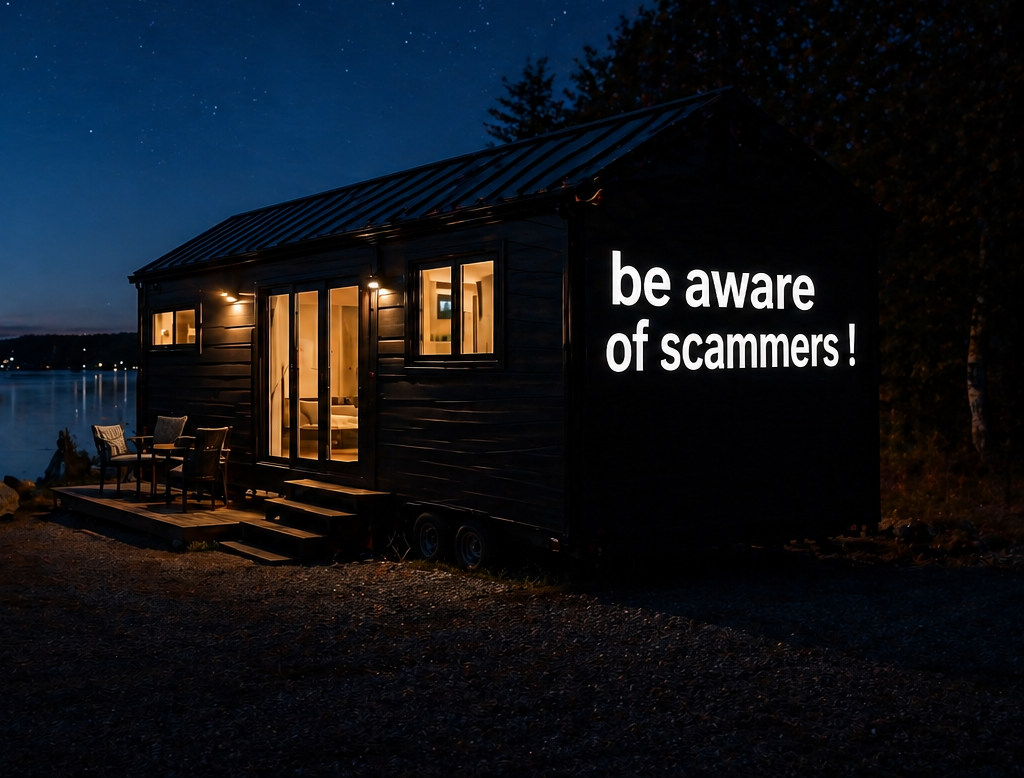
Tiny Home Scams Are Real and They Are Ruining Lives: What Every Buyer Needs to Know Before Spending a Single Dollar
It starts the same way almost every time. Someone finds a builder online, usually through Instagram or a Facebook group or a slick website with beautiful photos of finished homes. The prices look reasonable, the testimonials sound genuine, and the builder responds to messages quickly and professionally. A deposit is paid, sometimes a small one and sometimes a very large one. And then things start to go wrong in ways that range from mildly frustrating to financially catastrophic.
Tiny home scams have become one of the ugliest and most underreported problems in the alternative housing space. The victims are not naive or careless people. They are retirees trying to stretch their savings into a simpler life, young couples trying to get onto the property ladder without drowning in debt, remote workers chasing the freedom that a paid-off small home can provide, and veterans and people with disabilities seeking affordable housing solutions that work for their specific situations. These are people who did their homework, who asked questions, who thought they were being careful. And many of them lost tens of thousands of dollars anyway.
This guide exists because the tiny home industry, for all its genuine appeal and legitimate players, has a serious fraud problem that does not get discussed honestly often enough. If you are considering buying a tiny home, a park model home, or any form of alternative small dwelling, reading this before you spend any money could save you from becoming one of the thousands of people who wish they had known what they were walking into.
Why the Tiny Home Industry Is Such a Fertile Ground for Fraud
Understanding why scams are so common in this space helps you recognize the conditions that make fraud possible, which in turn helps you avoid them. There are several structural features of the tiny home market that make it unusually attractive to bad actors.
The industry is largely unregulated at the builder level. Unlike conventional home construction, where builders in most states must be licensed, bonded, and insured and where their license history is searchable in a public database, the tiny home builder space has very low barriers to entry. In many states, someone with minimal construction experience and zero financial backing can set up a website, start collecting deposits, and operate for months or even years before any regulatory body takes notice. By the time complaints accumulate to the point where authorities act, the money is often long gone and the builder has simply dissolved the company and started a new one under a different name.
The purchase process is inherently deposit-heavy. Because tiny homes are custom-built to order, buyers are expected to pay significant deposits upfront before construction begins. This is normal and legitimate in well-run operations, but it creates the perfect financial structure for fraud. A bad actor can collect deposits from dozens of buyers simultaneously, spend that money on personal expenses or other obligations, and then deliver nothing while stringing customers along with excuses about supply chain delays, material shortages, and staffing problems. Each excuse buys more time to collect more deposits from new victims.
The buyers themselves are often motivated by financial pressure, which can compromise the careful evaluation they would otherwise apply to a major purchase. Someone who needs affordable housing urgently, or who has just sold a conventional home and needs to find a place to live quickly, is more vulnerable to a builder who offers a compelling price and a reasonable-sounding timeline. The combination of emotional motivation and financial urgency is exactly what skilled fraudsters look for and exploit.
Finally, the tiny home community’s culture of enthusiasm and optimism, which is one of its genuinely appealing qualities, can work against buyers. Online groups celebrate wins and share beautiful finished homes constantly. Stories of things going wrong are often dismissed as the result of individual misunderstandings, or suppressed by community moderators who do not want negativity in the space, or buried under a flood of positive content that makes the bad experiences seem like rare exceptions when they are actually alarmingly common.
The Most Common Tiny Home Scam Patterns
Scams in the tiny home space tend to follow recognizable patterns. Knowing what these patterns look like is your first line of defense.
The Deposit Collector
This is the most prevalent pattern by a significant margin. A builder takes deposits from buyers, sometimes as little as 10 percent of the purchase price and sometimes as much as 50 percent or more, and then fails to deliver. The failure can be slow and gradual, with construction perpetually delayed and excuses constantly evolving, or it can be sudden, with the builder simply going silent and unreachable one day. Either way, the outcome is the same: the buyer is out their deposit and has nothing to show for it.
The deposit collector often has a real physical location, real photos of completed homes, and even real satisfied customers from earlier in their operation, before the financial problems or the outright fraud took hold. This makes them much harder to spot than the obvious internet-only scammers, because there is genuine evidence of legitimate activity mixed in with the fraudulent pattern.
The Phantom Builder
A step beyond the deposit collector, the phantom builder has no real operation at all. The photos on their website are stolen from legitimate builders, often from manufacturers in other states or countries. The testimonials are fabricated. The business address is a virtual office or a residential address that has no connection to any actual construction facility. These operations typically target buyers who are doing their shopping entirely online and never visit the builder in person before sending money.
Phantom builders often operate through social media platforms where account verification is minimal and professional-looking presentation is easy to fake with stolen images and copied language. They tend to offer prices that are slightly below market rate, just enough to feel like a deal without being so low that a careful buyer would be immediately suspicious.
The Quality Bait and Switch
This pattern involves a builder who actually delivers a home, but not the home the buyer agreed to purchase. The showroom model or the photos in the contract showed premium finishes, quality appliances, proper insulation, and solid construction. What arrives on the delivery truck is something built with the cheapest materials available, corners cut at every opportunity, and construction quality that would not pass even a basic inspection.
Buyers in this situation face an agonizing choice: accept the substandard home because they need somewhere to live and the cost of legal action seems prohibitive, or pursue the builder for breach of contract and spend months or years in a dispute while their money is tied up and they still have no home. Many builders who operate this way count on buyers choosing the first option.
The Unlicensed Contractor
This pattern is particularly common with on-site tiny home construction and custom builds placed on private land. A person representing themselves as a contractor takes a job to build a tiny home, collects payment in stages as construction progresses, and then either abandons the project partway through or delivers something structurally unsafe and legally unpermitted. Because they were never properly licensed, bonded, or insured, the buyer has very limited legal recourse and the structure they are left with may need to be entirely demolished and rebuilt by a legitimate contractor.
Unlicensed contractor fraud is particularly painful because the victim often does not realize the contractor was unlicensed until something goes badly wrong. The contractor seemed professional, showed up reliably early in the project, and produced visible progress that looked like construction was going well. By the time the problems become impossible to ignore, significant money has changed hands and the contractor has little to lose by walking away.
The Land and Home Package Scam
This variant targets buyers who are looking for the complete solution: land plus a tiny home already installed and ready to move into. The seller presents an appealing package at a price that seems competitive, takes a deposit or even full payment, and then delivers a situation where the land has title problems, the home is not actually permitted or legally placed, the utilities are not connected as promised, or some combination of all of the above. These packages are especially attractive to buyers from out of state who are planning a relocation and cannot easily visit the property in person before committing financially.
Red Flags That Should Make You Stop and Investigate
With those patterns in mind, here are the specific warning signs that should immediately slow you down and trigger a much deeper investigation before any money changes hands.
A builder who cannot show you a physical facility where construction actually happens is a serious red flag. Legitimate tiny home builders have shops, warehouses, or manufacturing facilities where work is being done. They welcome visits from serious buyers because they are proud of their operation and understand that seeing the facility builds buyer confidence. A builder who gives you reasons why a visit is not possible or inconvenient right now is a builder who may not have a real facility to show you.
Pressure to pay a large deposit quickly, particularly when combined with language about limited availability or a price that is only good for a short time, is a classic fraud setup. Legitimate builders who have real operations and real capacity do not need to pressure you into a rapid decision. They have enough business coming in that they can afford to let a careful buyer take the time they need. The urgency is manufactured to get your money before you have time to do proper due diligence.
A contract that is vague about delivery timelines, materials specifications, and consequences for non-performance is a document designed to protect the builder rather than the buyer. A legitimate contract for a tiny home purchase should specify exactly what materials will be used, what the home will look like in measurable detail, when it will be delivered, and what remedies are available to you if those commitments are not met. If the contract you are being asked to sign does not contain those elements, do not sign it.
A builder who has no verifiable reviews outside of their own website and social media channels deserves significant scrutiny. Reviews that appear only on platforms the builder controls are worthless as verification tools because they can be fabricated or curated. Look for reviews on third-party platforms like Google, the Better Business Bureau, and industry-specific forums where the builder cannot delete unfavorable comments. Look for reviews that include enough specific detail to sound genuine rather than the generic enthusiasm that appears in fabricated testimonials.
A price that is significantly below what comparable builders are charging is almost always a warning sign rather than a genuine bargain. Building a quality tiny home costs what it costs. If a builder is offering something at 30 or 40 percent below the market rate for similar quality, they are either building with materials and methods that will produce an inferior product, planning to deliver something other than what they promised, or operating an unsustainable business that will collapse before your home is finished. None of those options is acceptable.
A builder who cannot provide references from recent completed projects, with contact information for the actual buyers rather than just written testimonials on a website, has no real accountability trail. Call references. Not just one reference but several. Ask them specifically about whether the home was delivered on time, whether it matched what was promised in the contract, whether there were problems and how the builder handled them, and whether they would buy from the same builder again. A builder with genuinely satisfied customers will have references who answer these questions enthusiastically and in specific detail.
How to Protect Yourself Before Signing Anything
Protection against tiny home fraud is not complicated, but it requires discipline in applying a few fundamental practices even when you are excited about a particular builder or home design and your emotional engagement is pushing you toward moving quickly.
Verify the builder’s license status through your state’s contractor licensing database before you do anything else. This takes about five minutes and costs nothing. If the builder is not licensed in the state where construction will occur, or in the state where they are operating their manufacturing facility, walk away regardless of how appealing everything else about them seems. An unlicensed builder is an unacceptable risk full stop.
Verify that the builder carries current general liability insurance and workers compensation coverage. Ask for a certificate of insurance and call the insurance company to confirm that the policy is active. Fraudulent builders often carry policies they allow to lapse after obtaining the certificate, knowing that buyers rarely verify currency beyond the initial document.
Structure your payments to minimize your exposure at every stage. A legitimate builder will accept a reasonable deposit, typically in the 10 to 20 percent range, with subsequent payments tied to verifiable construction milestones rather than calendar dates. If a builder requires 50 percent or more upfront before construction begins, or structures payments in a way that you are nearly fully paid before the home is delivered, push back hard. Your financial risk should be proportional to the value of what has actually been built and is in your possession at each payment point.
Have an attorney review the contract before you sign it. This is especially important for purchases above a certain dollar threshold where the cost of legal review is clearly justified by the financial exposure. A real estate or construction attorney can identify contractual language that transfers unacceptable risk to you, spot missing provisions that would protect you in case of non-performance, and in some cases recognize the signatures or company names of known bad actors from previous disputes. The few hundred dollars this costs is the cheapest insurance available for a five or six figure purchase.
Visit the builder’s facility in person before committing to a purchase. Fly there if necessary. Drive there if you can. Walk through active builds, ask questions about the construction process, meet the people who will actually be building your home, and observe whether the operation has the organizational competence and physical capacity to deliver what they are promising. No amount of beautiful website photography or social media presence is a substitute for standing in the shop and seeing with your own eyes that a real operation exists.
Search specifically for complaints and negative reviews, not just positive ones. Search the builder’s name combined with words like “scam,” “complaint,” “fraud,” “lawsuit,” and “BBB.” Search their business address. Search the personal names of the principals if you can identify them. Fraudulent operators often have complaint histories that are visible to anyone who looks specifically for negative information rather than just accepting the curated positive presentation the builder wants you to see.
What to Do If You Have Already Been Victimized
If you are reading this after the fact, after a deposit has been paid and things have gone wrong, there are still steps you can take, and taking them quickly matters.
Document everything immediately. Every communication with the builder, every payment record, every version of the contract, every promise that was made verbally or in writing. The more complete your documentation, the stronger your position in any legal or regulatory action that follows.
File complaints with your state attorney general’s consumer protection division, the Federal Trade Commission, the Better Business Bureau, and the state contractor licensing board if the builder is licensed. These complaints serve two purposes: they create an official record that may support your own legal action, and they protect future buyers by adding to the public complaint history of the operator.
Consult with a construction or consumer protection attorney about your specific situation. Depending on your state’s laws, the amount involved, and the specific nature of the fraud, you may have options including small claims court for smaller amounts, civil litigation for larger ones, or participation in a class action if other buyers have been victimized by the same builder. Some attorneys in this space work on contingency for clear fraud cases, which means you can pursue justice without additional upfront cost.
Share your experience publicly and specifically in the tiny home communities where future buyers are doing their research. Detailed, factual accounts of fraud experiences are genuinely valuable public service. The fraudulent operators in this space count on victims staying quiet out of embarrassment or a belief that nothing can be done. Changing that dynamic, making it expected and normal for fraud victims to speak up publicly, is one of the most powerful tools the community has for protecting future buyers.
The Legitimate Industry Deserves to Be Protected Too
It is worth saying clearly that the tiny home industry has many genuinely excellent builders who are doing honest, high-quality work and who are as frustrated by the fraudulent actors in their space as the victimized buyers are. The scammers do not just hurt buyers. They damage the reputation of every legitimate builder, make potential customers more suspicious and harder to work with, and slow the broader adoption of alternative housing formats that could genuinely benefit a lot of people.
Supporting legitimate builders by doing business with them, leaving detailed honest reviews of good experiences, recommending them specifically by name in community discussions, and helping newer buyers understand how to distinguish quality operators from fraudulent ones is genuinely valuable work that serves the whole community.
The tiny home dream is real and it is achievable for a lot of people who pursue it with the right information and the right partners. The path there requires the same careful, skeptical, documentation-heavy approach you would apply to any other major financial decision. The difference is that in this industry, the cost of skipping that diligence is unusually high and the recovery options when things go wrong are unusually limited. Go in with your eyes open, ask hard questions, verify everything that can be verified, and find a builder whose track record and transparency give you genuine confidence before a single dollar changes hands. The home you end up with will be worth every bit of the extra care it took to get there.
Tiny home scams are surging on social media, particularly Facebook, using stolen photos, unrealistic pricing, and fake urgency to steal deposits. Protect yourself by verifying builders, demanding virtual tours, avoiding bank wire transfers, and using Google Reverse Image Search to find the original source of listing photos.
Common Tiny Home Scam Red Flags
Too Good to Be True Pricing: High-quality, new tiny homes for under are rarely legitimate.
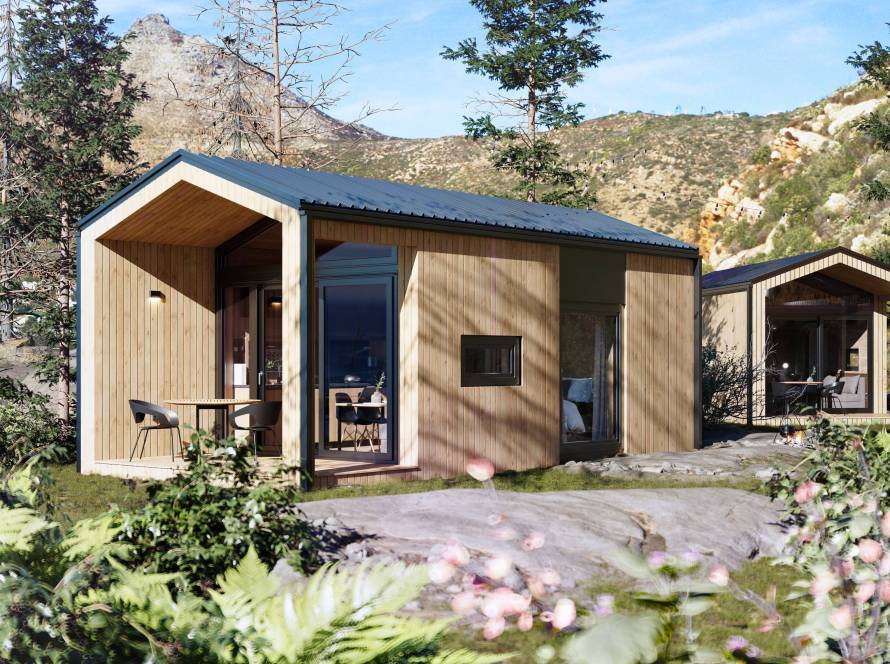
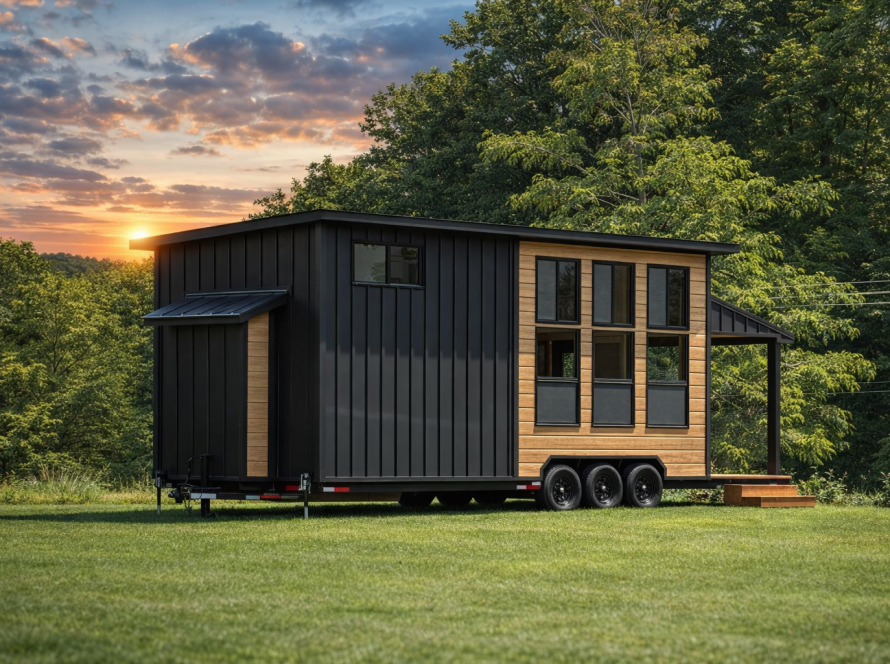
Stolen Photos: Scammers steal photos from reputable builders.
Pushy Sales Tactics: Pressuring for a quick “deposit” or “holding fee” on Facebook Messenger or Instagram without a contract.
Unusual Payment Methods: Requests for bank wire transfers, prepaid cards, cryptocurrency, or gift cards.
No Physical Presence: Inability to visit a manufacturing facility or see a home in person.
New/Suspicious Social Media Profiles: Accounts created recently with few followers, restricted comments, or no real-world company address.
How to Protect Yourself
Verify the Builder: Search for independent reviews on the Better Business Bureau or Tiny House Alliance USA.
Use Reverse Image Search: Search images on Google to see if they belong to a different, established builder.
Demand a Virtual/Physical Tour: Ask for a video call walking through the specific unit.
Check Contracts: Ensure a formal contract is provided before any money is transferred.
Use Secure Payments: Pay with credit cards or services that offer buyer protection, rather than non-traceable methods.
Validate ‘No Permit’ Claims: Be skeptical of “no permit needed” claims;, check local zoning regulations, as this varies by location.
If You Are Scammed
Report the profile and post to Facebook or Instagram.
File a complaint with the FBI Internet Crime Complaint Center (IC3).
Contact your bank immediately if you sent a wire transfer.