How Much Does a Park Model Tiny Home Cost?
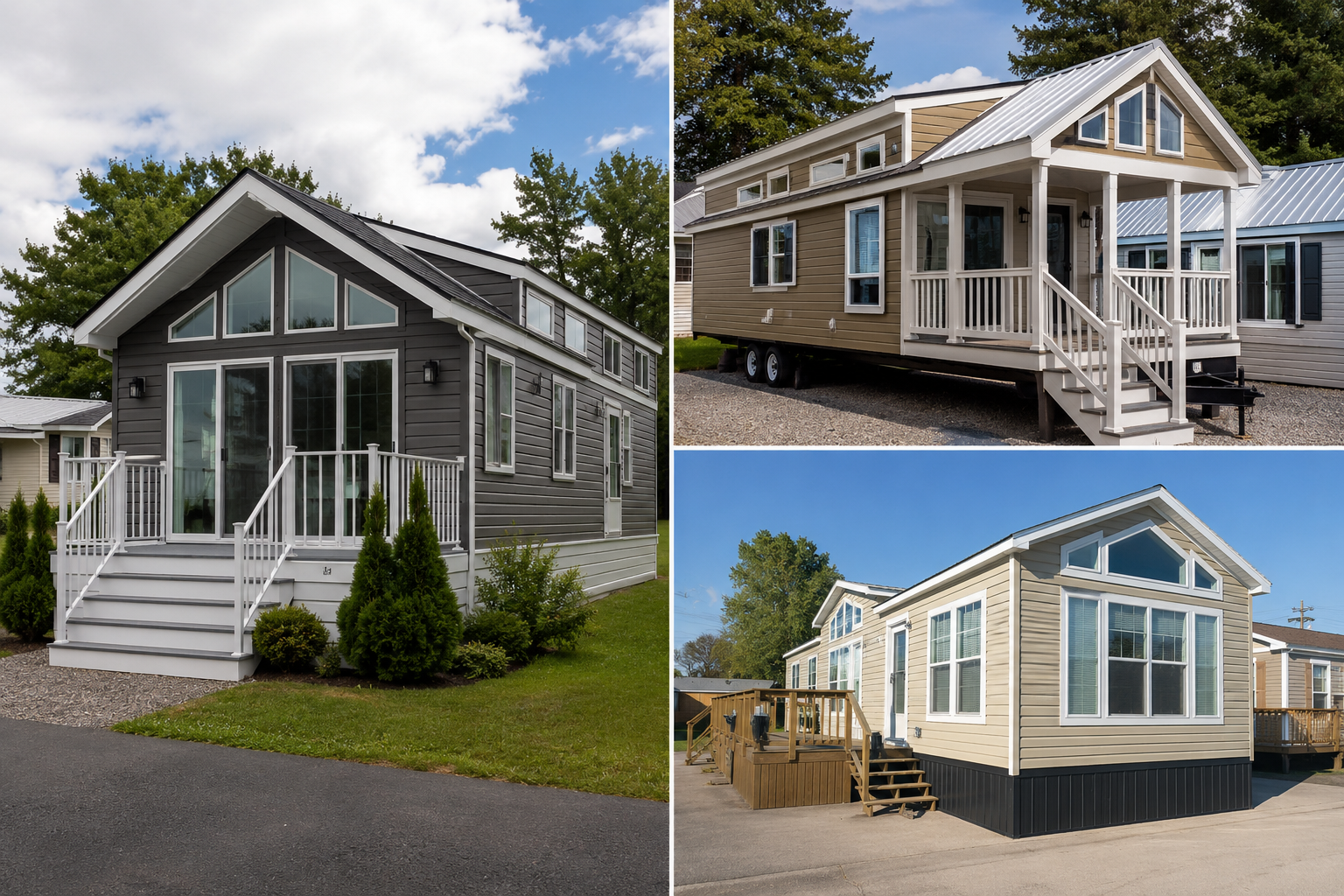
There’s a moment most people experience somewhere between their third cup of coffee and the third hour of scrolling through real estate listings — the quiet realization that the traditional path to homeownership feels more out of reach than ever. Mortgage payments that swallow half a paycheck. HOA fees. Property taxes. Maintenance costs no one warned them about. And then, almost by accident, they stumble onto something called a park model tiny home, and the whole conversation shifts.
Park models have quietly grown from a niche camping concept into a genuine housing alternative for retirees, remote workers, investors, and families looking to simplify. But the question everyone asks first is always the same: what does this actually cost?
The honest answer is that it depends on more variables than most people expect — but the numbers are almost always more encouraging than what you’d find in the traditional real estate market. This guide breaks it all down so you can plan with real clarity.
What Exactly Is a Park Model Home?
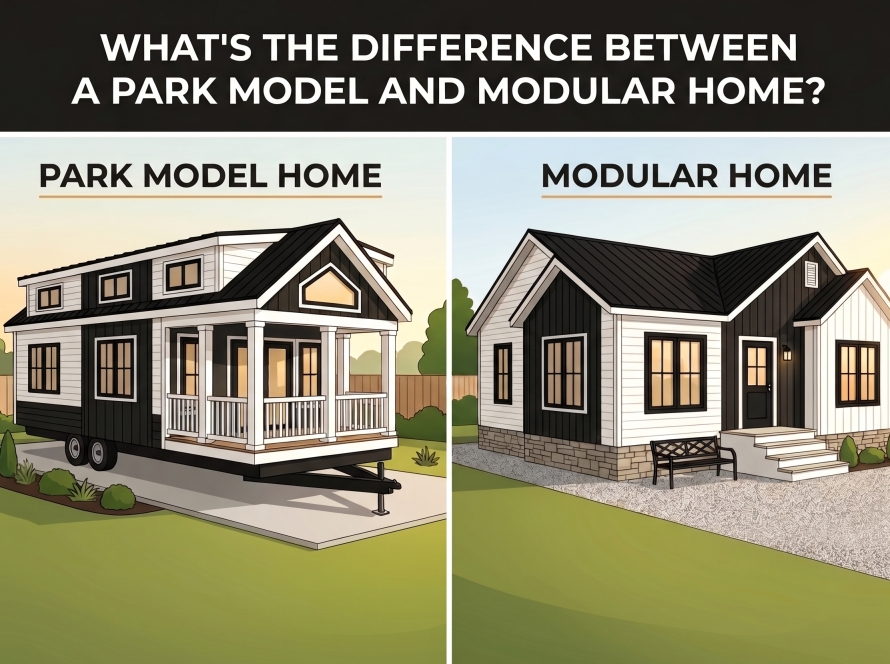
Before getting into numbers, it helps to understand what you’re actually buying. A park model home is a factory-built dwelling that falls under the ANSI A119.5 standard. It’s designed to be transportable but is typically set up on a semi-permanent or permanent basis at a destination of your choosing — a land lease community, a private lot you own, a campground, or a rural property.
The defining feature is size: park models max out at 400 square feet of primary living space, though most manufacturers, including EcoLife Homes, design them to feel significantly larger through smart layouts, high ceilings, and multi-use spaces. Lofts, storage walls, pull-out furniture, and covered porches are standard elements that change how 350 square feet actually lives.
They’re built indoors in a controlled factory environment, which means weather delays don’t affect quality and construction timelines are far more predictable than site-built homes. Once complete, they’re transported on a trailer and set up on-site within days rather than months.
The Base Price: What You’re Starting With
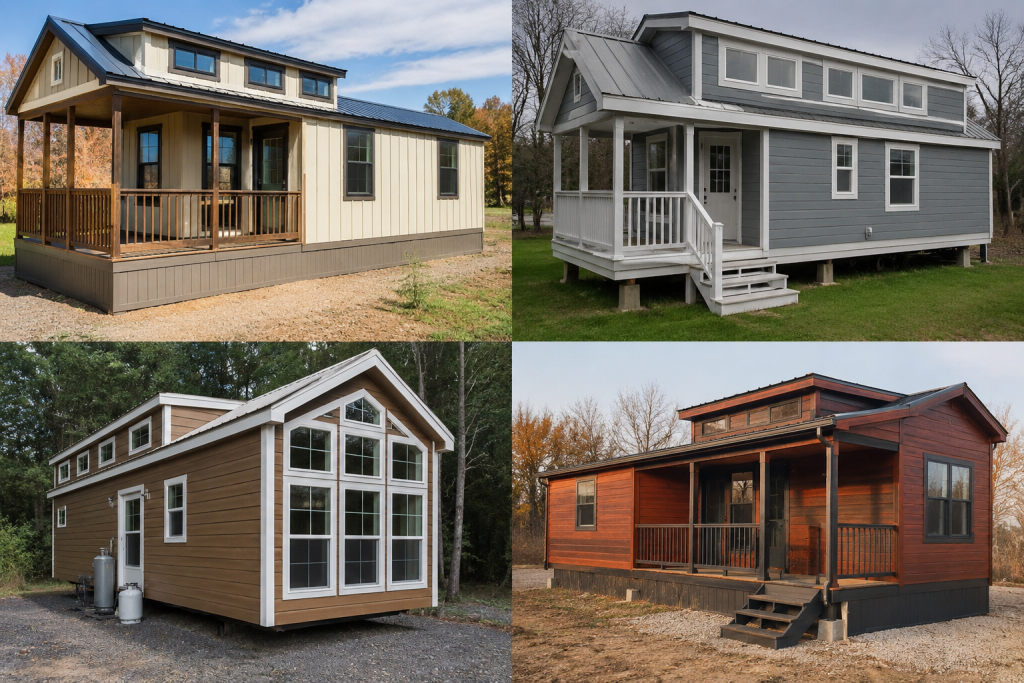
In 2026, the base purchase price for a new park model tiny home typically falls somewhere between $45,000 and $150,000. That’s a wide range, and it exists because the category includes everything from bare-bones starter units to fully appointed luxury cottages with custom cabinetry and high-end finishes.
To make sense of that range, it helps to think in tiers.
Entry-Level Park Models ($45,000 – $75,000)
These are functional, well-built units that prioritize essentials over aesthetics. You’ll typically get a full kitchen, a complete bathroom, a sleeping loft or dedicated bedroom, and basic mechanical systems. Finishes are practical rather than premium — laminate counters, vinyl plank flooring, standard appliances. For a buyer whose primary goal is affordable shelter or a low-overhead vacation property, this tier delivers excellent value.
Mid-Range Park Models ($75,000 – $115,000)
This is where most buyers land, and for good reason. Mid-range units offer meaningfully upgraded interiors — quartz or granite countertops, hardwood-style flooring, stainless appliances, better windows, improved insulation — without crossing into custom territory. EcoLife Homes’ most popular floor plans sit in this range, offering the kind of finish quality that doesn’t feel like compromise.
Premium and Custom Park Models ($115,000 – $150,000+)
At the top of the market, you’re looking at full custom builds with designer finishes, specialized layouts, energy-efficient systems, smart home features, and architectural details that blur the line between tiny home and luxury cottage. These units are increasingly popular as short-term rental investments, where presentation directly drives revenue.
What Drives the Price Up (or Down)
Several factors move a park model’s price significantly, and understanding them helps you budget realistically rather than getting caught off-guard later.
Floor Plan and Layout
A single-room studio with a sleeping loft costs less to build than a two-room plan with a dedicated bedroom, a bunk loft, and a separate living area. More walls, more structural complexity, more labor. If you need the space for two people or plan to host guests regularly, budget for it.
Finish Level
This is often the biggest variable. Upgrading from standard laminate to quartz countertops across a 200-square-foot kitchen adds a few thousand dollars. Choosing solid wood cabinetry over stock boxes does the same. None of these upgrades are frivolous if they matter to you — but they do add up fast if you’re checking every box on the upgrade list.
Energy Systems
Standard park models are built to connect to grid power and conventional water systems. If you’re adding solar panels, battery storage, a propane or tankless hot water system, or a composting toilet setup for off-grid capability, plan for an additional $8,000 to $25,000 depending on system size and setup.
Manufacturer and Build Quality
Not all manufacturers build to the same standard. The materials used in structural framing, the quality of the spray foam or batt insulation, the reputation of the HVAC and plumbing brands installed — these things matter enormously to long-term durability and operating cost. Choosing a manufacturer solely on price often costs more over a ten-year horizon than paying a fair price for quality from the start.
Delivery, Setup, and Site Preparation
The purchase price of the unit is your starting point, not your finish line. What happens after the factory is where a lot of buyers get surprised.
Transportation and Delivery
Depending on how far the unit needs to travel from the factory to your site, delivery costs typically range from $1,500 to $6,000 or more. Florida buyers working with Florida-based manufacturers like EcoLife Homes generally face shorter hauls and lower delivery costs than buyers bringing units from out of state.
Your park model needs somewhere to sit. If you’re placing it in an established land-lease community, the pad may already be prepared and utilities may already be stubbed in — a significant convenience. If you’re setting it up on raw land you own, you’ll need to budget for:
- Grading and clearing: $500 – $3,500
- Concrete pad, piers, or block foundation: $2,500 – $8,000
- Septic system (if no municipal connection): $5,000 – $15,000
- Well drilling (if needed): $5,000 – $12,000
- Electrical hookup and panel installation: $1,500 – $5,000
On a private rural lot, all-in site prep costs can realistically add $15,000 to $30,000 to your total project cost. This is not a hidden fee — it’s a real cost that responsible planning accounts for upfront.
Tie-Downs and Anchoring
Florida’s wind load requirements are serious, and rightfully so. Proper anchoring for hurricane-zone compliance is both a safety requirement and a standard expectation from most parks and insurers. Budget $1,500 to $3,500 for this depending on your site conditions.
Ongoing Costs: The Full Affordability Picture
One of the genuinely compelling arguments for park model living is what happens to your monthly expenses once you’re settled in. The comparison to traditional homeownership is striking.
Land Lease (Community Living)
If you choose a land-lease community — which many park model buyers do — you’ll pay a monthly lot rent that typically runs between $350 and $800 across Florida communities in 2026. This usually includes water, sewer, trash pickup, and access to community amenities. The trade-off is that you don’t own the land, but the financial predictability is difficult to argue with.
Property Taxes
Because park models are classified as personal property rather than real estate in most cases, they are often taxed at personal property rates rather than real estate rates. This typically translates to several hundred dollars per year rather than several thousand — a meaningful difference for long-term budgeting.
Insurance
Park model insurance has become increasingly accessible and competitively priced. A standard policy covering replacement value, liability, and contents typically runs $800 to $1,800 per year depending on location, value, and coverage selections. Florida buyers should pay close attention to wind and flood policy options given the state’s weather exposure.
Utilities
A well-insulated park model in Florida can realistically run $80 to $150 per month in electricity costs during summer months with efficient mini-split systems, and considerably less during the mild winter season. Water and sewer, if not included in lot rent, add another $40 to $80 monthly.
When you add it up, a park model owner with a land-lease arrangement can often sustain a complete monthly cost of housing — lot rent, insurance, utilities, and a maintenance reserve — for $800 to $1,400 per month. That’s a number that changes decisions.
Financing: How People Pay for Park Models
Cash purchases remain common in the park model market, particularly among buyers who are selling a larger home and allocating a portion of equity. But financing options have expanded meaningfully heading into 2026 and 2027.
Chattel Loans
A chattel loan is essentially a personal property loan, similar structurally to an auto loan, and it’s currently the most common financing vehicle for park models. Terms typically run 15 to 23 years with down payments of 10% to 20%. Interest rates have been variable in the current lending environment, but qualified buyers are finding rates in the 7% to 10% range depending on credit profile and lender.
Personal Loans
For buyers with strong credit who are purchasing at the lower end of the price range, an unsecured personal loan is sometimes the simplest path. Approval is faster, paperwork is lighter, and for a $55,000 purchase with a large down payment, the math can work cleanly.
Land-and-Home Loans
If you’re purchasing land and placing a park model on it simultaneously, some lenders will bundle both into a single loan product. This is increasingly available but varies significantly by lender and state.
RV Loans
Because many park models carry an RVIA certification, they can qualify for RV financing through credit unions and specialty lenders. RV loans often feature competitive rates and flexible terms for buyers who qualify.
Park Models as Investment Properties in Florida
A growing segment of the park model market in 2026 and 2027 is the short-term rental investment. Florida’s year-round tourism economy, its millions of annual visitors, and the continued strong performance of platforms like Airbnb and Vrbo have made park model cottages a genuinely interesting investment category.
A well-positioned park model in a vacation-friendly Florida area can realistically generate $25,000 to $60,000 in annual gross rental revenue depending on location, presentation, and marketing execution. When your total investment in unit, site prep, and furnishing sits at $100,000 to $130,000, those revenue numbers produce cash-on-cash returns that are difficult to find elsewhere in real estate.
The operating cost structure is also predictable. Maintenance on a factory-built unit with newer mechanical systems is modest. Cleaning and management fees are calculable. Property tax exposure is limited. For investors looking at 2027 projections, park model rentals continue to be one of the more accessible entry points into income-generating real estate.
The Honest Comparison: Park Model vs. Traditional Home
Let’s put the numbers side by side in plain terms.
The median home price in Florida in 2026 sits well above $400,000 in most markets. A 20% down payment on a $420,000 home is $84,000. The remaining $336,000 financed at 6.8% over 30 years produces a monthly principal and interest payment of approximately $2,190. Add property taxes, insurance, and maintenance and you’re looking at $2,800 to $3,400 per month in total housing cost.
Compare that to a mid-range park model at $95,000, purchased with a $20,000 down payment and financed over 20 years at 8.5% — a monthly payment of approximately $590. Add lot rent, insurance, and utilities and your all-in monthly housing cost is $1,100 to $1,500.
The gap is not subtle. For buyers who are willing to live smaller and live smarter, that gap represents financial freedom that compounds meaningfully over time.
What EcoLife Homes Builds and Why It Matters
EcoLife Homes designs and builds park model homes specifically for the Florida market and the broader Southeast, with every floor plan developed around the real-world conditions buyers encounter here — humidity management, hurricane-zone structural requirements, the way natural light moves through a south-facing space, and the kind of outdoor living integration that makes a small interior feel expansive.
The production process is transparent, the pricing is straightforward, and the floor plan options are designed to be genuinely customizable without turning customization into a mechanism for runaway costs. Whether you’re planning a primary residence, a second home on a Florida lot, or your first short-term rental property, the process begins with an honest conversation about what you need and what makes financial sense for your situation.
Planning Your Budget: A Practical Framework for 2026 – 2027 Buyers
If you’re beginning to plan seriously, here’s a grounded framework for thinking about your total budget.
Start with the unit price. Pick a realistic tier based on your priorities and non-negotiables. Then add 15% to 25% for site work, delivery, and setup — higher if you’re going onto raw land, lower if you’re moving into an established community. Add furnishing and initial supplies, typically $5,000 to $15,000 for a complete setup. Build a small contingency of $3,000 to $5,000 for the things that always come up.
A realistic all-in budget for a well-finished mid-range park model, fully set up and furnished, typically lands between $110,000 and $145,000 for community placement and $130,000 to $175,000 for private land placement. These are real numbers, not best-case estimates.
Against those numbers, the monthly cost structure is genuinely sustainable for a wide range of buyers — and the lifestyle, for those who are drawn to it, has a way of delivering more than the spreadsheet captures.
The Right Question to Start With
The cost question is important, but experienced park model buyers will tell you it’s not actually the first question worth asking. The first question is whether this way of living fits the life you’re trying to build. For a lot of people in 2026, the answer is turning out to be yes — and the financial case has never been easier to make.
If you’re ready to run the numbers for your specific situation, EcoLife Homes is here to help you work through them. Real floor plans. Real pricing. Real conversations about what’s possible.