Can You Move a Park Model Home?
It’s one of the first questions people ask when they start seriously researching park models — and it’s a reasonable one. You’re making a significant financial commitment to a home that sits on a trailer chassis. Naturally, you want to know what happens if your circumstances change. What if the community raises lot rent? What if you find a better location? What if you buy land of your own? Can you actually pick up and move, or does “transportable” just mean “it got here somehow and now it’s stuck”?
The honest answer is yes — a park model can be moved. But the fuller answer involves understanding what moving one actually requires, what it costs, and how often it makes practical sense. There’s a meaningful difference between a product that is technically movable and one that is designed for frequent relocation. Park models fall in a specific place on that spectrum, and buyers who understand that placement from the start make much better decisions.
Built to Travel — But Not Built to Wander
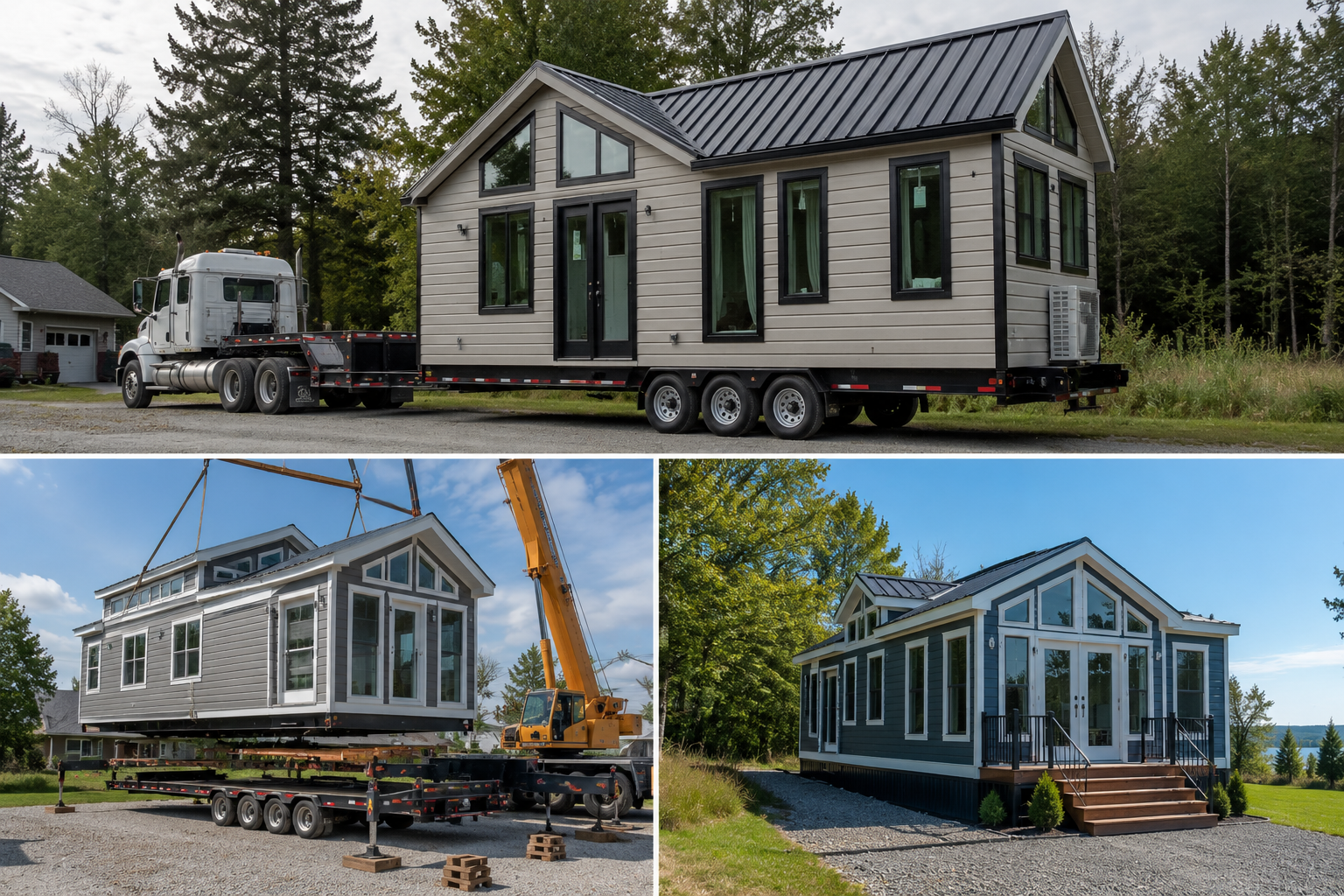
A park model home is constructed on a steel trailer chassis with a hitch and running gear. It leaves the factory on its own wheels, travels to its destination on public roads, and is then set up — leveled, anchored, connected to utilities, and typically skirted — at its site. The transportation hardware is part of the unit from the beginning.
What this means in practice is that the physical capability to move is built in. Unlike a manufactured home on a permanent foundation, which would require significant structural work and expense to relocate, a park model can be hitched to an appropriate tow vehicle, disconnected from utilities, and transported. The trailer it sits on is real, functional, and rated for the load.
What it doesn’t mean is that park models are designed for the kind of casual weekend relocation that travel trailers and fifth wheels are built for. The construction approach is fundamentally different. Park models use heavier framing, more substantial roofing systems, real interior finish materials, and cabinetry and fixtures that are installed with permanence in mind. All of that is what makes them feel like homes rather than camping units — and all of it means that moving one requires more planning and care than towing a recreational vehicle.
Think of it this way: a park model is designed to make one trip from the factory to its placement site, and then potentially move again once or twice over its lifetime when circumstances genuinely call for it. It is not a product you move seasonally or on a whim — but it is absolutely a product you can relocate when you need to.
What Moving a Park Model Actually Involves
The process of moving a park model home has several distinct phases, each with its own logistics and costs. Understanding them in advance removes the mystery and makes planning realistic.
Disconnection and Preparation
Before a park model can move, it has to be disconnected from everything that was connected during setup. That means utilities — electrical, water, sewer — as well as any skirting, porch structures, tie-down systems, and anchoring hardware. If the unit has a permanent or semi-permanent porch addition, that structure may need to be removed and either transported separately or left behind, depending on how it was built.
In Florida, hurricane tie-down systems are standard and required for compliance in most communities and counties. These anchoring systems are installed properly during setup and need to be properly removed before a move — not just unbolted carelessly. The process is straightforward for an experienced crew but shouldn’t be rushed.
Any additions that were made after the original installation — decks, screen enclosures, storage sheds, landscaping improvements — need to be addressed individually. Some travel with the unit, some don’t, and the cost of each depends on the specifics.
Permitting for Transport
Park models are oversize loads by road standards. A standard park model is 14 feet wide, which exceeds the 8.5-foot standard legal width on most roads. Moving one requires an oversize load permit from each state through which the unit will travel, and in many cases an escort vehicle is also required.
The permitting process is handled by the transportation company, and in most cases it’s a routine part of their work — they pull these permits regularly and know what each state requires. But it does add time to the planning process, particularly if you’re moving across multiple states. For Florida moves that stay within the state, the permitting is straightforward. Interstate moves require coordination with each state’s department of transportation along the route.
Some routes and timeframes are restricted. Many states prohibit oversize load movement at night, on weekends, or during certain holiday periods. Weather conditions can also affect move windows. A good transport company will walk you through all of this during the planning phase.
The Transport Itself
The actual towing of a park model home requires a commercial truck with the appropriate tow rating and rigging. This is not something a pickup truck can handle, and it’s not something to improvise. Specialized transport companies that work with manufactured housing and park models have the equipment, the licensing, and the experience to move these units safely.
The transport distance is the primary driver of cost. A short in-state move of 50 to 100 miles will cost meaningfully less than an interstate move of several hundred miles. We’ll cover specific cost ranges in a moment, but the key point is that professional transport is non-negotiable — the unit is too valuable and too large to handle any other way.
Site Preparation at the New Location
When a park model arrives at its new home, the destination site needs to be ready. That means a prepared pad — concrete, asphalt, or compacted gravel depending on the community or property — along with utility stubs at the right locations for hookup. If the unit is moving into an established land-lease community, the site is typically already configured for park model placement and the utility connections are in place.
If it’s moving to raw land, the site work needs to happen before the unit arrives. Grading, pad installation, utility connections, and anchoring points all have to be ready. Coordinating the timing of site prep and unit arrival is one of the more logistically demanding parts of a move, and planning a few weeks of cushion into the timeline is a sensible approach.
Reinstallation
Once the unit is on the new site, it needs to be leveled, anchored, reconnected to utilities, and inspected. In Florida, this reinstallation process typically involves a licensed contractor and may require a permit depending on the county and the nature of the site. The tie-down system needs to be reinstalled to the same hurricane compliance standards that applied at the previous location.
Any skirting, porch structures, or exterior additions then go back in place, and the unit is essentially move-in ready once the utilities are live and everything has been verified.
What It Costs to Move a Park Model
Cost is where the rubber meets the road for most buyers weighing whether a move makes sense, so let’s be specific.
For an in-state Florida move of 50 to 150 miles, total costs — including transport, permitting, disconnection, reconnection, and basic site preparation at the destination — typically run between $5,000 and $12,000. This assumes the destination site is already prepared and that no significant modifications to the unit or its additions are required.
For a longer move of 300 to 500 miles, perhaps from one part of Florida to another or into a neighboring state, total costs typically fall in the $10,000 to $20,000 range. The transport itself is the biggest variable at these distances, and fuel, driver time, and escort vehicle costs all scale with mileage.
Interstate moves of 500 miles or more — say, from Florida to a property in another southeastern state — can run $15,000 to $30,000 or more when all costs are accounted for. At those distances, the economics of moving versus selling and buying a comparable unit at the destination deserve careful analysis.
These are realistic, real-world ranges rather than best-case estimates. Buyers who plan against these numbers avoid the unpleasant surprise of a move that costs twice what they expected.
When Moving Makes Financial Sense
The question isn’t just whether you can move a park model — it’s whether moving it makes financial sense in a given situation. That calculation depends on several factors.
The value of the unit relative to the cost of moving it is the central variable. A mid-range park model worth $90,000 to $110,000 can absorb a $10,000 move cost and still make strong financial sense. A lower-value unit where the move cost represents a significant percentage of total value might push toward selling the unit at the current location and buying something comparable at the destination.
The condition of the unit matters too. A well-maintained park model from a quality manufacturer holds its structural integrity well and can handle a thoughtful relocation without any functional compromise. A unit that has been poorly maintained, has deferred repairs, or has structural issues from a previous move may not be a strong candidate for relocation — those issues will be exposed and potentially compounded by the stress of transport.
The destination matters enormously. Moving to a well-located Florida community where you’ve already confirmed lot availability and negotiated favorable terms is a different proposition than moving to an uncertain situation where the destination details are still being worked out. The clearer the destination picture, the more confident you can be in the decision to move.
Finally, the alternatives matter. Sometimes the calculus of moving versus renting the existing unit, selling it outright, or finding a different solution at the destination produces a better answer than relocation. Working through all of the options with honest numbers is always worth the time.
The Lot Rent Leverage That Changes the Calculation
One dynamic that’s worth understanding is how park model mobility affects your negotiating position in a land-lease community — even if you never actually move.
Community managers know that a park model owner can relocate if circumstances become sufficiently unfavorable. That knowledge creates a subtle but real check on how aggressively communities raise lot rent, how they handle disputes with residents, and how they approach major policy changes. The mobility of the product gives owners a degree of leverage that doesn’t exist for residents of apartment buildings or owners of site-built homes whose relocation cost is prohibitive.
This isn’t a reason to enter a community adversarially — most Florida land-lease communities are well-run operations with reasonable management. But it’s a genuine advantage that park model ownership carries, and it’s one of the reasons savvy buyers appreciate the product beyond its immediate cost advantages.
Florida-Specific Considerations for Park Model Moves
Florida buyers have a few specific factors to think through when considering relocation.
Hurricane tie-down compliance is the most important. Florida’s wind load requirements are serious, and the standard for compliant anchoring at a new site is no different from what was required at the original site. Any move within Florida needs to account for reinstallation to current wind zone standards — which may have been updated since the original installation if the unit is a few years old. A qualified Florida contractor who works with park models will handle this correctly, but it’s a question worth asking explicitly before you sign with a transport company.
Florida’s geography also creates some interesting move opportunities. The state has a large and varied landscape of land-lease communities, from Gulf Coast resort-style developments to interior rural communities with lower lot rent and a quieter character. As the park model market in Florida continues to mature through 2026 and 2027, new communities are opening and existing ones are evolving. The ability to relocate means you can take advantage of those changes in ways that traditional homeowners simply can’t.
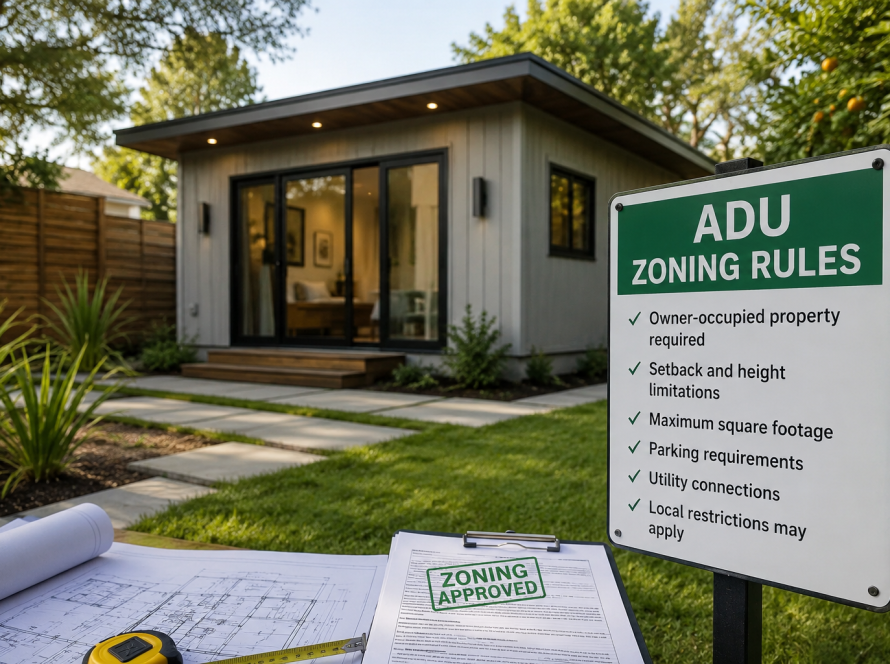
For buyers placing a unit on private land in Florida, zoning and permitting at the new site are worth investigating early. Some rural counties are very accommodating of park model placement on privately owned land. Others have restrictions that need to be navigated. Getting clarity on what the destination site requires before committing to the move avoids late-stage complications.
What Happens When You Move Into a Community That Has Rules About Older Units
This is a practical consideration that catches some buyers off guard. Many established Florida land-lease communities have age restrictions on the units they accept — they won’t take units that are more than a certain number of years old, typically somewhere between 10 and 15 years depending on the community.
These policies exist because communities want to maintain the visual quality and infrastructure compatibility of their property. A 15-year-old unit that has been well-maintained may still be refused admission based on age alone, regardless of its condition. If relocation is something you’re planning for the future, it’s worth understanding the age policies of likely destination communities now rather than discovering a closed door later.
The implication for buyers in 2026 and 2027 is that moving a newer unit — one purchased within the last few years — gives you a longer window of community eligibility than buying a used unit that’s already partway through its community-acceptable lifespan. Timing matters.
Park Model Relocation vs. Other Housing Types
To put park model mobility in proper context, it’s worth comparing it briefly to the alternatives.
A site-built home cannot be moved in any practical sense. Relocation requires either demolition or the extreme expense of a house-moving project that typically costs more than the home is worth. The homeowner’s options when they want to leave are sell or rent — full stop.
A manufactured home on a permanent foundation is technically movable but practically very difficult and expensive to relocate. Many manufactured homes lose their HUD certification if they’re moved after initial installation. The process is costly enough that most owners simply sell rather than move.
A travel trailer or fifth wheel is highly mobile — you can move it yourself on a weekend — but it isn’t designed as a primary residence. The construction quality, insulation, interior finish, and livability don’t compare to a park model.
A park model sits in an interesting middle ground: genuinely movable when circumstances call for it, with professional transport available and reasonably priced for in-state moves, but designed for the quality and permanence of residential living rather than the convenience of recreational mobility. That position makes it uniquely flexible in the housing landscape.
The EcoLife Homes Perspective on Mobility
At EcoLife Homes, we build every park model with the full arc of ownership in mind — not just the day of delivery, but what happens five, ten, or fifteen years down the road. That means solid structural framing, quality exterior cladding and roofing systems, and interior builds that hold up over time regardless of whether the unit ever moves again.
A park model that was built right will move well. One that was built to a price point rather than a standard will show its weaknesses under the stress of transport. It’s one of the reasons we don’t cut corners on structural elements that buyers rarely see — the frame, the blocking, the connection points. When the day comes that a move makes sense, those details matter.
Making the Decision With Clear Eyes
The ability to move a park model home is a genuine feature of the product — not a marketing promise, but a real capability that adds flexibility to your long-term housing strategy. The key is approaching that capability with realistic expectations about what a move involves, what it costs, and when it makes sense.
For buyers in Florida in 2026 and 2027, the combination of a maturing park model community landscape, a wide range of placement options, and a clear transport industry that handles these moves routinely means that relocation is a real option when life calls for it. You’re not trapped. You’re not locked in. You have choices — and that’s exactly how good housing should work.
If you’re thinking through a park model purchase and want to talk through the placement and relocation dynamics for your specific situation, EcoLife Homes is happy to have that conversation.