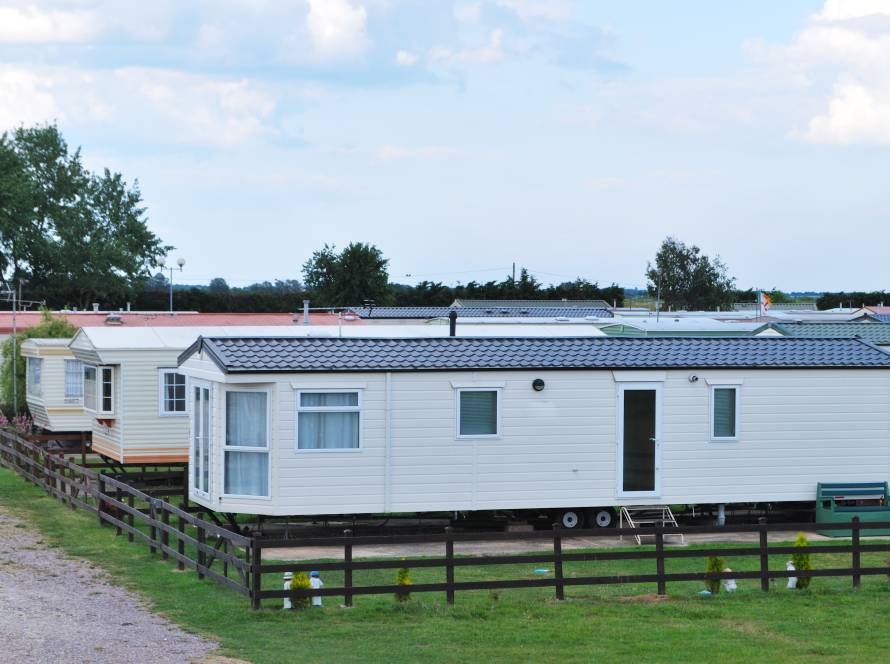
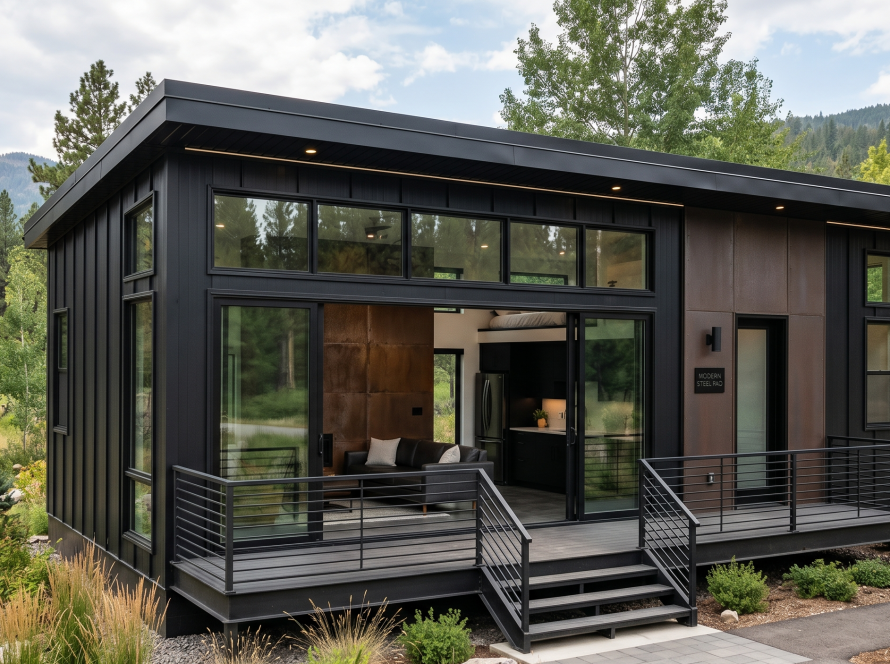
Storm Resistant Park Model Houses
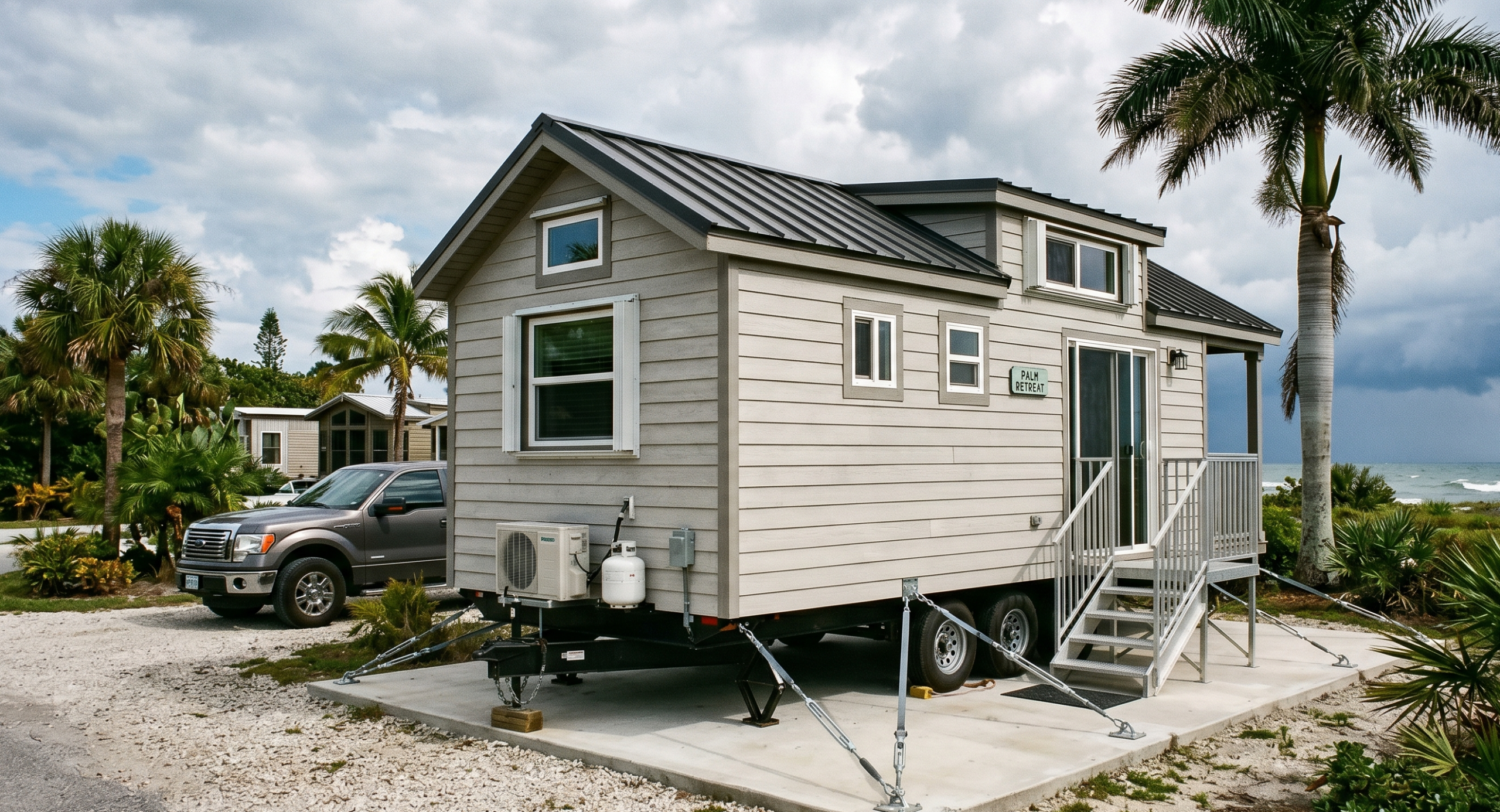
Why Florida Homeowners Are Finally Building Smarter
There is a moment every Florida homeowner knows well. The weather app flashes a red warning. The wind picks up in a way that feels different from a regular afternoon storm. You start walking through the house in your head, wondering what is going to hold and what is not. For decades, the answer to that quiet anxiety was to build bigger, reinforce more, and spend more money hoping the structure underneath you was actually as solid as you needed it to be.
But something has been shifting in the way people think about housing in storm prone states like Florida. The conversation is no longer just about size or square footage. It is about engineering. It is about materials that were chosen not for what looks good on a brochure, but for what actually survives when the sky decides to test everything you have built.
Storm resistant park model houses have entered that conversation in a serious way, and for good reason. These are not your grandfather’s trailer homes. They are not flimsy structures that get dragged away in a category three. They are precision engineered, thoughtfully designed residences that are changing what it means to live small and live safely in one of the most weather challenged states in the country.
What Makes a Park Model Home “Storm Resistant” in the First Place
The term gets used loosely, so it is worth being specific about what actually separates a storm resistant park model from a standard one. It comes down to three things: the frame, the connections, and the envelope.
The frame is your foundation of protection. Traditional park model homes have historically used wood framing, which is economical and familiar but carries real vulnerabilities in Florida’s environment. Wood absorbs moisture. It swells, warps, and over time becomes a host for mold and rot. More critically, wood framing under sustained wind pressure can rack and shift in ways that compromise the entire structure. When you replace that frame with heavy gauge galvanized steel, you change the equation entirely. Steel does not absorb water. It does not warp. It does not give termites anything to chew on. And under the lateral forces that a major hurricane generates, it holds its shape in ways that wood simply cannot match.
The connections matter just as much as the material. Every structural engineer who has walked through the aftermath of a hurricane will tell you the same thing: most buildings do not fail in the middle. They fail at the joints. The roof pulls away from the walls. The walls separate from the foundation. A properly engineered storm resistant park model addresses this at every connection point, using hurricane rated anchors, continuous load path design, and fastening systems that meet or exceed the most demanding wind codes in the country, which, not coincidentally, happen to be right here in Florida.
The envelope refers to everything that wraps the outside of the home, your roofing material, your exterior cladding, your windows and doors. In a true storm resistant build, none of these are afterthoughts. Impact resistant windows, reinforced door frames, and roofing systems designed to handle not just wind but wind driven rain are standard features, not upgrades you pay extra for at the end.
Why Florida Is the Right Market at Exactly the Right Time
Florida has always been a challenging place to own property. The combination of hurricane season, salt air corrosion, relentless humidity, and a termite population that behaves like it has a personal grudge against wood structures makes durability a survival issue, not just a preference. But several things have converged recently that make storm resistant park model homes particularly relevant right now.
First, insurance. Anyone who has tried to get or renew homeowners insurance in Florida over the last few years has experienced the market in a way that was not imaginable a decade ago. Carriers are leaving the state. Premiums for homes that cannot demonstrate adequate wind mitigation are becoming financially brutal. A home built to Miami Dade wind codes with a steel frame and documented impact protection is not just safer. It is insurable, and insurable at rates that make the initial investment look smart very quickly.
Second, the glamping and short term rental economy has exploded in ways that make storm resistant park model homes a genuine investment vehicle. Resort developers across Florida are no longer thinking about park model homes as temporary or disposable assets. They want structures that will still look sharp and function perfectly after ten seasons of Florida weather. A steel framed, storm engineered park model fits that need in a way that a conventionally built unit does not.
Third, the workforce and affordable housing conversation in Florida has gotten very real. Municipalities and developers are actively looking for solutions that can be deployed faster than traditional construction, hold up to Florida conditions, and keep long term maintenance costs low. Storm resistant park model homes check every one of those boxes.
All Steel Construction: The Honest Case for It
Steel tends to come up in conversations about park model construction and get dismissed with a wave of the hand because it sounds expensive. And yes, a fully steel framed park model home does cost more upfront than a wood framed alternative. That is true and worth acknowledging honestly.
But the math looks different when you extend the timeline. A wood framed park model in a coastal Florida environment is going to face ongoing battles with moisture intrusion, termite treatment, and structural maintenance. The average wood framed home in high humidity Florida environments requires meaningful maintenance intervention within five to seven years. A steel framed home essentially does not have that problem. The steel is galvanized or coated specifically to resist corrosion, and once installed, it is inert to the biological and moisture based attacks that eat wood frames alive.
When you factor in lower insurance premiums, dramatically reduced maintenance costs, and a longer useful life before major structural work is needed, the total cost of ownership calculation tips firmly in favor of steel. This is not a sales pitch. It is the kind of analysis that anyone who has owned property in Florida for more than a decade tends to arrive at on their own.
There is also a strength to weight ratio argument that matters specifically in the park model context. Steel delivers exceptional structural rigidity at weights that are still manageable for transport and installation. You get a frame that fights hurricanes the way a well planted tree fights wind, not by being rigid and brittle, but by being strong and connected through every joint.
What Florida Wind Codes Actually Require and Why That Matters to You
Florida has some of the most demanding building codes in the United States, and that is not an accident. After Hurricane Andrew devastated South Florida in 1992 and exposed catastrophic failures in how homes were built, the state went through a serious reckoning. The Florida Building Code that emerged from that process, and the Miami Dade County product approval system that accompanied it, became the national benchmark for wind resistant construction.
When a park model home is engineered and built to meet those codes, it is not a checkbox exercise. It is a genuine commitment to building something that has been tested against the kinds of forces that Florida actually produces. Miami Dade wind code compliance means the structure has been tested to withstand winds that would leave most conventionally built homes in serious trouble.
For buyers and investors, this matters in very practical terms. Lenders look at code compliance when evaluating the asset. Insurance carriers look at it when setting premiums. County inspectors look at it when approving installation. And when you eventually want to sell or rent the property, code compliance is a feature that shows up in real dollars.
A park model home that arrives at a site with proper documentation of its wind rating and engineering certification is a fundamentally different asset than one that does not. The paper trail is part of the value.
The Real Life Experience of Living in a Storm Resistant Park Model
One thing that does not get talked about enough in the technical conversations about storm resistant construction is what it actually feels like to live in one of these homes during a weather event. The answer, reported consistently by owners across Florida, is something that is genuinely surprising the first time you experience it: it feels solid.
Not just solid in the abstract sense, but physically, perceptibly solid in a way that well built permanent structures feel solid. The walls do not flex the way thin wood framed walls do under wind pressure. The noise profile during a storm is different. There is less of the groaning and creaking that makes weathering a storm in a less engineered structure an anxious experience. Owners of steel framed park model homes in Florida tend to describe a qualitatively different relationship with storm season, less bracing for the worst and more confidence that what they have built was made for exactly this.
That is not a small thing. Housing stress during hurricane season is real, and the psychological cost of worrying about whether your home is going to make it through the next storm is something that affects quality of life in ways that are hard to quantify but very easy to feel.
Choosing the Right Builder: What to Actually Look For
The park model market in Florida has grown quickly enough that there are real differences in quality among manufacturers, and those differences matter enormously when you are talking about a structure you are relying on to survive Category 4 conditions.
The first thing to look for is documented wind rating. Not claimed wind resistance, but actual tested and certified performance data. A legitimate storm resistant park model builder will have third party engineering certifications and product approvals that you can verify. If that documentation is not readily available, that tells you something important.
The second thing to evaluate is the frame specification. Not all steel frames are equal. The gauge of the steel, the quality of the galvanization, the engineering of the connection points, these are technical details that distinguish a genuinely storm resistant product from one that uses steel as a marketing term without the engineering behind it.
Third, look at the track record. Florida is a market that produces real world data about what survives and what does not. Manufacturers and builders who have been operating here through multiple hurricane seasons have a record you can look at. Homes that have come through storms intact are exactly the reference points you want when you are making this kind of investment.
Finally, pay attention to how a builder talks about the build process. The best manufacturers will walk you through the engineering decisions, explain why specific connections and materials were chosen, and welcome your questions about code compliance. If the conversation feels evasive or vague when you get into technical specifics, that is a meaningful signal.
Storm Resistant Park Model Homes for Investment: The Numbers Make Sense
For real estate investors in Florida, storm resistant park model homes represent a genuinely interesting asset class for reasons that go beyond durability.
The acquisition cost is lower than traditional real estate, which means the barrier to entry is accessible for investors who want Florida exposure without the capital intensity of single family home purchases or multifamily development. A well placed park model home in a glamping resort, RV park, or workforce housing community can generate rental income that produces strong returns relative to the acquisition cost.
The storm resistant engineering adds a layer of protection to the investment itself. A conventional park model that takes serious damage in a hurricane is not just a repair cost. It is an interruption to rental income, a potential insurance dispute, and a significant operational headache. A storm resistant unit that weathers the same event and is back in service within days is a completely different investment experience.
There is also a positioning advantage in the rental market. Guests and tenants in Florida are not oblivious to hurricane risk. A property that can honestly market itself as built to storm resistant standards and engineered for Florida conditions is a differentiated product in a competitive rental environment. That differentiation shows up in occupancy rates and the ability to hold pricing.
The Bigger Picture: Building Differently for a State That Demands It
Florida is asking its housing stock to do things that the traditional construction industry was not always designed to deliver. The combination of climate pressures, insurance market realities, and the growing demand for alternative and affordable housing formats has created a moment where building smarter is not idealism. It is practical necessity.
Storm resistant park model homes, particularly those built on all steel frames and engineered to Florida wind codes, represent one of the most coherent answers to that necessity available in the market today. They are not a compromise. They are not a consolation prize for people who could not afford a traditional home. They are a deliberately designed, purpose built housing solution for one of the most demanding environments in the country.
For Florida residents, resort developers, workforce housing advocates, and real estate investors, the case for storm resistant park model construction is only getting stronger as the conditions that make it necessary become more familiar parts of everyday Florida life.
Building small does not have to mean building vulnerable. In fact, when it is done right, building small in Florida means building exactly as tough as this state requires you to be.