Park model homes: affordable, flexible living explained
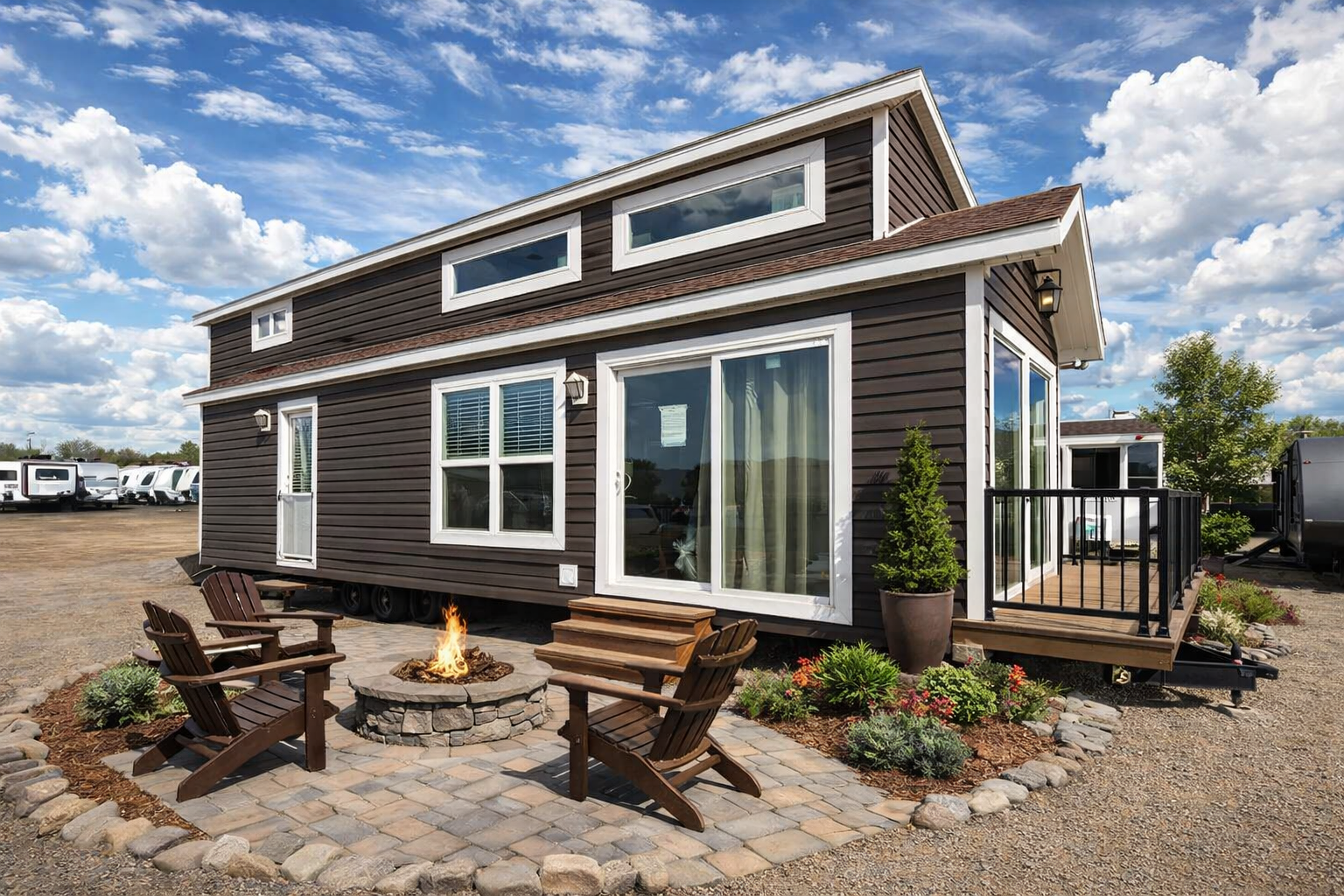
A park model home is a prefabricated RV-classified dwelling under 400 sq ft built on a steel chassis. They cost less and are more flexible but face zoning and financing limitations. Buyers should verify certifications, zoning, and total costs before purchasing.
Many people assume park model homes are just shrunken versions of mobile homes or a trendy spin on the tiny house movement. That assumption misses the mark entirely. Park model homes occupy a distinct legal and physical category, with their own building standards, classification rules, and lifestyle advantages. Whether you’re a retiree looking to downsize, a snowbird chasing warm weather, or someone ready to escape a high mortgage, understanding exactly what a park model home is can open doors you didn’t know existed. This guide breaks down the definition, comparisons, benefits, limitations, and buying steps so you can make a confident, informed decision.
Table of Contents
- What is a park model home? Definition, features, and classification
- Park model homes vs. tiny homes and manufactured homes
- Benefits and limitations of park model homes for buyers
- Key considerations when buying a park model home
- A fresh perspective: Why choosing a park model home could rethink the way you live
- Find your perfect park model home with Ecolife Homes
- Frequently asked questions
Key Takeaways
| Point | Details |
|---|---|
| Park model home definition | A park model home is a prefabricated, RV-classified dwelling under 400 sq ft built on a steel chassis. |
| Major cost savings | Park model homes are usually 30-50% less expensive than traditional houses yet offer similar amenities. |
| Great for flexible living | Park model homes suit seasonal, recreational, or eco-friendly lifestyles but may face zoning and full-time limitations. |
| Buyer checklist | Before buying, verify certifications, budget for setup, and understand zoning restrictions. |
What is a park model home? Definition, features, and classification
A park model home is a prefabricated dwelling under 400 sq ft, built on a permanent steel chassis and legally classified as a recreational vehicle (RV). That last part surprises most people. Despite looking and feeling like a small house, it falls under RV regulations rather than traditional residential building codes. This classification shapes everything from where you can place it to how you finance it.
The steel chassis is one of the most important structural elements. It gives the home its mobility and allows it to be transported from the factory to your chosen site. Once placed, most park model homes are anchored securely and connected to utilities, functioning very much like a permanent residence. The RVIA park model certification ensures that units meet federal safety and construction standards, which is a key quality marker buyers should look for.
Here’s a quick overview of standard park model home specifications:
| Feature | Specification |
|---|---|
| Maximum floor area | 400 sq ft (excluding lofts) |
| Structure | Built on a permanent steel chassis |
| Classification | Recreational vehicle (RV) |
| Building standard | ANSI A119.5 or RVIA certified |
| Mobility | Transportable but typically semi-permanent |
| Utility connections | Water, sewer, electric hookups |
Park model homes differ meaningfully from manufactured homes, which must comply with the HUD manufactured home code and are built for permanent residential use. Park models, by contrast, are designed with recreational living in mind, even if many owners use them as primary residences.
Key features that define a park model home include:
- Size: Capped at 400 square feet of main living space
- Chassis: Permanent steel frame for transport and stability
- Certification: ANSI A119.5 or RVIA standards
- Utilities: Designed for hookup to standard campground or residential utility systems
- Materials: Often include moisture-resistant materials suited for varied climates
- Mobility: Can be relocated, though most owners keep them in one place long-term
The park model advantages become clearer once you understand this foundation. These homes are engineered for durability and comfort within a compact footprint, making them a practical option for a wide range of buyers.
Park model homes vs. tiny homes and manufactured homes
Once you understand park model basics, a clear comparison with similar options helps clarify why they stand out, or when another type might be a better fit for your situation.
All three housing types share one obvious trait: they’re smaller and more affordable than traditional site-built homes. But the differences in legal classification, building codes, and practical use are significant. Unlike HUD-code manufactured homes, park models are RV-classified and prioritize recreational use, which affects zoning eligibility and financing options.
Here’s a side-by-side comparison to make the distinctions concrete:
| Feature | Park model home | Tiny home (on wheels) | Manufactured home |
|---|---|---|---|
| Max size | 400 sq ft | Varies (typically under 400 sq ft) | No strict max |
| Building code | ANSI A119.5 / RVIA | IRC or none | HUD code |
| Classification | RV | RV or residential | Residential |
| Mobility | Semi-permanent | High | Low |
| Typical cost | $40,000 to $120,000 | $30,000 to $150,000 | $80,000 to $200,000 |
| Zoning eligibility | RV parks, some residential | Varies widely | Residential zones |
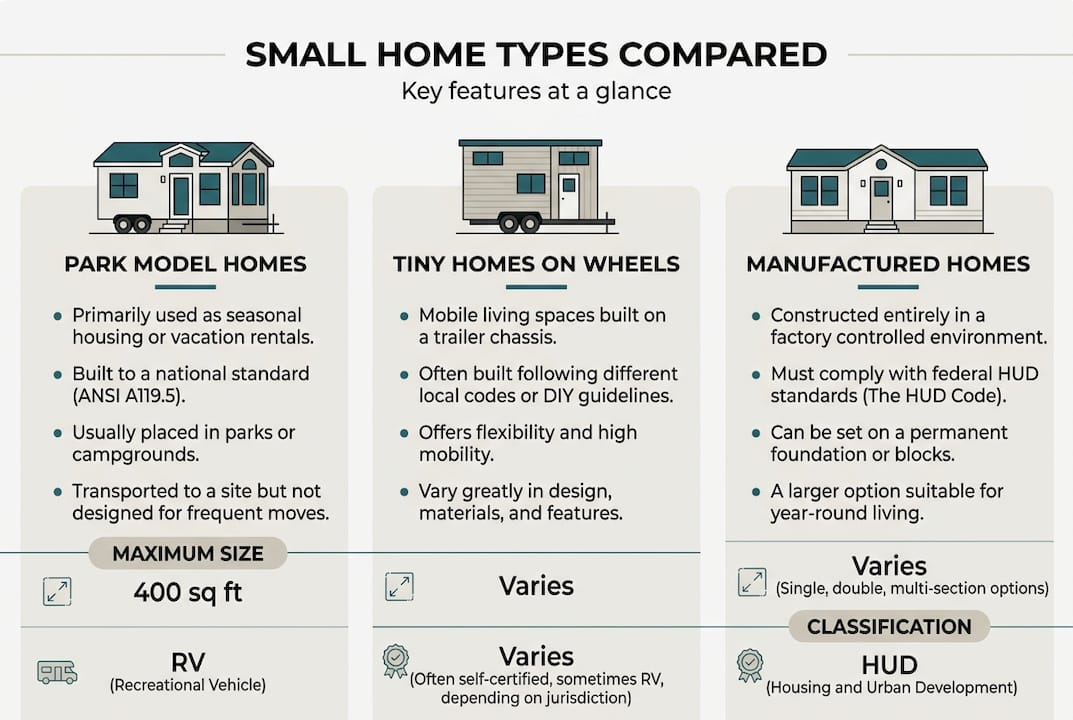
For buyers focused on flexibility and regulations, understanding key park model features helps set realistic expectations. Tiny homes on wheels share the RV classification but lack the standardized building requirements that park models follow, which can create complications with insurance and placement. Manufactured homes offer more space and residential zoning access but come with higher price tags and less mobility.
Pros and cons based on classification and lifestyle fit:
- Park model pros: Standardized certification, lower cost, semi-permanent setup, suitable for RV parks and some residential lots
- Park model cons: Zoning restrictions limit placement, RV classification complicates traditional mortgage financing
- Tiny home pros: Maximum design flexibility, strong community culture, wide customization range
- Tiny home cons: Inconsistent regulations, harder to insure, placement challenges
- Manufactured home pros: More living space, residential zoning access, traditional financing available
- Manufactured home cons: Higher cost, very limited mobility, stigma in some communities
Why does classification matter so much? Zoning laws determine where you can legally place your home, and lenders use classification to decide loan eligibility. Understanding zoning for park models before you buy can save you from costly surprises. Similarly, if you’re comparing tiny vs traditional homes, the regulatory landscape is just as important as the price tag.
Benefits and limitations of park model homes for buyers
Now let’s look at how these features affect real buyers. What do you actually gain, and what challenges might arise when choosing a park model home?
The financial case is compelling. Park model homes cost 30-50% less than traditional homes, require less maintenance, and tend to be more energy efficient due to their smaller footprint. Setup is also faster. Most units arrive ready to connect to utilities within days rather than months.
Park model homes are typically 30 to 50% cheaper than traditional homes, with lower maintenance costs and strong energy efficiency, though buyers must navigate space constraints and zoning restrictions.
For buyers interested in reducing their environmental footprint, eco-friendly model homes built with sustainable materials and energy-efficient systems make this an even stronger choice. Smaller spaces naturally use less energy for heating and cooling, and many builders now offer solar-ready or off-grid configurations.
Key pros and cons at a glance:
- Pro: Significantly lower purchase price compared to site-built homes
- Pro: Faster construction and delivery timelines
- Pro: Lower utility bills due to compact size
- Pro: Flexible placement in RV parks, resorts, or private land (where zoning allows)
- Pro: Easier to maintain and clean
- Con: 400 sq ft limit may feel restrictive for families
- Con: RV classification limits traditional mortgage options
- Con: Zoning laws vary widely by county and state
- Con: Resale market is smaller than traditional homes
- Con: Some communities do not permit full-time residency
Understanding the full park model cost picture is essential before committing. The base price of the unit is just one part of the equation. Delivery, site preparation, utility connections, and permits all add to the total. Reviewing cost factors from real projects gives you a more accurate budget baseline.
Pro Tip: Always prioritize ANSI-certified units when shopping. Certification confirms the home meets minimum safety and construction standards, which protects your investment and simplifies the insurance process.
Key considerations when buying a park model home
Before you make an offer or sign a contract, here’s how to prepare and what to look for to make the best investment in your park model home.
Buying a park model home involves more steps than a typical purchase. You need to think about where it will go, how it will get there, and what local rules apply. Prioritizing ANSI-certified units and budgeting 1.5x the base price for full setup costs is one of the smartest moves a first-time buyer can make.
Here’s a numbered checklist to guide your buying process:
- Confirm zoning eligibility at your intended placement site before anything else
- Verify certifications by asking for ANSI or RVIA documentation from the manufacturer
- Calculate total costs including delivery, site prep, foundation or anchoring, and utility hookups
- Review local permit requirements since rules vary significantly by county and state
- Assess site access to ensure delivery trucks can reach and position the unit safely
- Explore customization options for layout, materials, off-grid systems, or eco-friendly upgrades
- Check financing options because RV loans, personal loans, and some specialty lenders serve this market
- Ask about warranty coverage for both the structure and any installed appliances
- Understand placement rules at RV parks or communities, including seasonal vs. year-round residency
- Research the builder’s track record by reading reviews, visiting completed projects, and asking for references
Customization is one of the strongest selling points of park model homes. You can configure layouts for off-grid living, request moisture-resistant materials for humid climates, or add solar panels and rainwater collection systems. Reviewing common buyer questions can also surface issues you hadn’t considered, from insurance requirements to HOA restrictions.
Pro Tip: Budget 1.5 times the sticker price of the unit to cover all move-in ready costs. A $60,000 park model can easily require $90,000 total once site work, permits, delivery, and utility connections are factored in.
Taking these steps seriously before signing anything protects your investment and eliminates most of the surprises that catch first-time buyers off guard.
A fresh perspective: Why choosing a park model home could rethink the way you live
Conventional thinking about homeownership is deeply tied to square footage. Bigger is assumed to be better, more comfortable, more successful. But after working with buyers across a wide range of lifestyles and budgets, we’ve seen a consistent pattern: the people who thrive in park model homes aren’t just saving money. They’re making a deliberate choice about how they want to spend their time and energy.
A smaller home forces clarity. You stop accumulating things you don’t use. You spend less time cleaning and maintaining. You redirect financial resources toward experiences, travel, or savings rather than mortgage payments and utility bills. That’s not a sacrifice. For many buyers, it’s a genuine upgrade in quality of life.
The real advantage of a park model home isn’t the price. It’s adaptability. These homes can move with you as your life changes, serve as a vacation rental when you’re not using them, or transition into a guest suite on your property. Exploring green building approach options adds another layer, letting you align your home with your values around sustainability and resource use. The buyers who approach this decision with a long-term mindset consistently report the highest satisfaction.
Find your perfect park model home with Ecolife Homes
If this guide has helped clarify what a park model home is and whether it fits your lifestyle, the next step is exploring real options built to your specifications.
At Ecolife Homes, we design and manufacture premium steel park model tiny homes right here in Florida, delivering anywhere in the USA. You can explore park model designs that range from cozy retreats to stylish vacation rentals, all fully customizable. We also offer guidance on financing options to help you understand your payment path. Want to see how it’s all built? Take a look at our custom building process and see why buyers across the country trust us to handle everything from permits to final installation.
Frequently asked questions
How big is a park model home?
A park model home is typically 400 sq ft or less of main floor space, though loft areas may add additional usable room above that limit.
Can you live in a park model home year-round?
In many areas, full-time residency is restricted because park model homes carry an RV classification, so local zoning laws often limit them to seasonal or recreational use.
Are park model homes cheaper than traditional homes?
Yes. Park model homes are generally 30 to 50% less expensive than traditional site-built houses, making them one of the most accessible entry points into homeownership.
What certifications should I look for in a park model home?
Buyers should prioritize ANSI-certified units and look for RVIA certification, both of which confirm the home meets recognized safety and construction standards.
Recommended
- Park Model Home Payment Options – Ecolife Homes – Park Model Home Manufacturer – Florida – USA
- Park Model Home Photo Inspiration – Ecolife Homes – Park Model Home Manufacturer – Florida – USA
- Park Model Tiny House – Ecolife Homes – Park Model Home Manufacturer – Florida – USA
- Park Model Homes in Florida – Ecolife Homes – Park Model Home Manufacturer – Florida – USA