The Tiny House Revolution: Everything You Need to Know About Living Small in 2026
A Big Idea in a Small Package
Something radical is quietly happening across America. People are walking away from sprawling suburban homes, towering mortgage payments, and the endless cycle of accumulating things they never really needed. They are choosing instead to live in homes that are, on average, just 225 square feet — and they have never been happier about it.
This is the tiny house movement, and it is no longer a fringe lifestyle experiment. It is a full-blown cultural and economic shift driven by practical financial logic, genuine environmental concern, and a deep hunger for a simpler, more intentional way of life. Whether you have been dreaming about it for years or just stumbled across the idea this week, this guide will walk you through everything the data tells us about tiny house living — the numbers, the trade-offs, the communities, the costs, and the quality of life waiting on the other side of downsizing.
At ecolifehomes.com, we believe that the future of housing does not have to mean sacrificing comfort, beauty, or function. It just means rethinking what those words truly mean.
What Exactly Is a Tiny House?
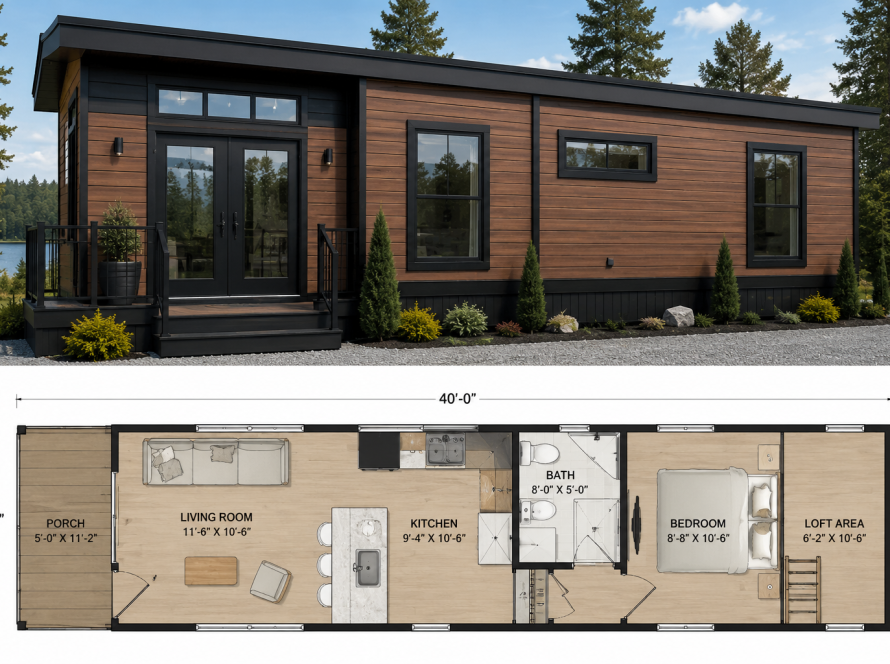
Before diving into the data, it helps to be precise about what we mean. A tiny house is typically defined as any dwelling under 400 square feet, though the sweet spot most builders and dwellers gravitate toward is right around 225 square feet. That is not a typo. Two hundred and twenty-five square feet is roughly the size of a large hotel room — yet within that footprint, modern tiny homes manage to pack a fully-equipped kitchen, a sleeping area, a bathroom, dedicated storage, and increasingly sophisticated utility systems including solar power, composting toilets, and rainwater collection.
Interior ceiling heights in most tiny homes reach 6 feet 6 inches in main living areas, with some reaching a full 7 feet, ensuring that most adults can move through the space without ducking. About 85% of tiny houses consist of a single open-plan living space, while the remaining 15% include a small loft or mezzanine that often becomes the sleeping area, reclaiming valuable floor space below for living and working.
The footprint sounds limiting until you start thinking creatively about verticality, multi-function furniture, and the simple truth that most of us only actively use a fraction of our traditional home’s square footage on any given day.
Who Is Moving Into Tiny Homes — And Why
If you picture a tiny house dweller as a young, carefree backpacker with no attachments and a hammock collection, the data will surprise you. The reality is far more nuanced, diverse, and frankly more relatable than that stereotype suggests.
The largest demographic is adults between the ages of 25 and 44, who make up 62% of the tiny house community. Adults aged 45 to 64 represent another 30%, and those under 25 account for just 8%. This is not a youth movement — it is a working-age and mid-life movement driven by people who have done the math on traditional housing and decided there has to be a better way.
Gender breakdown shows that 58% of tiny house dwellers identify as male, 40% as female, and 2% as non-binary. Notably, within the 25 to 34 age bracket specifically, women are strongly represented, with 70% of tiny house owners in that segment driven by solo living and travel flexibility. Relationship status across the full community reveals that 45% of owners are single, 35% are in relationships, 15% are married with children, and 5% are cohabiting with a partner or roommate.
Education levels skew toward higher attainment — 35% hold college degrees, 30% have some college education, and 25% have a high school diploma — suggesting that tiny house living is frequently a deliberate, well-researched choice rather than a last resort.
The motivations behind the move are equally telling. A full 60% of tiny house owners cite financial reasons as the primary driver — crushing mortgage debt, sky-high urban rents, or simply the desire to stop working to pay for square footage they barely use. Environmental conviction motivates 25%, while 15% describe the decision as a lifestyle change driven by values around simplicity and intentionality. Another 65% say their choice was rooted in a desire for simpler living, with 25% describing themselves as committed minimalists.
At ecolifehomes.com, we see all of these motivations in the people who reach out to us — and the good news is that a well-designed tiny or eco-home can serve every single one of them simultaneously.
Where Are Tiny Houses Being Built and Lived?
Geography matters enormously in the tiny house world, both in terms of regulations and lifestyle. Roughly 55% of tiny homes are located in rural areas, 30% in suburban settings, and 15% in urban environments. The distribution makes sense when you consider zoning and lot-size requirements, which tend to be far more flexible in rural areas.
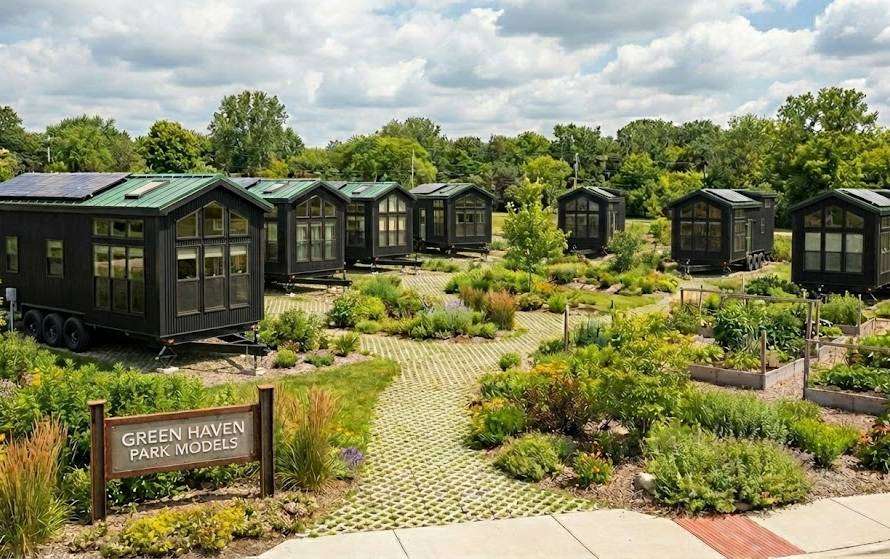
About 25% of tiny houses are parked in designated tiny house communities — intentional neighborhoods specifically designed for this style of living, often with shared amenities, communal gardens, and a strong neighborly culture. The largest share, 55%, sit on private land owned by the homeowner or a family member, while 20% are located in RV parks or campgrounds, particularly for homes on wheels.
Regulatory climate plays a major role in where people choose to plant their homes. Roughly 45% of tiny house owners live in states with relatively loose zoning and building code requirements — Texas, Arizona, and Florida rank among the most accommodating — while about 30% navigate life in stricter regulatory environments like California and New York, where minimum square footage requirements and utility connection mandates can make tiny living more complicated.
For those in Florida specifically, the regulatory landscape has been steadily improving, making it one of the more viable states for both stationary tiny homes and park model units. The team at ecolifehomes.com has deep experience navigating Florida’s permitting landscape and can help you find a path that works within your county’s specific requirements.
The Full Cost Picture: What Does Tiny House Living Actually Cost?
Here is where the romance of tiny living meets the spreadsheet — and the numbers are more nuanced than you might expect in either direction.
Building a new tiny house from scratch runs between $15,000 and $30,000 on average, with custom and high-end designs easily exceeding $50,000. Used tiny houses on the secondary market are available for $10,000 to $30,000, with models from 2020 onward averaging around $25,000. If you want a tiny house on wheels — which adds the flexibility of relocation and sometimes simplifies permitting — expect to budget $35,000 to $60,000 once transport and permit costs are factored in.
Financing is available but not always straightforward. Roughly 40% of tiny house owners use personal loans, while 30% pay cash from savings and 20% leverage home equity loans. Interest rates on personal loans for tiny homes typically run between 6% and 8%, compared to 3% to 5% for construction loans on traditional homes. Down payment requirements generally fall between 10% and 20% of the purchase price.
Foundation costs, if your home is not on wheels, add $3,000 to $10,000 depending on whether you choose a concrete slab or a pier-and-beam system. Connecting to public utilities — water, sewer, and gas — can cost $5,000 to $15,000 for a stationary tiny home, though wheeled homes connecting at campgrounds or RV parks tend to run $2,000 to $5,000.
Solar panels — used by a remarkable 90% of tiny house owners — cost between $5,000 and $8,000 to install, with payback periods of just 5 to 7 years given the dramatically reduced energy consumption of small-footprint living. Tiny homes that incorporate renewable energy systems do carry a 10% to 15% higher upfront cost, but the monthly savings of $50 to $100 on utility bills make the math compelling over any reasonable time horizon.
On the ongoing cost side, monthly utilities for tiny homes average just $50 to $150, including electricity, water, and heating. Annual repairs and maintenance run $1,000 to $3,000 — similar in absolute dollars to traditional homes but representing a much smaller percentage of the home’s total value. Insurance is dramatically cheaper, averaging $300 to $600 per year, or 30% to 50% less than comparable coverage for a traditional home.
For those thinking about tiny homes as income-generating assets, the numbers are interesting. Tiny houses used as vacation rentals on platforms like Airbnb generate an average of $30 to $60 per night, with annual rental incomes ranging from $15,000 to $40,000 depending on location, design quality, and availability. That range can represent a meaningful contribution toward covering the cost of the home itself.
Off-grid setups do require additional investment — well drilling runs $10,000 to $20,000, while rainwater collection systems cost $2,000 to $5,000. These are not insignificant expenses, but for those seeking true independence from municipal systems, they represent a one-time cost rather than a recurring monthly obligation.
Furniture and interior setup tends to cost $5,000 to $10,000, with approximately 70% of that budget going toward multi-functional pieces — fold-out beds, storage ottomans, extendable dining surfaces, and convertible sofas that are doing the work of two or three traditional furniture pieces. Interestingly, tiny house owners tend to spend about 30% less on furnishings overall than traditional homeowners, simply because there is no room — or desire — for excess.
Environmental Impact: The Numbers That Make Tiny Living Feel Urgent
If you care about your environmental footprint — and increasingly, most of us do — the data on tiny house living is genuinely striking.
A tiny home produces a carbon footprint of just 2 to 3 tons of CO2 per year. The average traditional American home generates 6 to 8 tons annually. That is a reduction of 50% to 70% in annual carbon emissions simply by changing the size of your living space. When you factor in that tiny houses on wheels emit 30% to 40% less CO2 even during their construction phase — due to the dramatically reduced volume of materials required — the environmental case for small-footprint living becomes even stronger across the full life cycle.
Energy consumption follows a similarly dramatic pattern. The average tiny house uses 10 to 20 kilowatt-hours of electricity per day. A traditional American home uses 80 to 100 kilowatt-hours daily — making tiny homes 70% to 80% more energy efficient by this measure. And because 90% of tiny homes use solar panels as their primary energy source, with most owners reporting they rarely or never experience power outages, that reduced energy demand is increasingly being met entirely by renewable generation.
Water usage tells the same story. Tiny homes save an average of 50 to 80 gallons of water per day compared to traditional homes, thanks to low-flow fixtures, smaller water heaters, and more intentional usage habits that naturally develop when you are living in a compact space. The average monthly water bill for a tiny home runs $20 to $50, compared to $50 to $100 for traditional homes — a 40% to 50% savings. Sixty percent of tiny house owners supplement or replace municipal water with rainwater harvesting systems that supply between 50% and 100% of their daily water needs.
Waste reduction is equally remarkable. Tiny house dwellers produce an average of 1 to 2 pounds of solid waste per day, compared to 4 to 5 pounds in traditional households. Roughly 90% of tiny homes produce zero landfill waste by incorporating composting toilets, recyclable packaging habits, and upcycled construction materials. The overall garbage reduction compared to conventional homes is estimated at 60% to 70%.
Heating efficiency stands out particularly. Tiny homes use an estimated 90% less heating fuel than traditional homes, a figure driven by superior insulation standards, passive solar design principles, and the simple thermodynamic reality that it takes much less energy to heat 225 square feet than 2,200. About 80% of tiny homes include double-paned windows and fully insulated wall assemblies, reducing heat loss by 50% to 60% compared to average traditional construction.
The environmental benefits also extend to land use. Tiny houses on wheels reduce land consumption by 70% to 80% compared to conventional homes, and because they can be repositioned periodically, they allow natural land to recover and regenerate rather than being permanently altered.
At ecolifehomes.com, environmental performance is not an afterthought — it is engineered into every aspect of our home designs, from the materials we source to the systems we integrate and the orientation we recommend for passive solar gain.
Quality of Life: What Does It Actually Feel Like to Live Small?
This is the question that matters most to most people considering the switch, and the data is overwhelmingly positive — though not without its honest trade-offs.
A full 82% of tiny house owners report feeling less stressed about home maintenance and upkeep than they did living in a traditional home. This makes intuitive sense: with an average cleaning time of just 1 to 2 hours per week (versus 5 to 10 hours in a traditional home) and home repair demands of only 2 to 4 hours per month (versus 10 to 20 hours monthly in conventional housing), tiny house dwellers reclaim dozens of hours per year that used to disappear into the endless logistics of maintaining a large property.
Sixty percent of tiny house owners report measurable improvements in mental health, including reduced anxiety and better sleep quality. Eighty percent say they have more time for hobbies and personal interests. Seventy-five percent report stronger relationships with friends and family, attributing this to reduced distraction from material possessions and the simplified financial life that tiny living enables.
Sixty-five percent of tiny house dwellers say they have better access to natural light than they did in their previous traditional homes, made possible by larger window-to-wall ratios and more open floor plans that do not compartmentalize the space. Seventy-two percent say they value the freedom to travel and relocate more than they miss the material possessions they left behind.
Community is a surprising and consistent theme in the quality-of-life data. Eighty-five percent of tiny house owners report a stronger sense of community, particularly those living in dedicated tiny house parks or co-living spaces. Sixty percent say their social circle has remained the same or actually grown since downsizing, with 40% noting that they have simply shed social obligations that had always felt more obligatory than genuinely enriching.
Seventy percent of tiny house dwellers work remotely — a much higher share than the 15% remote-work rate in traditional homes — and 40% identify as part of the broader digital nomad community, using their homes to travel full-time while maintaining a fully functional living space. The work-from-home infrastructure in a well-designed tiny house can be just as capable as any traditional home office, and the financial freedom created by dramatically lower housing costs tends to make remote career choices far more viable.
There are real challenges, of course. Average noise levels in tiny homes run 30 to 40 decibels — quieter than traditional homes in some respects, but also meaning that the sounds of daily life are less isolated and private. Hosting guests requires creative adaptation: the average tiny house host accommodates 2 to 3 guests per month, and 80% of them rely on fold-out couches or air mattresses to manage the sleeping arrangements. The kitchen, at 40 to 60 square feet with 4 to 6 linear feet of counter space, demands more intentional meal planning than a traditional kitchen’s 10 to 15 feet of counter allows.
But the trade-off calculation is clearly working for the people who have made the move. The data does not suggest widespread regret — it suggests widespread liberation.
[H2] The Demographics of Downsizing: A Closer Look at Who’s Leading the Way
One of the most interesting dimensions of the tiny house movement is how it cuts across economic and professional lines in unexpected ways.
While 40% of tiny house dwellers have household incomes under $50,000 per year — compared to just 15% in traditional homes — this reflects a choice about how to allocate income rather than a limitation on earning power. Thirty-five percent of tiny house owners are self-employed, compared to 10% in traditional homes. The dramatically reduced fixed housing costs of tiny living make entrepreneurship and self-employment financially safer, removing the pressure of a large mortgage payment from the monthly calculation.
Thirty percent of tiny house owners are retirees using the model to reduce living expenses, eliminate housing debt, and gain the flexibility to travel. This demographic has quietly become one of the fastest-growing segments of the tiny house community, particularly as the financial reality of fixed-income retirement meets the escalating cost of traditional housing maintenance and property taxes.
Seventy-five percent of current tiny house dwellers previously owned or occupied a traditional home, and 60% sold that home before moving into their tiny house — suggesting that the transition is typically a deliberate, planned decision rather than a sudden leap. These are not people who stumbled into small living; they researched it, prepared for it, and chose it with full knowledge of what they were giving up and what they were gaining.
The pet statistic is charming and worth noting: 50% of tiny house dwellers have at least one pet, with cats and dogs being most common. Living small with animals requires thoughtful space planning, but it is clearly far from impossible for half the community.
Tiny Homes as Investment Vehicles
Beyond the lifestyle appeal, the financial case for tiny home ownership deserves serious attention from an investment perspective.
The combination of low acquisition costs ($15,000 to $60,000 depending on configuration), dramatically reduced operating costs (utilities averaging $50 to $150 per month), and strong short-term rental income potential ($15,000 to $40,000 annually on vacation rental platforms) creates an investment profile that is genuinely competitive with far more expensive traditional real estate.
Insurance costs of $300 to $600 per year, financing available at 6% to 8% on personal loans, and repair and maintenance budgets of $1,000 to $3,000 annually mean that the total cost of ownership is predictable and manageable in ways that traditional real estate rarely is. The average well-maintained tiny home has a lifespan of 30 to 50 years — longer than the 15 to 20 years often cited for traditional stick-built construction — making the long-term value proposition even stronger.
Solar integration is perhaps the most powerful financial accelerant in the tiny home equation. At a cost of $5,000 to $8,000 with a 5 to 7-year payback period, solar panels on a tiny home reach breakeven far faster than on a traditional home — simply because the energy demand is so much lower that the panels can cover a much larger percentage of total consumption from day one.
At ecolifehomes.com, we work with clients who approach tiny and eco-friendly homes from both the lifestyle and investment angles. The two motivations are more compatible than most people assume, and the portfolio of options we offer is designed to serve both equally well.
[H2] The Future Is Small, Smart, and Solar
The statistics point consistently in one direction: tiny house living is not a compromise. It is a recalibration of what home is supposed to provide.
A 70% to 80% reduction in energy consumption. A 50% to 70% reduction in annual carbon emissions. A 30% to 50% reduction in insurance costs. One to two hours of cleaning per week instead of five to ten. More time, more freedom, more community, and measurably better mental health for the majority of people who make the switch.
The challenges are real — space constraints, regulatory complexity, the learning curve of intentional resource management, and the social adjustment of hosting a dinner party in a home that seats six only if two of them sit on the kitchen counter. But the data does not suggest these challenges outweigh the benefits for the people who have made the transition with their eyes open.
Ninety-five percent of tiny house owners report that their lifestyle has made them more conscious of their environmental impact, leading to broader sustainable practices well beyond housing alone. This is not a statistic about guilt or obligation — it is about awareness, and the quiet satisfaction of living in alignment with your values.
Whether you are a millennial calculating your escape from urban rent, a retiree planning your next chapter with less financial overhead and more geographic freedom, a digital nomad who wants a home base that can move with you, or simply someone who has looked around at all their stuff and wondered why on earth they own so much of it — the tiny house movement has something worth your serious consideration.
At ecolifehomes.com, we design and deliver homes built for exactly this kind of life. Compact, beautiful, solar-ready, eco-smart, and engineered to prove that the best things in life — and in housing — do not require more space. They require better thinking.
The revolution is small. And it is just getting started.