Tiny Life in Florida

What It Really Means to Live Small in 2026-2027
There’s a version of the tiny life that exists only on Instagram — sun-drenched lofts, perfectly organized kitchen shelves, a dog sleeping on a hand-woven rug near a window that frames exactly the right view. It looks intentional and beautiful and a little unreal, because it is. It’s the highlight reel of a lifestyle, and like all highlight reels, it leaves out the parts that are harder to photograph.
Then there’s the actual tiny life. The one where people have made a deliberate decision to stop spending the majority of their income on shelter, to stop maintaining space they don’t use, to stop deferring the things they actually want to do because the house always needs something. The one where the trade-offs are real but the gains are realer. The one that looks different for every person living it, because the reasons people choose it are as varied as the people themselves.
Florida has become one of the most active tiny living markets in the country, and not by accident. The state’s climate, its land availability in certain regions, its established community infrastructure for alternative housing, and its demographic mix of retirees, remote workers, and people simply done with the conventional housing treadmill have created a genuine ecosystem for people choosing to live differently. If you’re curious about what the tiny life actually looks like in Florida in 2026 — not the Instagram version, but the real one — this is that conversation.
What “Tiny Life” Actually Means
The phrase gets applied to a wide range of living situations, and the lack of precision creates confusion that’s worth clearing up before going further.
At the broadest level, tiny life refers to any intentional choice to live in significantly less space than the American housing norm — which, for context, has been trending upward for decades and now sits around 2,300 square feet for a new single-family home. Tiny life, in this broad sense, includes anything from a 150-square-foot tiny house on wheels to a 500-square-foot park model home to an 800-square-foot ADU or cottage. The specific square footage matters less than the intentionality behind it — the choice to use space deliberately rather than accumulate it by default.
Within this broad category, the Florida market in 2026 has a few specific forms that are worth understanding on their own terms.
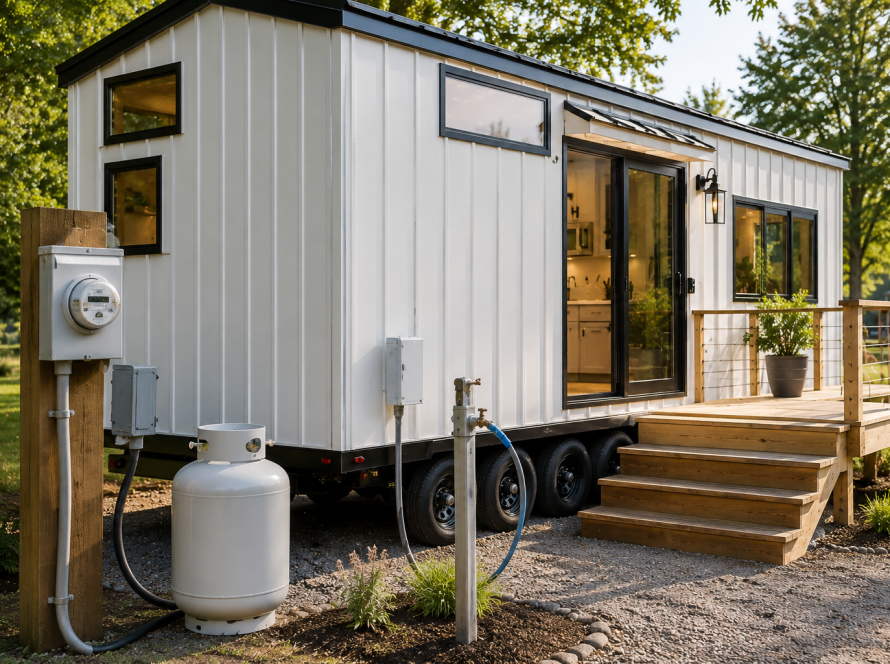
Tiny houses on wheels are structures built on trailer chassis that can be moved and that typically fall between 100 and 400 square feet. They’re appealing for their mobility and their extreme space efficiency, but they face real regulatory challenges in Florida because most jurisdictions don’t have clear legal pathways for parking and living in them permanently. Finding legal, stable placement for a tiny house on wheels in Florida requires careful research and often creative solutions.
Park model homes are factory-built structures that fall under the ANSI A119.5 standard, typically 400 square feet or under in the main body, built on a permanent chassis. They have more established regulatory pathways in Florida than tiny houses on wheels, can be placed in the hundreds of communities throughout the state that accommodate them, and are built to standards that make them genuinely comfortable long-term residences. EcoLife Homes works specifically in this space, and it represents one of the most practical entries into Florida tiny living for people who want a quality home with clear legal standing.
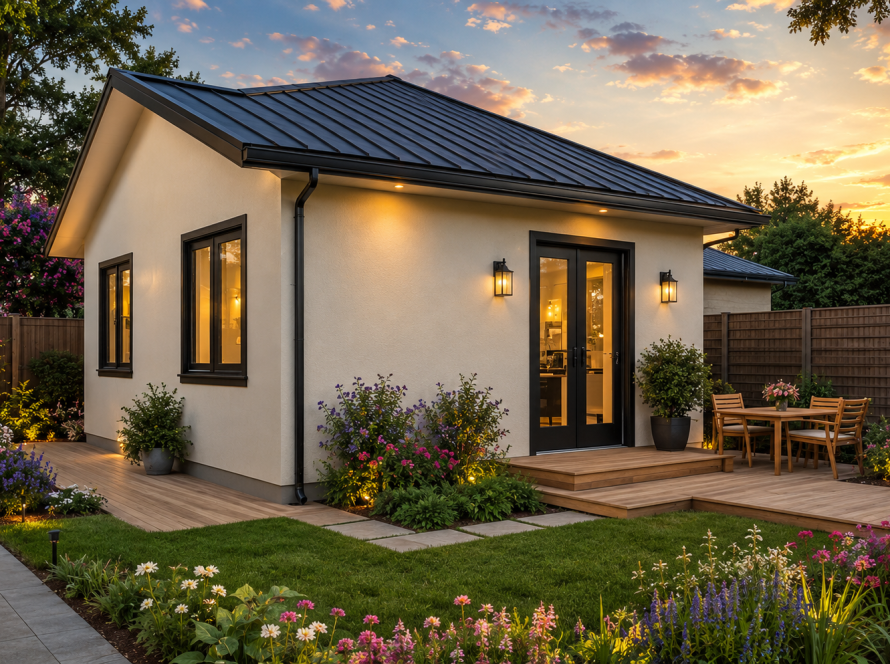
Micro homes and small cottages — site-built or modular structures in the 400 to 700 square foot range — represent another form of tiny living that’s particularly relevant for people who own land or are considering an ADU configuration. These are permanent structures that go through the full local permitting process and appraise as conventional real estate, and they’re increasingly common as standalone residences on rural and semi-rural Florida properties.
Why People Choose the Tiny Life in Florida in 2026
The motivations are worth spending time on because they’re more varied and more thoughtful than the stereotypes suggest, and because understanding why people make this choice makes the trade-offs more legible.
Financial freedom is the most commonly cited reason, and it’s genuinely compelling. Florida’s conventional housing market has become increasingly expensive over the past several years. Entry-level homes in desirable markets — the Tampa Bay area, South Florida, the Orlando metro — regularly list above $350,000, and carrying a mortgage on a home at that price point on a middle-class income consumes a percentage of take-home pay that leaves little room for anything else. A park model home or small cottage acquired for $80,000 to $150,000, placed on a leased lot at $600 a month, creates a housing cost that allows the other parts of life to happen — travel, savings, experiences, early retirement, time with family, work that’s meaningful rather than just financially necessary.
For people who have paid off a conventional home and are now navigating retirement on a fixed income, the tiny life in Florida can represent a restructuring of assets that changes everything. Selling a $400,000 home and transitioning to a $100,000 park model frees up $300,000 in capital — capital that, invested conservatively, can supplement Social Security and other retirement income in ways that make the later decades genuinely comfortable rather than financially anxious.
Environmental values drive some people toward smaller living in ways that are deeply held rather than performative. A 400-square-foot home uses a fraction of the energy of a 2,000-square-foot one. The materials that went into building it are a fraction of the materials in a conventional home. The ongoing resource consumption — water, electricity, cooling — is proportionally reduced. For people who think seriously about their environmental footprint, smaller living is one of the most impactful choices they can make, and Florida’s climate makes it more livable than almost anywhere else in the country.
Life stage transitions are another significant driver. People coming out of divorce or the death of a spouse, navigating the empty nest transition, leaving careers that anchored them to specific locations, or simply reaching a point where the home they’ve been living in no longer fits the life they have — all of these transitions create openings for reconsidering what housing should look like. The tiny life isn’t just for young minimalists; it’s often most appealing to people who have lived in large homes and know from experience what they actually use and what they don’t.
Remote work has been a quieter but real contributor to the tiny life movement in Florida. When work happens on a laptop and the office is wherever you are, the calculus of where to live and how to live changes significantly. People who previously needed to be near specific employment centers — and who paid the housing premiums those locations demanded — have gained geographic freedom that opens up options that weren’t previously available. A park model home on a few acres in North Central Florida, or a small cottage in a community that wouldn’t have made practical sense as a base for a commuter, becomes viable when the commute doesn’t exist.
The Florida Advantage for Tiny Living
Florida is a genuinely excellent place for the tiny life, and not just because the winters are mild. The specific advantages compound in ways that make Florida’s tiny living appeal durable rather than trend-dependent.
The outdoor living extension is probably the most significant Florida-specific advantage. A 380-square-foot park model home with a 200-square-foot screened lanai functions as a 580-square-foot home for the six to eight months of the year when the lanai is fully usable living space. Add a covered outdoor dining area, a porch, and a small garden, and the effective living area expands further. Florida’s climate transforms the concept of home from an exclusively indoor experience to an indoor-outdoor one, and that transformation makes smaller square footage much more livable than it would be in a climate where outdoor space is seasonal.
Florida’s community infrastructure for smaller living is exceptionally developed. The state has hundreds of land-lease communities, RV resorts, and manufactured home parks that welcome park models, ranging from simple and affordable to resort-caliber developments with pools, fitness centers, organized social activities, and amenity packages that would be competitive with upscale conventional communities. This infrastructure didn’t develop by accident — it’s the result of decades of retirees and seasonal residents choosing Florida for exactly the kind of lifestyle the tiny life enables, and the supply of communities has matured in response to that sustained demand.
The land availability in parts of Florida — particularly in North Central Florida, the Ocala region, and rural pockets of the state that haven’t been consumed by suburban development — creates opportunities for private tiny living on owned land that simply don’t exist in many other parts of the country. An acre or two in the Ocala area, within reasonable distance of services and amenities, can be purchased at prices that make the combined land-plus-home total genuinely affordable. EcoLife Homes has been active in helping clients navigate these private placement situations, from zoning research through site preparation and installation.
Florida’s healthcare infrastructure matters more than people expect when they’re young but becomes increasingly relevant as the decades pass. Florida’s large retirement population has driven significant investment in healthcare facilities, specialist availability, and senior services across the state. For people considering the tiny life as a long-term lifestyle rather than a temporary experiment, the quality and accessibility of healthcare in their chosen location is a real factor, and Florida performs well on this dimension.
The Trade-offs Are Real — Here’s What They Actually Are
Anyone who tells you the tiny life has no trade-offs is selling something. The trade-offs are real, and being honest about them is part of treating this lifestyle choice with the seriousness it deserves.
Space for hosting is the most commonly cited challenge. A 400-square-foot home is not a venue for Thanksgiving dinner with twelve people. Overnight guests require creative solutions — a pull-out sofa, an air mattress, a nearby hotel for family visits. People who are very socially active in ways that involve hosting large gatherings at home need to think carefully about how those social practices would adapt in a smaller space, or whether they’d adapt at all.
Storage requires a different relationship than most people have with their possessions. The tiny life is not compatible with accumulation. Every object in a small home competes with every other object for a limited number of cubic feet, and the things you own need to earn their space in a way they don’t in a larger home. For some people, the process of scaling down possessions before making the transition to smaller living is genuinely therapeutic — a letting go that feels like relief. For others, it’s a source of ongoing friction. Being honest with yourself about which of those experiences is more likely for you is important information.
Privacy and noise dynamics change in small spaces. Sounds travel differently. There are fewer ways to be in different parts of the home doing different things simultaneously. For couples or roommates with different schedules or different noise tolerances, the reduced sound separation of a smaller home requires adjustment and sometimes accommodation. This is manageable for most people but worth acknowledging as a real adjustment rather than pretending it doesn’t exist.
The social geography of community living — which describes the situation for many park model residents in Florida’s land-lease communities — has its own dynamics. The sense of community that these environments offer is genuinely valuable for many people, particularly those who are transitioning out of conventional neighborhoods and find the social isolation of suburban living problematic. But community living also means proximity to neighbors, shared amenities that operate on community schedules, and a degree of social engagement that not everyone finds comfortable. Researching the specific community culture before committing to placement is as important as researching the physical infrastructure.
How to Transition Into the Tiny Life Without Getting It Wrong
The stories that make people skeptical of tiny living are usually stories of people who made the transition badly — who downsized faster than they could emotionally process, who didn’t research their placement situation adequately, who bought a cheaply built home that created problems before the first year was out, or who made the choice under financial pressure rather than genuine preference and discovered that desperation and intentionality produce different experiences of the same lifestyle.
The transitions that work well share common elements. They’re deliberate rather than reactive. The people making them have spent real time in smaller spaces — visited communities, stayed in park model rentals, spent extended time in small spaces rather than just imagining what it would be like. They’ve had honest conversations about the trade-offs with themselves and with the people who will be living the life with them. And they’ve done the practical research — zoning, community selection, manufacturer quality, installation logistics — before any money changes hands.
EcoLife Homes exists, in part, to support people through this transition in ways that prevent the most common mistakes. Not every client who reaches out is ready to move immediately, and the conversations that happen before a project starts are part of what makes the projects that do start go well. Understanding what someone is actually trying to accomplish — what they’re moving toward and what they’re moving away from — shapes the recommendations that follow.
What the Tiny Life Looks Like Day to Day in Florida
The abstract arguments for tiny living become more grounded when you think about what a typical day in a well-designed, well-placed Florida tiny home actually looks like.
It’s a Tuesday morning in November. You wake up in a properly insulated, climate-controlled bedroom that’s small enough that your phone charger is always reachable. Coffee is made in a kitchen that has everything you actually use and nothing you don’t. Breakfast happens on the screened lanai because it’s 72 degrees and there’s birdsong and there’s no reason not to. Your morning walk takes you through the community, past neighbors you know, around a lake that the community maintains.
The afternoon involves whatever you’ve decided to do with your time — which, because your housing cost is $800 a month instead of $2,200, is actually your time to decide. Maybe it’s a day trip. Maybe it’s a hobby you actually have time and energy for now. Maybe it’s a long phone call with the grandkids, or a round of golf, or a volunteer commitment, or work that you actually choose because you don’t have a mortgage forcing your hand.
Evening comes, the lanai lights come on, dinner is made in a kitchen that takes ten minutes to clean, and the home is quiet by nine because the neighbors are mostly on the same schedule and the community is that kind of place.
This is not a fantasy. It’s the description that EcoLife Homes clients — people who have actually made the transition and been living it for a year or two — give when asked what a typical day looks like. Not every day is this smooth, and not every community is this idyllic. But it’s an accurate representation of what the tiny life in Florida can look like when it’s done deliberately and well.
The Market in 2026 and Looking Ahead to 2027
The park model and tiny home market in Florida has been growing, and the growth looks durable heading into 2027. The combination of persistent housing affordability pressure, demographic trends that favor downsizing, the continued expansion of the remote work economy, and the genuine lifestyle appeal of intentional smaller living is not a moment — it’s a direction.
Manufacturers are responding to this demand with better products. The quality ceiling for park model homes has risen noticeably over the past several years, with manufacturers investing in better materials, more sophisticated designs, and construction standards that reflect the expectations of buyers who have lived in high-quality conventional homes and aren’t interested in compromising on finish quality even as they reduce square footage.
Community development in Florida has also been expanding, with new communities being developed and existing ones upgrading their amenities to meet the expectations of the newer wave of tiny life adopters, who tend to be younger and more quality-conscious than the traditional snowbird demographic that shaped many older communities.
EcoLife Homes has been positioning itself at the quality end of this market — working with manufacturers who build to Florida’s specific climate demands, serving clients who are making intentional lifestyle choices rather than distressed housing decisions, and building the regional expertise and local relationships that make projects go well rather than getting stuck in the regulatory and logistical complexity that trips up less experienced operators.
If the tiny life is something you’ve been thinking about seriously — not as a fantasy but as an actual possibility you’re evaluating — 2026 is a genuinely good time to take the next step. The market is mature enough to offer real quality and real choices. The communities are established enough to evaluate with real information. And the financial case has never been stronger relative to the conventional alternative.
The conversation starts wherever you are in the process — even if that’s just a general curiosity about whether this could work for your situation. EcoLife Homes is built to have that conversation honestly and usefully.
Curious about what the tiny life could look like for you in Florida? EcoLife Homes offers free consultations covering park model options, community placement, private land placement, and everything in between. No pressure — just real information for a decision that deserves it.