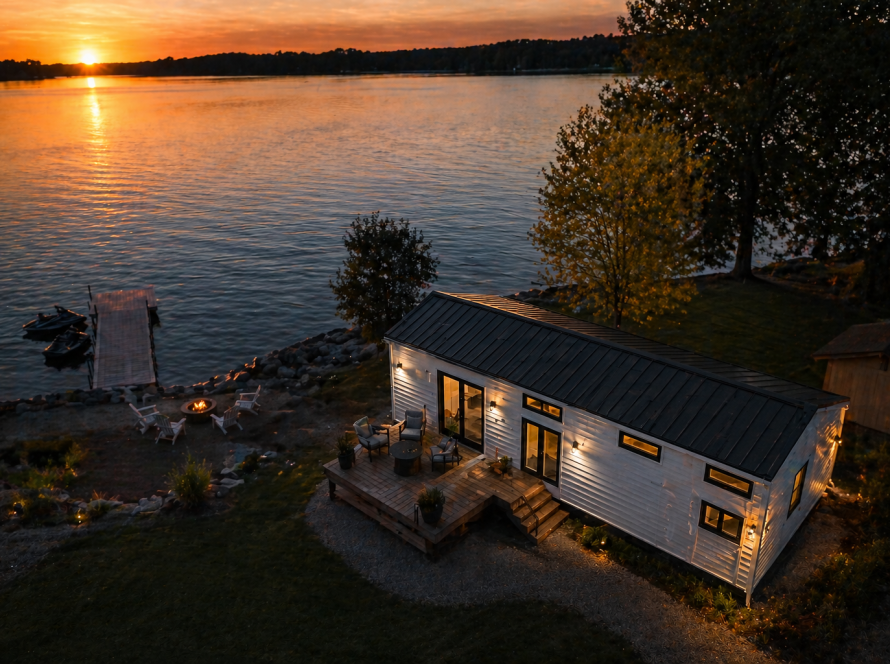
Park Model RV Florida

Park Model RV Florida: Why Thousands Are Choosing This Smarter Way to Own in the Sunshine State
There’s a quiet revolution happening across Florida’s RV parks, resort communities, and waterfront campgrounds. It doesn’t make headlines the way skyrocketing home prices do. It doesn’t trend on social media the way luxury condos in Miami or overwater bungalows in the Keys might. But it’s real, it’s accelerating, and the people living it wouldn’t trade it for anything.
It’s the park model RV lifestyle — and Florida is its undisputed epicenter.
Drive through any well-established resort community between Pensacola and Key Largo and you’ll see them: compact, carefully designed homes sitting on manicured lots with screened lanais, native plantings, and outdoor kitchens. You’ll see neighbors gathered around fire pits at sunset. You’ll see bikes leaning against front porches and kayaks stacked beneath elevated decks. What you won’t see is the anxiety that comes with a $450,000 mortgage, a massive property tax bill, or a five-bedroom house that’s too large to clean and too expensive to maintain.
These are park model RV owners. And in Florida, they’ve figured something out that the rest of the housing market is still catching up to.
Rethinking What “Home” Means in Florida
For most of the 20th century, the American definition of homeownership was fixed: a site-built house on a deeded lot, the bigger the better. In Florida, that dream became particularly seductive — and particularly expensive. Today, the median home price in many of the state’s most desirable areas hovers well above $400,000, with property insurance costs, HOA fees, and maintenance expenses adding thousands more to the annual cost of ownership.
Park model RVs challenge that definition at its roots. They ask a simple question: what if your home was exactly the size you actually need, located exactly where you actually want to be, and cost a fraction of what traditional ownership demands?
The answer, for a growing segment of Florida residents — retirees, snowbirds, remote workers, investors, and minimalism converts — is that such a home sounds not like a compromise, but like the better deal.
A park model RV is a factory-built dwelling constructed on a permanent steel chassis, classified as a recreational vehicle under the ANSI A119.5 standard. In most states, the maximum living area is capped at 400 square feet. Florida, however, operates under a special HUD Park Model designation that allows units up to 499 square feet — giving Sunshine State buyers nearly 25% more living space than buyers anywhere else in the country. It’s a detail that seems small until you’re inside a thoughtfully designed 499-square-foot home with vaulted ceilings, a full kitchen, a proper bathroom, and a screened porch overlooking a pond. Then it seems exactly right.
The Florida Advantage: Why This State Makes Park Model RV Living Work
Not every state is built for park model living. Florida is. Several converging factors make the Sunshine State the optimal environment for this lifestyle:
The Climate Does the Heavy Lifting
Florida’s subtropical climate is not merely pleasant — it’s economically transformative for park model owners. Unlike northern counterparts who must maintain two residences, budget for seasonal travel, and pay carrying costs on a property that sits idle for months, Florida park model owners live in their investment year-round. The sun is a constant, the winters are mild, and the outdoor living season never ends. Every month of the year, your home is earning its keep.
The Regulatory Framework Is Navigable
Florida Statute §320.8231 states that park trailers built to ANSI A-119.5 may not exceed 400 square feet of living area when set up — however, Florida also allows a special “HUD park model” version up to 500 square feet under HUD standards. This dual framework gives Florida buyers more flexibility than virtually any other state, and the registration process through the Florida Department of Motor Vehicles is straightforward for buyers working with an experienced builder or dealer.
A Massive, Established Community Network
Florida’s RV park and resort infrastructure is among the most developed in the United States. From full-amenity golf resort communities in Central Florida to peaceful nature-adjacent campgrounds in the interior to Gulf Coast properties where your back patio faces open water, the inventory of licensed, well-maintained placement options is enormous — and growing.
Demographics That Drive Demand
Park model homes are particularly popular among retirees and older adults, with 71% of owners aged 55 and older and 55% being retired. Florida is the retirement capital of the country. This alignment of product and demographic is not accidental — it’s the result of decades of market evolution producing a housing option that genuinely fits the needs of people entering or living their retirement years: lower cost, lower maintenance, strong community, and proximity to the natural amenities that made them choose Florida in the first place.
Inside a Modern Park Model RV: What You’re Actually Getting
One of the most persistent misconceptions about park model RVs is that they’re glorified camping trailers — functional but spartan. Spend an afternoon touring a premium 2025 model and that perception dissolves quickly.
Today’s park model RVs, particularly those built by eco-conscious manufacturers like ecolifehomes.com, are finished to a standard that rivals mid-range site-built homes. Consider what a well-specified model typically includes:
Kitchen: Full-size or apartment-size appliances, solid surface or quartz countertops, soft-close cabinetry, undermount sink, designer tile backsplash. Not a camp kitchen — a real one.
Bathroom: Walk-in shower with tile surround, vanity with storage, quality fixtures. Some models include a soaking tub or dual vanity in larger layouts.
Living Space: Open-concept living and dining area, vaulted ceilings that create a sense of spaciousness well beyond the square footage, large windows with abundant natural light, engineered hardwood or luxury vinyl plank flooring throughout.
Bedroom: Full-size or queen bed, built-in storage solutions, closet with wardrobe organization systems. Lofted models add a secondary sleeping area accessible by ship-style ladder stairs.
Exterior: Covered or screened porch, architectural rooflines that distinguish them from standard RVs, durable low-maintenance siding in a range of coastal and contemporary finishes.
The gap between what people imagine when they hear “park model RV” and what these homes actually deliver is significant. The best way to close that gap is to see one in person.
The Financial Case: Breaking Down the Real Numbers
Abstract claims about affordability are only useful when backed by specific numbers. Here’s what the financial picture of park model RV ownership in Florida actually looks like:
Purchase price: Quality park model RVs in Florida range from $65,000 to $165,000, depending on size, finish level, and manufacturer. Eco-integrated models with solar, premium insulation, and sustainable materials sit in the $95,000–$150,000 range.
Lot rent: Monthly lot rent in Florida’s licensed RV communities ranges from $450 to $1,200, with the wide variation reflecting location quality, amenities, and proximity to coastlines or attractions. Many communities include water, basic cable, trash pickup, and common area maintenance in the lot fee.
Total monthly housing cost: A buyer who purchases a $110,000 park model RV with a modest down payment and finances the remainder through an RV loan (typically at 7–10% APR over 15–20 years) will carry a monthly payment in the $750–$950 range. Add lot rent of $600 and total monthly housing cost lands around $1,350–$1,550 — compared to $3,000–$4,500 or more for a comparable traditional home in the same Florida market.
Insurance: Park model RV insurance in Florida typically runs $800–$2,000 annually, far below the property insurance premiums hammering traditional homeowners in the state’s current market.
Ongoing maintenance: With no roof to reroof for 25–30 years, no HVAC system the size of a whole house to service, and no large yard to maintain, monthly maintenance costs for a park model are minimal compared to a traditional home.
The numbers are not marginally better. They’re dramatically better — and that mathematical reality is one of the primary drivers of the market’s growth.
Placement, Zoning, and What You Need to Verify Before You Buy
Understanding where your park model RV can legally be placed in Florida is essential groundwork before committing to a purchase. Here’s what the landscape looks like:
RV Parks and Licensed Campgrounds: This is the most straightforward placement pathway. RV parks, mobile home communities, and vacation parks are common places where park models are allowed. Florida’s Chapter 513 governs the licensing, inspection, and operation of these facilities, providing a layer of consumer protection that benefits residents.
Resort Communities: Many of Florida’s most desirable park model communities operate as resort-style developments with professional management, extensive amenities, and active programming. These typically have their own architectural standards and community rules alongside the state regulatory requirements.
Private Land: If placing a park model on private land as a longer-term residence, check local zoning, building code, foundation requirements, and whether the unit may be classified as a “dwelling” rather than an RV. County-level variation here is significant — what’s permitted in one county may be restricted in the next, so direct verification with the county planning department is non-negotiable.
Occupancy Duration: Florida law typically limits occupancy to a certain number of months in a year depending on local rules, and full-time occupancy in an RV or park model home is often regulated with local codes enforcing maximum stay limits. In practice, many well-established resort communities have found pathways for full-time residency, but confirming this with the specific community is essential before committing.
Hurricane Compliance: Since Florida is prone to hurricanes, park models must be properly anchored and secured in accordance with state and local requirements for wind resistance. Quality builders design their Florida-spec models with engineered tie-down systems and impact-resistant construction as standard features — not optional upgrades.
The Eco Life Homes Difference: Built for Florida, Built for the Future
Buying a park model RV in Florida is a decision that deserves serious scrutiny of who built it and how. Not all park models are created equal, and the consequences of purchasing an underpowered or poorly engineered unit — particularly in Florida’s demanding climate — can be costly.
ecolifehomes.com approaches park model RV design differently. Rather than treating sustainability as a marketing checkbox, Eco Life Homes builds it into the DNA of every unit from the first design decision to the final inspection.
Florida-Engineered from the Ground Up: Every Eco Life Homes unit is designed with Florida’s specific climate realities in mind — the humidity, the heat loads, the hurricane exposure, and the year-round occupancy demands that park models in more temperate states never have to manage.
Solar-Ready Architecture: With Florida averaging over 230 days of sunshine annually, solar energy isn’t a fringe technology here — it’s a logical default. Eco Life Homes designs every unit to accommodate rooftop solar as seamlessly as possible, with full solar-integrated packages available that allow owners to generate their own electricity from day one.
High-Performance Building Envelope: Standard RV insulation is not adequate for Florida’s combination of summer heat and humidity. Eco Life Homes specifies spray foam insulation, thermally broken framing, low-emissivity glazing, and vapor-control systems that maintain comfortable interior temperatures with minimal HVAC demand. In practical terms, that means monthly electricity bills that are a fraction of what similarly sized conventional units require.
Sustainable Material Selections: From formaldehyde-free cabinetry and low-VOC interior finishes to recycled-content composite decking and sustainably sourced structural materials, Eco Life Homes makes material choices that improve both indoor air quality and environmental performance.
Transparent Process, End-to-End Support: From initial design consultation through site selection guidance, delivery coordination, and setup completion, the Eco Life Homes team manages the complexity of park model RV ownership so buyers can focus on the part that matters — moving in and living well.
Who Is Buying Park Model RVs in Florida Right Now?
The profile of Florida park model RV buyers in 2025 is more diverse than the stereotype suggests. Yes, the core demographic skews toward retirement age — but the market has broadened considerably.
Active retirees remain the primary demographic. They want community, outdoor access, lower overhead, and freedom from the burdens of a large home. Park model RVs deliver all of this and more.
Snowbirds from the Northeast and Midwest represent a significant and growing segment. Rather than renting a condo or staying in hotels for their Florida winters, they’re purchasing park model RVs as semi-permanent winter bases — enjoying ownership economics, community connection, and the ability to personalize their space.
Remote workers are a newer entrant. With location independence, a 40-something professional who wants to spend Florida winters working remotely from a Gulf Coast resort community finds park model RV ownership a genuinely compelling option — high quality of life at a fraction of what Florida real estate traditionally demands.
Investors have taken notice of park model RVs as income-producing assets. Florida’s tourism economy generates extraordinary demand for unique, comfortable short-term rental accommodations, and well-placed, well-designed park model RVs in desirable resort communities can generate gross rental yields that outperform many conventional real estate assets.
Making the Move: First Steps Toward Park Model RV Ownership in Florida
If park model RV living in Florida aligns with your lifestyle goals and financial picture, here’s how to approach the decision methodically:
Step 1 — Define your use case: Are you planning full-time occupancy, seasonal use, short-term rental, or a hybrid? Your answer shapes every subsequent decision about location, community type, and unit specification.
Step 2 — Research communities: Visit prospective communities in person before committing. Evaluate not just the amenities and lot pricing, but the management quality, the community culture, and the specific rules around occupancy duration, subletting, and architectural standards.
Step 3 — Choose your builder carefully: Request references, inspect existing units, verify certifications, and ask hard questions about warranty coverage, post-purchase support, and the builder’s experience with Florida-specific regulatory and climate requirements.
Step 4 — Understand your financing options: RV loans, personal loans, chattel loans, and in some cases home equity products can all be used to finance park model RV purchases. Shop lenders as carefully as you shop builders.
Step 5 — Get county-specific regulatory clarity: Before finalizing any placement decision, confirm directly with the relevant county planning department that your intended use is permitted at your chosen location.
The Bottom Line
Florida’s park model RV market is growing because it deserves to grow. It offers a genuine, well-reasoned alternative to the financial strain of traditional homeownership in one of the country’s most desirable states — without demanding that buyers sacrifice comfort, community, or quality of life to access it.
The numbers are compelling. The lifestyle is proven. The communities are established. And builders like ecolifehomes.com are raising the bar on what a park model RV can be — in terms of design, sustainability, and long-term livability in Florida’s unique environment.
If you’ve been watching Florida’s housing market and wondering whether there’s a smarter way in, the answer is sitting on a lot in a sun-drenched resort community, with a screened porch facing a quiet lake and a monthly cost that leaves room in the budget for actually living your life.
Explore what’s possible at ecolifehomes.com.
Keywords: park model RV Florida, park model homes Florida, park model RV for sale Florida, HUD park model Florida, ANSI A119.5 Florida, park model communities Florida, ecolifehomes.com, eco-friendly park model RV, Florida RV resort living, park model snowbird Florida, affordable housing Florida, park model RV lifestyle