Rent Out Your ADU in Florida
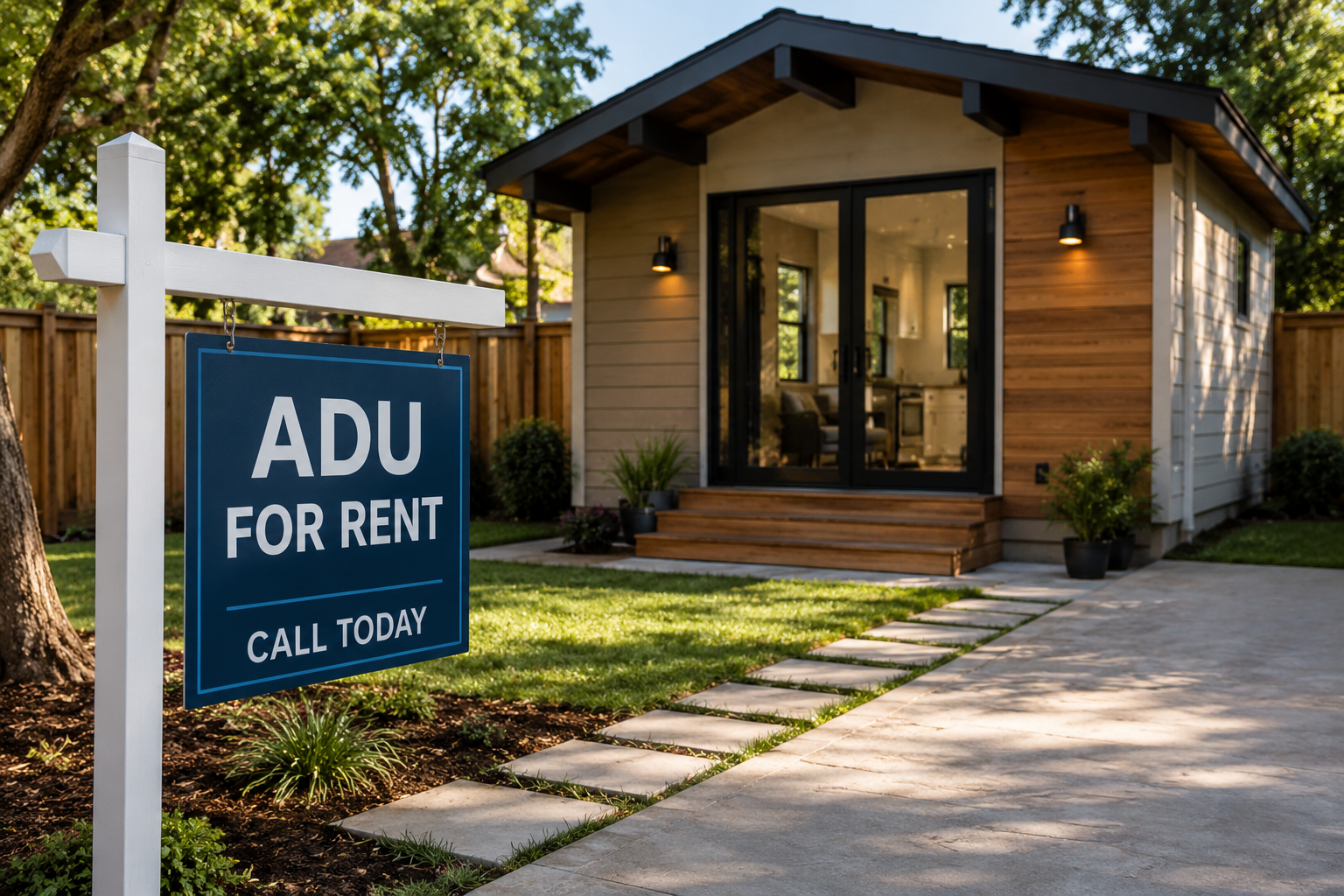
If you’ve built an ADU — or you’re seriously thinking about building one — the rental income question is probably front and center in your planning. And the first version of that question is usually the most fundamental one: is this even legal?
The answer, for most Florida property owners, is yes. You can legally rent out an ADU in Florida. But the word “most” in that sentence is doing real work, because the details of what’s allowed, where it’s allowed, and under what conditions vary enough across Florida’s counties and municipalities that a blanket yes without context isn’t actually useful guidance. The difference between a well-researched answer and an optimistic assumption can be the difference between a smooth rental operation and a code enforcement notice that creates real headaches.
This post is about giving you the complete picture: the legal framework for ADU rentals in Florida, the municipal variations that matter, the owner-occupancy rules that affect some property owners, the difference between long-term and short-term rental regulations, and what you need to have in place to rent legally and confidently in 2026. If you’re planning an ADU project for 2026 or 2027 with rental income as a goal, this is the regulatory context you need to understand before you finalize your plans.
The Foundation: What Makes an ADU a Legal Rental Unit
The starting point for understanding ADU rental legality in Florida is understanding what makes a structure qualify as a legal rental unit in the first place.
Florida law does not allow just any structure on a residential property to be rented as a dwelling. A converted storage shed, an unpermitted addition, a manufactured structure placed without going through the proper permitting process — these are not legal rental units regardless of how finished they look on the inside. Renting them creates liability for the property owner, exposure to code enforcement action, and potential problems at sale time that are both financially and legally costly.
A legal rental unit in Florida is a structure that has been built to the Florida Building Code, permitted through the local building department, and inspected and issued a Certificate of Occupancy or its equivalent. It needs to meet minimum habitable space requirements — sufficient square footage, adequate ceiling height, natural light and ventilation, proper egress — and it needs to have the utility connections and fixtures that make a space genuinely livable.
Block-built ADUs constructed on slab foundations and permitted through the full building department process — which is the standard EcoLife Homes follows for every project — meet all of these requirements. They’re treated as real property. They appraise as real estate. And they qualify as legal rental units under Florida law.
This distinction matters enormously when you’re evaluating the real cost of different building approaches. An ADU that cuts corners on permitting might appear cheaper in the short run. But an ADU that can’t be legally rented, can’t be appraised as real property, and creates liability for its owner isn’t actually cheap — it’s a liability disguised as a building. The full-process approach that produces a legally rentable structure is the only approach that delivers on the ADU income promise.
Long-Term Rentals: The Broadly Legal Option Across Florida
For long-term rentals — typically defined as leases of six months or longer — ADUs in Florida are generally allowed wherever the underlying zoning permits ADUs at all. If your property is in a zoning district that allows accessory dwelling units and your ADU is properly permitted, long-term rental is the baseline legal use across most of Florida’s municipalities.
This broad permissibility for long-term rentals reflects Florida’s legislative posture on housing supply. The state has been pushing for more flexibility in residential land use, and making it easier for property owners to rent legal ADUs on long-term leases is consistent with that direction. The Florida Legislature has in recent years taken steps to limit how aggressively local governments can restrict ADU development, and those limitations generally favor the property owner’s ability to use a permitted ADU as a rental.
In practice, this means that a properly built and permitted ADU in Tampa, Orlando, Jacksonville, Fort Lauderdale, Miami, or virtually any other Florida market can be legally rented on a long-term lease. The specific terms of what’s allowed — maximum occupancy, parking requirements, utility metering — vary by municipality, but the baseline right to rent is there in most jurisdictions.
What this does not mean is that no research is needed. Zoning codes change. Individual municipalities have their own overlay requirements. Homeowners associations, which are extremely common in Florida’s residential communities, may have rules that restrict rentals or require approvals that have nothing to do with municipal zoning. The HOA piece is something EcoLife Homes specifically discusses with clients during the project planning process, because discovering an HOA restriction after an ADU is built is a genuinely painful situation.
Owner-Occupancy Requirements: The Rule That Affects Some Property Owners
This is the regulatory detail that surprises more Florida ADU owners than almost anything else, and it’s worth understanding clearly because it affects whether you can rent your ADU if you don’t live on the property.
Some Florida municipalities — not all, but a meaningful number — have owner-occupancy requirements attached to their ADU ordinances. An owner-occupancy requirement means that to rent the ADU, the property owner must be living in either the primary home or the ADU on the same parcel. The logic is that having the owner on-site promotes responsible management and reduces neighborhood impacts from rental activity.
The practical implications vary depending on your situation. If you live in your primary home and want to rent the ADU in your backyard to a tenant, owner-occupancy requirements pose no problem at all — you’re already satisfying them. If you own a property as an investment, live elsewhere, and want to rent both the primary home and the ADU as separate units, owner-occupancy requirements in some jurisdictions would prevent this. You could rent one unit as the owner-occupant living in the other, but not rent both while living somewhere else.
The critical thing to understand is that owner-occupancy requirements are municipality-specific. They’re not statewide policy. Some Florida cities and counties have them; others don’t. And even in municipalities that have them, the rules are often more nuanced than a simple “you must live there” statement — there may be waivers, there may be different rules for different zoning districts, or the requirement may apply only to certain types of ADU configurations.
For property owners who are planning an ADU specifically as a non-owner-occupied rental investment, research into your specific municipality’s owner-occupancy rules is essential before you commit to the project. EcoLife Homes addresses this during the upfront zoning research phase of every project, because a project that doesn’t work for the owner’s intended use is a project that shouldn’t have been started without that information.
Short-Term Rentals: A More Complex Landscape
Short-term rentals — typically defined as stays of less than 30 days, and sometimes less than 7 days, depending on the jurisdiction — occupy a fundamentally different regulatory space than long-term rentals in Florida, and the landscape is considerably more complicated.
Florida has been through years of legal and legislative battles over short-term rental regulation, with state law, municipal ordinances, and HOA rules all pulling in different directions. The current state of play heading into 2026 is that short-term rental permissibility for ADUs is highly variable by location and has been subject to ongoing regulatory evolution.
At the state level, Florida law has historically limited the ability of municipalities to prohibit short-term rentals outright in most residential zones, though municipalities that had ordinances in place before certain legislative changes were grandfathered in. This has created a patchwork where some Florida municipalities actively allow and regulate short-term rentals through registration and licensing programs, while others have more restrictive approaches based on their pre-existing ordinances.
For ADU owners interested in short-term rental income — Airbnb, VRBO, and similar platforms — the research required is both more detailed and more time-sensitive than for long-term rentals. Rules in this area have been changing more frequently than in other areas of land use regulation, which means that information from a year or two ago may not reflect current policy. Looking at 2027 projections, there’s reason to expect continued evolution in this regulatory area as municipalities balance housing concerns against short-term rental economics.
Markets near Florida’s major tourism destinations — the Orlando area, the Gulf and Atlantic coasts, the Florida Keys — have particularly active short-term rental markets and typically have more established regulatory frameworks for managing them, including registration requirements, inspection programs, and density limits on short-term rentals within specific areas. Understanding where your property fits within these frameworks requires current, location-specific research.
HOA Rules: The Layer That Exists Outside Zoning
This deserves its own section because HOA restrictions on rentals operate independently of municipal zoning, and in Florida — where HOAs govern a very large percentage of residential communities — this is often the binding constraint that matters most.
An HOA can restrict or prohibit rentals, require tenant approval processes, limit lease terms, impose minimum lease lengths, or have other rules affecting how a property can be used as a rental, regardless of what the municipality’s zoning code allows. Municipal zoning creates a floor — you can’t do more than zoning allows — but an HOA can create a ceiling that’s more restrictive than zoning would require.
Common HOA rental restrictions in Florida include minimum lease periods of 30 days, 90 days, or six months; limits on the number of times a property can be leased per year; requirements that tenants be approved by the HOA board; and outright prohibitions on short-term rentals, which some HOAs have strengthened in response to the growth of platform-based short-term rental activity.
Before building an ADU in an HOA community, the HOA documents — the declaration of covenants, conditions, and restrictions, typically called the CC&Rs — need to be reviewed carefully for any provisions that would affect ADU construction or rental. Some HOAs have specific provisions about accessory structures. Others have general restrictions on the number of dwelling units per lot. And some HOAs may need to formally approve the ADU construction before it can proceed.
This is not unique to any particular type of Florida community — gated communities, deed-restricted neighborhoods, condominium complexes, and planned unit developments all operate under HOA governance that can affect ADU plans. EcoLife Homes clients are advised to review HOA documents before the project planning process goes too far, because discovering an HOA restriction after design and permitting work has been done is both costly and frustrating.
Rental Laws and Landlord Responsibilities in Florida
Once you’ve established that your ADU can be legally rented in your municipality under your applicable rules, you step into Florida’s landlord-tenant law framework, which governs the actual rental relationship.
Florida’s landlord-tenant law is codified primarily in Chapter 83 of the Florida Statutes, and it establishes the rights and responsibilities of both landlords and tenants for residential rental agreements. Key provisions include requirements for written leases for tenancy periods of more than one year, rules about security deposit handling and accounting, maintenance and habitability obligations, notice requirements for lease termination and entry, and procedures for handling disputes and evictions.
For ADU landlords in 2026, a few areas of Florida landlord-tenant law are particularly worth understanding. The habitability requirement — the landlord’s obligation to maintain the rental unit in a condition fit for human habitation — applies fully to ADUs just as to any other rental unit. This means functioning plumbing, working electrical systems, adequate heating and cooling (which in Florida means cooling in particular), weathertight walls and roof, and freedom from unsafe conditions. A well-built ADU constructed to current Florida Building Code standards will satisfy these requirements without difficulty, but they do create ongoing maintenance obligations that are part of the real cost of being a landlord.
Security deposit rules in Florida require that deposits be held in separate accounts, that tenants be notified of where deposits are held, and that deposits be returned with a proper accounting within 15 days of lease termination if there are no claims, or 30 days if there are deductions being claimed. These rules apply regardless of whether the rental unit is a freestanding home, an apartment, or an ADU.
Eviction procedures in Florida have specific statutory requirements — you can’t simply lock a non-paying tenant out or remove their belongings. The formal eviction process requires proper notice, court filing if the tenant doesn’t comply, and enforcement through the sheriff’s office. Understanding this framework before you have a problem tenant is significantly better than learning about it in the middle of one.
Setting Up the Rental: Practical Steps for 2026
Once you’ve confirmed that your ADU can be legally rented and you understand the applicable rules, the practical setup of the rental involves several steps that are worth approaching methodically.
Registering the rental unit with your municipality may be required — many Florida cities and counties have landlord registration or rental unit registration programs that apply to all residential rentals including ADUs. These programs typically involve a modest annual fee and sometimes a periodic inspection to verify code compliance. Check with your local code enforcement or housing department to determine whether registration is required in your area.
Obtaining proper insurance is important and sometimes overlooked. Your standard homeowner’s insurance policy likely does not cover rental activity — most policies exclude or limit coverage for structures rented to non-family members. A landlord policy or a dwelling fire policy for the ADU, combined with a requirement in your lease that tenants carry renter’s insurance, creates a proper coverage structure. This is worth discussing with your insurance agent before the first tenant moves in.
Establishing a proper lease agreement is fundamental. Florida has specific requirements for lease terms and disclosures, and using a properly drafted Florida residential lease agreement — either through an attorney, a property management company, or a reputable lease template specifically designed for Florida — protects both parties and gives you the legal framework you need if a dispute arises.
Setting rent based on current market data rather than guesswork produces better outcomes. Looking at comparable rentals in your specific neighborhood and market — units of similar size, condition, and amenity level — gives you a realistic price that will attract qualified tenants without leaving money on the table or sitting vacant while overpriced. EcoLife Homes clients often discuss rental market conditions in their area as part of the project planning process, because understanding what a completed unit will rent for is foundational to the ROI analysis.
The Markets Where ADU Rentals Perform Strongest in Florida
While ADU rental income potential exists across Florida, certain markets have characteristics that make the rental economics particularly compelling.
Tampa and the broader Tampa Bay area has been one of Florida’s strongest rental markets heading into 2026. The region’s continued economic growth, significant professional and healthcare workforce, and active short-term rental market near the coast create strong demand across rental unit types and sizes.
The Orlando area’s dual economy — tourism-driven employment alongside a growing technology and healthcare sector — creates diverse rental demand. Long-term rentals serving the professional workforce and short-term rentals near tourist attractions both have markets, though the regulatory landscapes for each are distinct.
South Florida markets including Fort Lauderdale, Pompano Beach, Deerfield Beach, and Boca Raton continue to see strong rental demand driven by population growth, limited new housing supply in established neighborhoods, and the persistent appeal of South Florida’s lifestyle and climate. EcoLife Homes has worked with property owners throughout this region on ADU projects that are now generating meaningful rental income.
Jacksonville, Florida’s largest city by area, has been growing significantly and its rental market reflects that growth. The city’s diversity of neighborhoods and price points creates rental opportunities at various levels, and its continued economic development keeps demand for rental housing strong.
The common thread across all of these markets in 2026 is that rental demand is supported by demographic and economic fundamentals — population growth, housing supply constraints, employment base — that make the income projections for well-built, well-located ADUs realistic rather than speculative.
What Separates Successful ADU Landlords From Frustrated Ones
After working with ADU owners across Florida, the patterns that distinguish successful rental experiences from frustrating ones are reasonably consistent.
Doing the regulatory research before the project starts, rather than discovering restrictions after the ADU is built, prevents the most painful problems. This sounds obvious, but the temptation to assume everything will work out and deal with details later is real — and the consequences of that assumption can be severe.
Building a unit that tenants actually want to live in, rather than the cheapest structure that technically qualifies as habitable, produces better tenants, better rents, lower vacancy, and fewer maintenance problems. The return on finish quality is real, and the calculus of saving money by cutting quality consistently favors investing in the build.
Understanding landlord-tenant law before you have a problem tenant is significantly better than learning it under pressure. Florida’s landlord-tenant framework is navigable, but it has specific procedural requirements that don’t accommodate improvisation well.
Treating the ADU rental as a real business — with proper insurance, proper lease documentation, proper accounting of income and expenses, and proper tax treatment — produces better outcomes than treating it as informal income. The rental income from an ADU is taxable, and the expenses are deductible, and the depreciation deductions can be meaningful. Getting tax guidance from an accountant who understands rental real estate before the income starts is worth the time and cost.
EcoLife Homes builds ADUs that are designed from the beginning to function as excellent rentals — the layouts are practical, the finishes are durable, the systems are sized correctly for Florida’s climate, and the units are built to the standard that produces legitimate real estate assets rather than structures that create problems down the road.
If you’re building an ADU in Florida with rental income as a goal, the project deserves to be approached with the seriousness of a real investment, because that’s exactly what it is.
Wondering whether you can legally rent your ADU in your Florida market? EcoLife Homes confirms your specific rental options — long-term, short-term, owner-occupancy requirements, and HOA considerations — as part of every free site consultation. Get the real answer for your property before you build.