Affordable, sustainable tiny homes
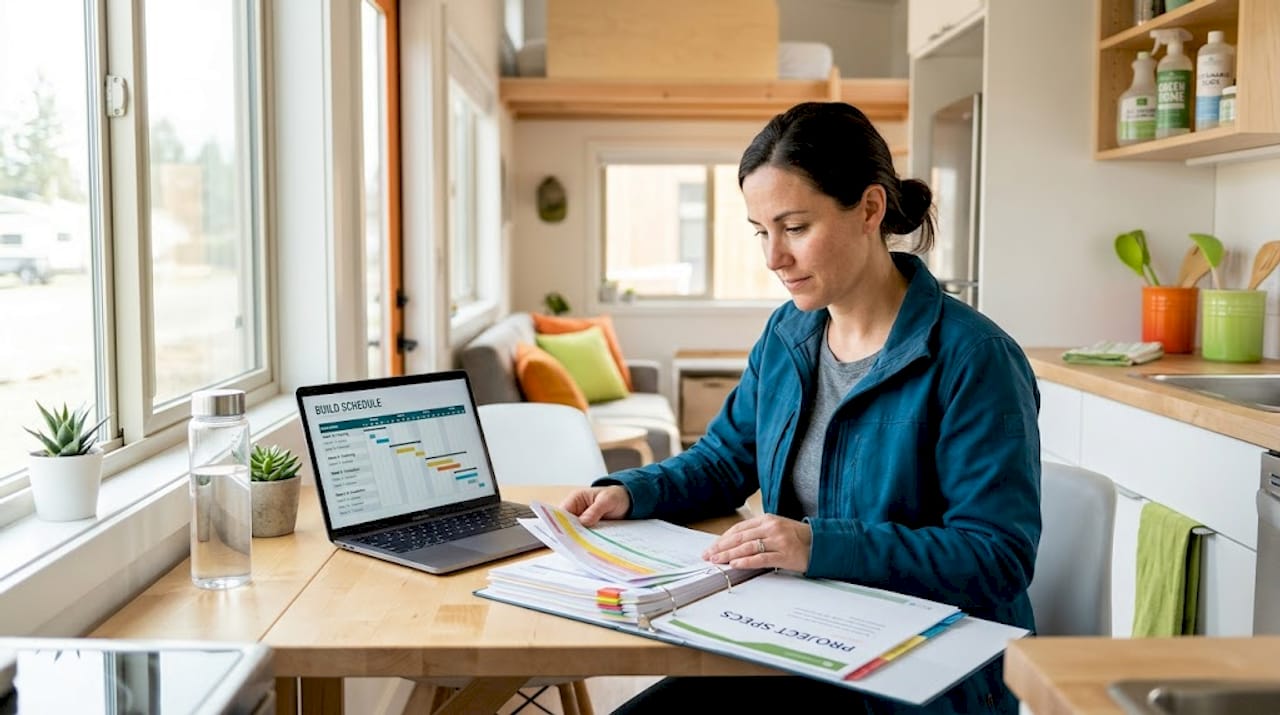
Building a tiny home becomes more achievable and trustworthy when transparency guides costs, materials, and processes. Choosing builders who openly share detailed documentation ensures eco-friendly choices and avoids hidden fees.
Building a tiny home sounds simple until you start asking questions about costs, materials, and who’s actually in charge of what. Many prospective buyers assume the process is either reserved for construction insiders or packed with hidden fees that quietly inflate the final bill. The truth is different. Prefab kits and owner-builder models are proving that sustainable, affordable housing becomes far more accessible when the process is laid bare from the start. This article walks you through what transparent home building actually looks like, why it matters for your budget and the environment, and how to find builders who genuinely practice it.
Table of Contents
- What does transparent home building really mean?
- Core elements of transparent home building: Costs, materials, and process
- Owner-builder models, prefab kits, and how transparency enables choice
- Sustainability and ethical building: Why transparency matters for the planet
- How to choose a transparent builder or supplier
- The overlooked power of transparency: Why information is your best tool
- Ready to start your transparent home building journey?
- Frequently asked questions
Key Takeaways
| Point | Details |
|---|---|
| Transparency cuts costs | Knowing every fee and material up front makes tiny homes more affordable and prevents budget surprises. |
| Empowered customization | Transparent building lets you choose eco-friendly materials and tailor features to your lifestyle. |
| Sustainable choices | With disclosed sourcing and processes, you can confidently select truly green solutions for your home. |
| Informed decision-making | Clear, step-by-step processes and honest communication protect buyers from common pitfalls. |
What does transparent home building really mean?
Transparency in home building is not just a buzzword. It is a commitment to keeping buyers fully informed at every stage, from the first design conversation to the final walkthrough. That means knowing exactly what materials go into your walls, what each line item costs, and how long each phase of construction will take.
Traditional home building often keeps buyers at arm’s length. You sign a contract, write checks, and hope the finished product matches the vision. Transparent building flips that dynamic entirely. The builder becomes a partner, not just a contractor.
Here is what genuine transparency looks like in practice:
- Full cost disclosure before work begins, with no surprise add-ons halfway through
- Material specifications shared in plain language, including sourcing and eco credentials
- Timeline milestones communicated clearly so you are never left wondering what happens next
- Open access to the build site or manufacturing facility, so you can see progress firsthand
- Warranty and compliance documentation provided without you having to chase it down
Choosing a transparent contractor is one of the most protective decisions you can make as a buyer. It is the difference between a stressful, uncertainty-filled experience and one where you feel confident at every turn.
“A truly transparent builder welcomes your questions. If a contractor hesitates when you ask where the lumber comes from or why a cost shifted, that hesitation tells you everything.”
The connection between transparency and sustainability in home building is also significant. When builders openly share their material sourcing, eco-friendly choices become verifiable rather than assumed. You are not just trusting a label; you are seeing the evidence.
| Feature | Traditional builds | Transparent builds |
|---|---|---|
| Cost breakdown | Often bundled or vague | Itemized from day one |
| Material sourcing | Rarely disclosed | Shared with documentation |
| Customer involvement | Minimal until handover | Active throughout |
| Eco claims | Difficult to verify | Backed by material lists |
| Timeline updates | Inconsistent | Regular and structured |
Core elements of transparent home building: Costs, materials, and process
Transparency has three main pillars: cost, materials, and process. Each one addresses a specific source of stress and confusion that buyers commonly face.
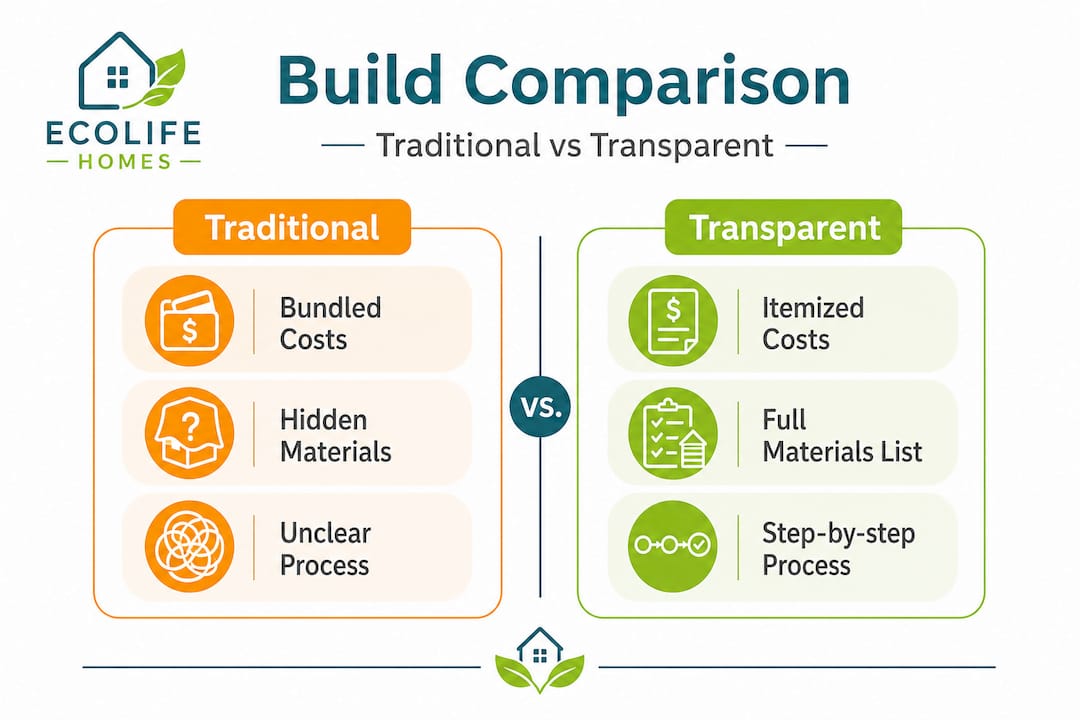
Cost transparency means you receive an itemized quote before any work starts. Not a rough estimate. Not a ballpark. A line-by-line breakdown that includes labor, materials, permits, delivery, and installation. This makes budgeting straightforward because you know exactly what you are paying for and why.
Material transparency goes one layer deeper. It means knowing not just what materials are used, but where they come from, how they perform, and how they affect the environment. For example, knowing that your flooring is made from sustainably harvested bamboo is very different from being told it is “eco-friendly.” You can explore sustainable flooring options that combine durability, beauty, and environmental responsibility. Specific claims with documented sourcing give you real information to work with.
Process transparency means every build stage is visible and explained. Here is a simplified step-by-step overview of how a transparent tiny home build typically flows:
- Initial consultation and design review – Your goals, budget, and site conditions are all discussed openly.
- Itemized quote and material selection – You receive a full cost breakdown and can review or adjust material choices.
- Permit and compliance phase – The builder handles paperwork and keeps you updated on approvals.
- Manufacturing or on-site construction – Progress updates are shared regularly, with photos or site visits available.
- Quality inspection and review – You inspect the build against agreed specifications before final acceptance.
- Delivery, installation, and handover – Documentation, warranties, and keys are all delivered together.
As prefab kits bridge the gap between DIY builds and full custom construction, they also naturally support this kind of structured, visible process. When a home is manufactured in a controlled facility, every component is documented before it ever reaches your site.
Pro Tip: Always ask for an itemized quote and a full material list before signing any contract. If a builder cannot provide both within a few days of your request, that is a clear sign they may not be operating transparently.
| Category | Traditional builds | Transparent builds |
|---|---|---|
| Average cost surprises | 15% to 30% over estimate | Under 5% with itemized plans |
| Material documentation | Rarely available | Standard practice |
| Build time reliability | Often delayed | Milestone-based scheduling |
| Eco verification | Minimal | Documented and auditable |
For buyers interested in prefabricated home methods, the transparent process is often already built in because factory production requires precise documentation from the outset. And for those drawn to eco-friendly tiny homes, transparency is the mechanism that ensures your green choices are real and not just marketing language.
Owner-builder models, prefab kits, and how transparency enables choice
Transparency is not just informative; it is liberating. When you understand exactly what goes into each build option, you can make a choice that genuinely fits your budget, your skills, and your values.
There are three primary paths for building a tiny home:
- Owner-builder: You take on the role of general contractor, sourcing materials and hiring subcontractors yourself. Owner-builder models cut costs dramatically but demand real construction knowledge, time, and patience. This path suits buyers with strong DIY experience and the bandwidth to manage a project.
- Prefab kits: A manufacturer builds major components in a factory, then delivers and assembles them on site. This model offers speed, cost predictability, and built-in material transparency since the factory controls what goes into every unit.
- Fully custom builds: A builder designs and constructs your home from scratch to your specifications. This option offers the most creative freedom but requires the most rigorous vetting to ensure transparency is maintained throughout.
| Build type | Estimated cost range | Skill required | Speed | Eco features |
|---|---|---|---|---|
| Owner-builder | $30,000 to $80,000 | High | Slow | Variable |
| Prefab kit | $50,000 to $130,000 | Low to moderate | Fast | Often standardized |
| Fully custom | $80,000 to $200,000+ | Low (managed by builder) | Moderate | Highly customizable |
Each option has real trade-offs. Here is an honest look at the pros and cons:
Owner-builder:
- Pros: Lowest cost, complete control, deep personal involvement
- Cons: High time commitment, requires permits and subcontractors, easy to make costly mistakes
Prefab kit:
- Pros: Speed, predictable cost, factory quality control, transparent material sourcing
- Cons: Less design flexibility, delivery logistics can be complex in remote areas
Fully custom:
- Pros: Total design freedom, can incorporate premium eco materials
- Cons: Higher cost, requires strong builder vetting to ensure genuine transparency
Pro Tip: Be honest with yourself about your DIY skills and available time before committing to an owner-builder approach. The cost savings are real, but so is the workload. Many buyers overestimate their capacity and end up spending more to fix mistakes than they would have with a prefab option.
For buyers who want the best of both worlds, eco-friendly park model homes offer custom design within a factory-built, transparent framework. Pairing that with sustainable craftsmanship in tiny homes means your investment is both financially sound and environmentally responsible. And if you want to stretch your budget further, applying energy-efficient design tips during the design phase can reduce long-term utility costs significantly.
Sustainability and ethical building: Why transparency matters for the planet
When a builder is truly transparent, sustainability stops being a sales pitch and starts being a verifiable fact. You can check the certification on the lumber, confirm that insulation meets energy efficiency standards, and verify that finishes are low in volatile organic compounds (VOCs), chemicals that off-gas from paints and adhesives and affect indoor air quality.
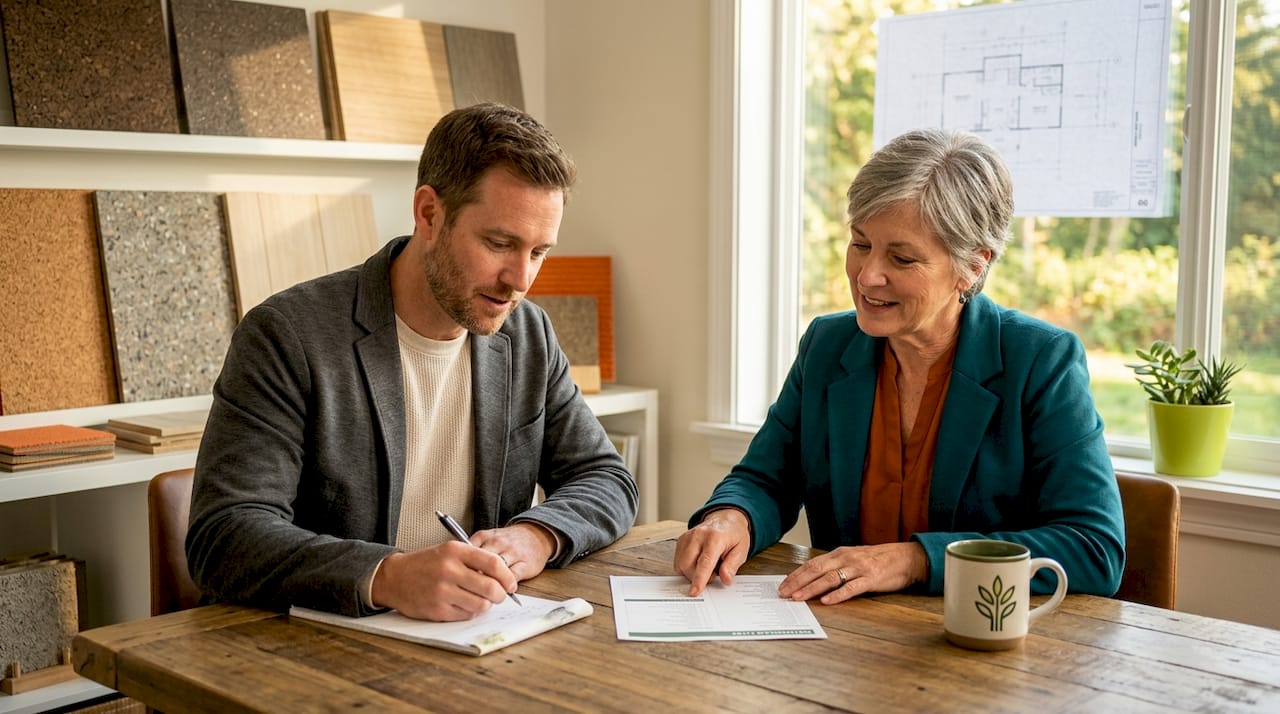
This matters because greenwashing, the practice of making products sound eco-friendly without real evidence, is common in the construction industry. When a builder shares actual documentation for every material, greenwashing becomes impossible.
Key environmental benefits of a transparent build include:
- Lower embodied carbon from documented, responsibly sourced materials
- Reduced construction waste through factory-precision manufacturing
- Verified energy efficiency from insulation and window specifications you can actually read
- Responsible forestry confirmed by certifications like FSC (Forest Stewardship Council)
- Healthier indoor air quality through documented low-VOC or zero-VOC finishes
- Smaller overall footprint since smaller homes naturally use fewer resources
Prefab kits bridge the gap for buyers who want eco-friendly construction without managing every supplier themselves. When the factory controls material inputs and documents them by default, you get sustainability built into the process rather than bolted on as an afterthought.
For a deeper look at making sustainable choices from the ground up, the guide to sustainable tiny homes covers specific materials and methods worth knowing. And staying current with sustainable design trends can help you make forward-thinking choices that hold their value over time. The principles of sustainability in renovation also apply here: small material choices made with care add up to a meaningful environmental difference.
The bottom line is simple. Transparency and sustainability reinforce each other. You cannot have genuine eco credentials without openness, and you cannot have trustworthy openness without the documentation to back it up.
How to choose a transparent builder or supplier
Knowing what transparency looks like is only useful if you can identify builders who actually practice it. Here is a straightforward process for vetting any contractor or manufacturer:
- Research online first. Look for reviews that specifically mention communication, cost accuracy, and material quality, not just the final result.
- Request a virtual or in-person facility tour. Any manufacturer worth working with will welcome this. Seeing the production process firsthand tells you more than any brochure.
- Ask for an itemized quote in writing. Not a total number. A breakdown by category including materials, labor, permits, delivery, and contingency.
- Request a full material list with sourcing documentation. If a builder cannot tell you where your steel frame comes from or what the R-value (thermal resistance) of your insulation is, that is a problem.
- Review warranty terms carefully. A transparent builder provides clear, written warranties that explain exactly what is covered, for how long, and under what conditions.
- Check licensing and credentials. Verify that the builder holds the appropriate state licenses and that any eco claims are backed by third-party certifications.
Pro Tip: Ask for a virtual or in-person walk-through of the manufacturing or construction workflow. This single step reveals more about a builder’s actual practices than any sales conversation.
Common red flags to watch for:
- Vague or bundled quotes with no itemization
- Reluctance to provide material documentation or sourcing information
- No clear timeline with defined milestones
- Pressure to sign quickly before you have reviewed everything
- Eco claims without certifications or third-party verification
For buyers weighing their long-term options, understanding why eco modular homes are a smart choice can help clarify what standards your builder should meet. And reviewing consumer must-knows before selecting a contractor gives you a practical checklist to use in every interview.
The overlooked power of transparency: Why information is your best tool
Here is something most buying guides do not say plainly: most construction problems, including budget overruns, material failures, and broken timelines, do not happen because of bad luck. They happen because critical information was withheld, either intentionally or through poor communication. Buyers who focus only on square footage or interior design often discover far too late that they had no idea what they had actually agreed to.
Transparency is not just a nice-to-have quality in a builder. It is a protective mechanism. It is the thing that stops a $95,000 project from quietly becoming a $130,000 one. It is what ensures that the “eco-friendly” insulation in your walls actually meets the specification you paid for.
We have seen, across more than two decades in this industry, that the buyers who ask the most questions and demand the most documentation consistently end up with better outcomes. Not because they are difficult clients, but because they create accountability at every step. A builder who knows you are paying attention builds more carefully.
There is also a mindset shift worth considering. Many buyers treat transparency as something they hope to receive passively. The smarter approach is to pursue it actively. Keep a running checklist of every commitment made in writing, every material approved, every timeline agreed upon. This is not about distrust. It is about building a record that protects both you and the builder if questions arise later.
For anyone thinking about building long-lasting tiny homes, transparency is actually the foundation of durability. You cannot build something that lasts if you do not know what it is made of.
Pro Tip: Create a simple “transparency checklist” and bring it to every conversation with a potential builder. Include questions about material sourcing, cost itemization, timeline milestones, warranty terms, and eco certifications. If a builder responds well to this list, you have found a strong partner.
Ready to start your transparent home building journey?
At Ecolife Homes, transparency is not a policy we added later. It is the reason we exist. With over 21 years of combined expertise in civil engineering and construction, we built our process around one simple idea: you deserve to know exactly what you are getting, what it costs, and how it is made.
We design and manufacture premium steel park model tiny homes right here in Florida, delivering anywhere in the USA. Every quote is itemized. Every material is documented. And from permitting to installation, we handle the details so you can focus on the exciting part: imagining your new home. Whether you are exploring affordable tiny homes for the first time or you are ready to compare prefab vs traditional homes in detail, we are here to walk you through every step with honesty and care. Reach out today and request your itemized quote. No surprises. Just clarity.
Frequently asked questions
How do I know if a builder is truly transparent?
Look for builders who provide itemized budgets, share full material lists with sourcing documentation, and give clear answers to all your questions without hesitation. A genuinely transparent builder welcomes your scrutiny rather than discouraging it.
Are transparent builds more expensive than traditional homes?
Transparent builds are generally more affordable over the full project because itemized costs eliminate hidden fees and help you make informed decisions that prevent expensive mistakes. Prefab and owner-builder models show that openness and affordability go hand in hand.
Can I customize my materials in a transparent home building model?
Yes, and this is one of the biggest advantages. When you can see exactly what materials are being used, you can request upgrades, substitutes, or eco-certified alternatives that better reflect your priorities. Prefab kits especially often include material selection as a standard part of the buyer experience.
What are common signs of a builder lacking transparency?
Vague quotes presented as single totals, reluctance to explain material sourcing, slow or evasive responses to direct questions, and missing warranty documentation are all significant red flags. Transparent builders provide documentation without being asked twice.
Recommended
- Sustainable housing guide: tiny & eco homes in 2026
- Modern tiny house design: affordable, sustainable living
- Eco-Friendly Park Model Tiny Homes – Ecolife Homes – Park Model Home Manufacturer – Florida – USA
- Top tiny home design trends shaping sustainable living