How to maintain a park model home for lasting comfort

Park model homes require regular, proactive maintenance to prevent costly repairs and ensure longevity. Owners should gather essential tools, create a scheduled routine, and monitor moisture and structural integrity through seasonal inspections. Consistent attention to underbelly, skirting, and ventilation significantly reduces mold, water damage, and energy costs over time.
Park model homes offer a refreshing blend of comfort, efficiency, and flexibility that appeals to retirees, vacationers, and full-time residents alike. But that freedom comes with a responsibility that many new owners underestimate: consistent, proactive maintenance. Without a reliable routine, small issues like a hairline crack in your skirting or a clogged air filter can quietly snowball into expensive repairs. The good news is that keeping your park model home in excellent shape does not require a contractor on speed dial. With the right tools, a clear schedule, and some practical know-how, you can protect your investment and enjoy your home for decades.
Table of Contents
- Gathering the right tools and essentials for park model home maintenance
- Step-by-step maintenance checklist for park model homes
- Managing moisture, condensation, and protecting your home’s structure
- Troubleshooting and preventing common park model home issues
- What most park model owners overlook—and how to truly extend your home’s life
- Upgrade your park model experience with expert support
- Frequently asked questions
Key Takeaways
| Point | Details |
|---|---|
| Routine is key | A monthly and seasonal maintenance routine prevents most costly repairs. |
| Manage moisture | Properly vented skirting and regular underbelly checks prevent mold and preserve your home’s structure. |
| Have the right tools | A dedicated toolkit speeds up inspection and allows you to address issues before they worsen. |
| Spot issues early | Most park model problems start small—catch them early for simple, low-cost fixes. |
Gathering the right tools and essentials for park model home maintenance
Now that you know why regular maintenance matters, start by gathering what you will need for simple, effective upkeep. Many park model home owners make the mistake of waiting until something breaks before reaching for their toolbox. Being prepared before problems arise saves you time, money, and a lot of frustration.
Core tools and supplies to keep on hand
A well-stocked maintenance kit does not need to be large or expensive. Here are the essentials every park model homeowner should have ready:
- Caulk gun and exterior-grade sealant for sealing gaps around windows, doors, and skirting panels
- Moisture meter to test walls, floors, and the underbelly for hidden dampness before it becomes mold
- Cordless screwdriver and drill for tightening hardware and replacing vent covers
- Sturdy, adjustable ladder for safe access to your roof and gutters
- Weatherstripping rolls to seal door and window frames against drafts
- Replacement air filters sized to your HVAC unit, kept in a two-pack supply
- Skirting panels and vent inserts matched to your home’s existing material for quick repairs
- Work gloves, safety glasses, and a flashlight for underbelly inspections
Pro Tip: Buy two or three extra air filters and store them in a labeled bin near your HVAC unit. When you see the reminder on your calendar, you will not need to run to the store first.
Beyond tools, keep a home maintenance log or use a simple digital spreadsheet to track every task you complete, every part you replace, and every repair you make. This record becomes invaluable when troubleshooting recurring issues or if you ever decide to sell. Pair your log with the manufacturer’s manual for your HVAC, water heater, and any appliances so you are never guessing about service intervals.
Skirting material deserves a separate mention. According to guidance on skirting for small homes, managing moisture under your unit with proper skirting and underbelly blocking is one of the most effective ways to improve winter performance and cut condensation and mold risk. Stocking replacement skirting panels in advance means a damaged section gets fixed the same week it breaks, not months later.
You can also review design workflow tips and explore customization ideas to understand how your home’s layout affects which areas need the most attention.
| Tool or supply | Purpose | Recommended quantity |
|---|---|---|
| Exterior caulk | Seal gaps and joints | 3 to 4 tubes |
| Air filters | HVAC efficiency | 2 to 3 extras |
| Moisture meter | Detect hidden dampness | 1 unit |
| Weatherstripping | Draft prevention | 10 to 20 feet |
| Skirting panels | Underbelly protection | 2 to 4 spares |
Step-by-step maintenance checklist for park model homes
With the right tools in hand, it is time to follow a simple schedule to keep your park model home in peak condition. Think of this schedule like an oil change for your car. Do it consistently, and the engine runs smoothly for years. Skip it, and you pay a much bigger bill later.
Monthly tasks
- Walk the exterior and inspect all skirting panels for visible cracks, gaps, or shifting.
- Check under doors and around window frames for drafts using your hand or a lit candle.
- Look under the home (using a flashlight) for any standing water, frost buildup, or pest intrusion.
- Confirm all exterior vents are clear of debris, leaves, or insect nests.
- Test your smoke detector and carbon monoxide (CO) detector by pressing the test button.
Quarterly tasks
- Replace HVAC air filters, even if they look relatively clean. A used filter still restricts airflow.
- Clean gutters and downspouts to prevent water from pooling near your foundation or skirting base.
- Wipe down bathroom exhaust fan covers and check that fans are pulling air properly.
- Inspect water supply lines under sinks for drips, discoloration, or mineral buildup.
- Check exterior sealant around windows, doors, and roof penetrations for cracking or lifting.
Biannual tasks (spring and fall)
- Flush your water heater to remove sediment, which reduces efficiency and shortens the unit’s life.
- Schedule an HVAC service visit or run through your system’s self-diagnostic features before each season.
- Inspect your roof surface and all sealants for bubbling, cracking, or soft spots.
- Test all GFCI outlets (the ones with the small reset button near sinks and bathrooms) by pressing the test and reset buttons.
- Review your insulation techniques to make sure your home is ready for season changes.
Annual deep inspection
- Conduct a full underbelly inspection, looking for torn wrap, wet insulation, or signs of animal nesting.
- Verify that all plumbing venting pipes are intact and unobstructed at the roof level.
- Check the structural frame and any support piers or tie-downs for rust, shifting, or settling.
- Review your complete maintenance log and make notes for the year ahead.
Remember: According to expert guidance on skirting for small homes, checking your skirting for cracks and sealing up drafts under the home is one of the most practical steps you can take to keep pipes from freezing in colder months. Make this part of every monthly walk-around.
Pro Tip: Set four recurring calendar reminders per year labeled “Park model home check.” Each reminder opens your maintenance log and shows you exactly what is due that quarter. No guesswork needed.
You can also cross-reference this schedule with the FAQ for park model homes resource for additional guidance on specific systems.
| Task category | Frequency | Time required |
|---|---|---|
| Skirting inspection | Monthly | 15 to 20 minutes |
| Filter replacement | Quarterly | 10 minutes |
| Roof and sealant check | Every 6 months | 30 to 45 minutes |
| Underbelly deep inspection | Annually | 1 to 2 hours |
Managing moisture, condensation, and protecting your home’s structure
Beyond regular tasks, moisture management is a critical topic that deserves special attention by all park model home owners. Water damage is the leading cause of expensive structural repairs in park model homes, and the tricky part is that it often develops slowly and out of sight.

Why skirting and ventilation work together
Skirting is the material that encloses the space beneath your park model home, and it does more than just look neat. It protects pipes from freezing wind, keeps pests out, and creates a thermal buffer in cold weather. But skirting that traps air with no way to escape creates its own problem. Sealed, unvented skirting holds humidity against your home’s undercarriage, and over time, that moisture feeds mold and accelerates rot in wooden structural components.
The solution is vented skirting, which uses small panels or louvers to allow controlled airflow underneath the home. Vented skirting reduces humidity while still blocking wind chill and pest entry. In winter, some owners use removable vent covers to reduce cold airflow, then reopen them in warmer months.
According to expert guidance on small home enclosures, enclosed underbelly spaces must include appropriate ventilation to avoid trapped humidity that promotes mold and condensation. This is not an optional upgrade. It is a structural necessity.
Practical steps to control moisture year-round
- Use a dehumidifier inside the home if you live in a humid climate like Florida or the Gulf Coast
- Apply vapor barrier sheeting on the ground beneath the home to stop ground moisture from rising
- Inspect roof seams and window caulking at least twice a year for gaps where rain can enter
- Keep gutters clear so water does not overflow and pool against your skirting base
- Run bathroom and kitchen exhaust fans consistently during cooking and showering
Understanding these principles also deepens your appreciation for the benefits of park model living, because a well-maintained home is a genuinely comfortable and efficient one. You can also explore energy-efficient upgrades that complement moisture management and reduce your utility bills at the same time.
| Skirting type | Moisture control | Freeze protection | Maintenance level |
|---|---|---|---|
| Fully sealed, no vents | Poor | Excellent | Low |
| Vented skirting | Excellent | Good | Moderate |
| Removable vent covers | Excellent (seasonal) | Excellent | Moderate to high |
Troubleshooting and preventing common park model home issues
Understanding how to control moisture helps, but being able to spot and fix common issues solidifies your home’s long-term health. Most park model home problems follow predictable patterns, and catching them early is almost always cheaper and easier than dealing with them after they worsen.
Common issues and how to catch them early
- Drafts near doors and windows: Run your hand slowly around frames on a cold day. Even a small air movement signals a weatherstripping or caulk failure worth fixing immediately.
- Water stains on ceilings or walls: A yellowish ring almost always points to a roof leak or a plumbing drip above. Do not ignore it or paint over it.
- Musty odors inside: This is often the first sign of mold growth in the underbelly or behind walls, usually traced back to unmanaged condensation.
- Soft or springy floor sections: These suggest moisture has reached subflooring and warped or weakened the material. Act fast to prevent spreading.
- High energy bills without a clear reason: A failing seal or poor insulation is often to blame. Compare your monthly bills season over season to catch these trends.
DIY fixes that work for most small problems
Many of the most common issues are genuinely manageable without calling a professional. Sealing drafts with fresh caulk or new weatherstripping takes about 20 minutes and costs under $15. Replacing a clogged bathroom vent or adding a basic skirting vent panel is a straightforward afternoon project with the right materials.
Experts consistently note that sealing skirting cracks and ensuring proper underbelly venting are two of the most impactful DIY tasks an owner can do to protect their home from the inside out.
When to call a professional
Call a licensed contractor or technician when you see standing water near electrical panels, any evidence of structural settling or frame damage, or mold covering an area larger than about 10 square feet. These situations move beyond DIY territory fast. Electrical and structural issues in particular carry safety risks that require certified expertise.
Review your park model home regulations as well, since some repairs in regulated communities may require permitted work by licensed professionals.
What most park model owners overlook—and how to truly extend your home’s life
Here is an honest observation from years of working in park model home construction and design: most owners pay careful attention to what they can see. They repaint a scuffed wall, replace a dripping faucet, and upgrade their kitchen fixtures. But the underbelly? The skirting vents? Those go unchecked for years.
That gap between visible maintenance and invisible maintenance is where most major problems are born. A small moisture issue beneath the floor in year one becomes a mold colony and compromised subfloor by year five. The repair cost jumps from $200 to $8,000 or more. And it was entirely preventable with a 20-minute inspection twice a year.
The habit that separates homeowners who deal with expensive surprises from those who do not is simple: they treat underbelly inspections as non-negotiable seasonal events, just like they would changing their smoke detector batteries. Research on small home enclosures confirms that skirting and ventilation together cut mold and condensation risk dramatically across seasons. The data is clear. The practice just needs to become a habit.
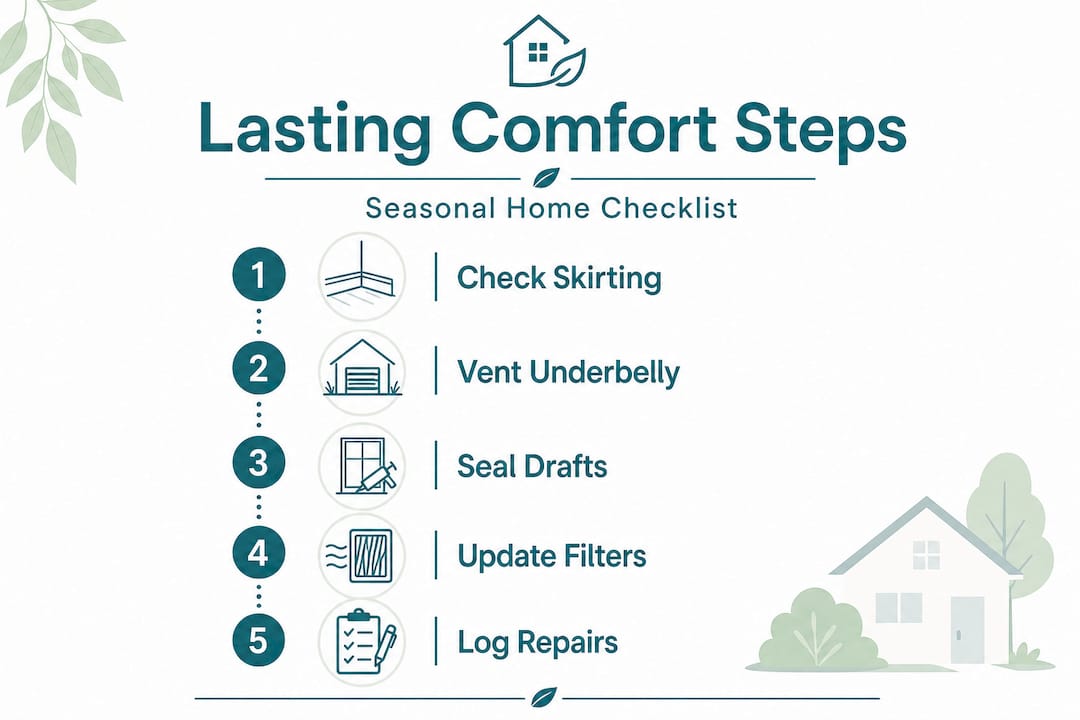
A seasonal checklist, revisited every three months, is genuinely the single best return on your time as a park model homeowner. Write it down, put it on your phone, tape it inside your utility closet door. The format does not matter. Consistency does. You can use a solid workflow for lasting homes as a framework to build your own seasonal rhythm.
Upgrade your park model experience with expert support
Maintaining a park model home is easier with the right knowledge and the right partner. At Ecolife Homes, we design and manufacture premium steel park model homes built to handle real-world conditions with minimal stress on the owner.
Our homes are engineered with moisture-resistant materials, durable steel chassis construction, and smart layout choices that make long-term maintenance straightforward. Whether you are looking to upgrade your current setup, explore new features for a second home, or simply want to understand what makes a park model home truly last, our team is ready to help. Browse our Tiny Homes Life resources or compare your options with our prefab vs traditional homes guide to see how our approach delivers lasting value.
Frequently asked questions
What is the most important regular maintenance task for a park model home?
Inspecting and maintaining the skirting and underbelly for moisture, cracks, and proper ventilation is the most critical ongoing task, since skirting and underbelly management directly reduces condensation and mold risk through every season.
How do I reduce condensation and prevent mold in my park model home?
Properly vented skirting combined with regular underbelly checks is your most effective defense, because enclosed underbelly spaces without ventilation trap humidity that promotes mold growth over time.
How often should I check my park model home’s roof and seals?
Inspect your roof and all exterior seals at least twice a year, ideally in spring and fall, and always do a visual check after major storms to catch leaks or lifted sealant before water gets inside.
Can DIY fixes handle most common park model home issues?
Yes, many small problems like drafts, worn weatherstripping, or cracked skirting panels are straightforward DIY repairs, but call a licensed professional any time you suspect major water intrusion, structural damage, or electrical issues.
Recommended
- How to customize a park model home for style and comfort
- Park model home design workflow for maximum value
- Why Choose a Park Model Tiny Home? – Ecolife Homes – Park Model Home Manufacturer – Florida – USA
- Top 100 FQA about Park Model Homes – Ecolife Homes – Park Model Home Manufacturer – Florida – USA