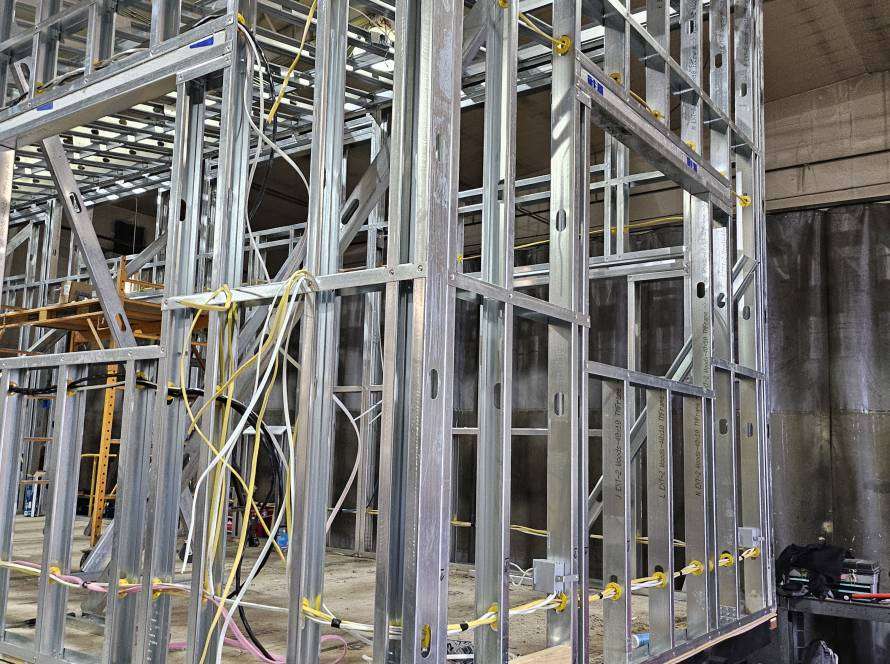
How to navigate the park model compliance process in Florida

Buying a park model tiny home in Florida involves complex compliance steps beyond the factory certification. Understanding the roles of federal, state, and local agencies, and verifying licenses and documentation, is essential for legal placement. Ensuring all permits, inspections, and park licenses are current before move-in prevents costly delays and enforcement issues.
Buying a park model tiny home in Florida sounds straightforward until the paperwork starts piling up. Many buyers are blindsided by compliance requirements that go well beyond what the factory stamps on the unit, discovering too late that missing a single permit or license can delay move-in by weeks or trigger costly fines. The good news is that when you understand the full picture from the start, including which agencies are involved, what documents you need, and exactly what happens at each approval stage, the process becomes predictable and manageable. This guide breaks it all down so you can move forward with confidence.
Table of Contents
- Understanding park model compliance requirements in Florida
- Preparing for compliance: What you need before you buy or move in
- Step-by-step: Navigating the park model compliance process
- Troubleshooting and common mistakes in park model compliance
- What most buyers miss about park model compliance
- Ready for a compliant park model home? Explore your options
- Frequently asked questions
Key Takeaways
| Point | Details |
|---|---|
| Dual compliance is vital | You must satisfy both HUD/factory and local park requirements for legal park model placement in Florida. |
| Plan reviews matter | County health departments regularly inspect and enforce health and safety standards at the park level. |
| Documentation is crucial | Gather all required documents—including HUD certification and park licenses—before moving your home. |
| Stepwise approach saves stress | Following each compliance step in order avoids common delays and regulatory problems. |
| Local inspections are ongoing | Even after moving in, expect periodic county inspections to maintain your home’s compliance. |
Understanding park model compliance requirements in Florida
Now that you know why compliance matters, let’s clarify what specific requirements you’ll encounter and who enforces them.
Park model is a term used to describe factory-built recreational units, typically between 400 and 500 square feet, built on a permanent chassis. They are not the same as manufactured homes. A manufactured home is regulated under the HUD Code (the federal Manufactured Home Construction and Safety Standards), while a park model often falls under a different classification depending on its intended use and placement. Understanding that distinction is the first thing any buyer needs to get right.
Compliance in Florida works on two distinct layers. The first layer is the unit certification, which confirms the home itself was built to applicable standards. The second layer is park-level compliance, which covers the site, infrastructure, and operating license of the park where you place it. Many buyers focus only on the unit and completely overlook the park. That oversight is where most problems originate.
The main agencies you’ll deal with include:
- HUD (U.S. Department of Housing and Urban Development): Oversees the federal manufactured housing program. Manufacturers apply a HUD certification label (called a HUD tag) to each unit to confirm it meets the HUD Code. Private inspection agencies and State Administrative Agencies (SAAs) assist with this oversight.
- Florida Department of Health: Governs RV parks and mobile home parks at the state level under Chapter 513 of the Florida Statutes.
- County health departments: These are your front-line local agencies. Under Chapter 513 regulations, county health departments handle plan reviews, routine inspections, and enforcement actions for parks that host park model homes.
- Local zoning and building departments: Depending on the county, these offices may also weigh in on site preparation, setbacks, and utility connections.
The table below gives you a quick summary of each agency’s role:
| Agency | Jurisdiction | Key responsibility |
|---|---|---|
| HUD | Federal | Unit certification (HUD tag) |
| Florida Department of Health | State | Park licensing under Chapter 513 |
| County health department | Local | Plan review, inspections, enforcement |
| Local zoning/building dept. | Local | Site permits, setbacks, utilities |
Understanding Florida park model regulations across all these layers is not optional. It is the foundation of a smooth and legal placement.
Pro Tip: Before you sign any purchase agreement, ask the park manager for a copy of their current health department license. A licensed park is one of the most important indicators that your placement will proceed without major issues.
Preparing for compliance: What you need before you buy or move in
With the main authorities and rules in mind, you’re ready to gather materials and documentation for a smooth compliance journey.
The biggest mistake buyers make is treating compliance as something to handle after the purchase. In reality, it should start before you commit to a specific unit or a specific park. Having the right documents ready from day one saves you from scrambling later.
Here’s what you need to gather and verify:
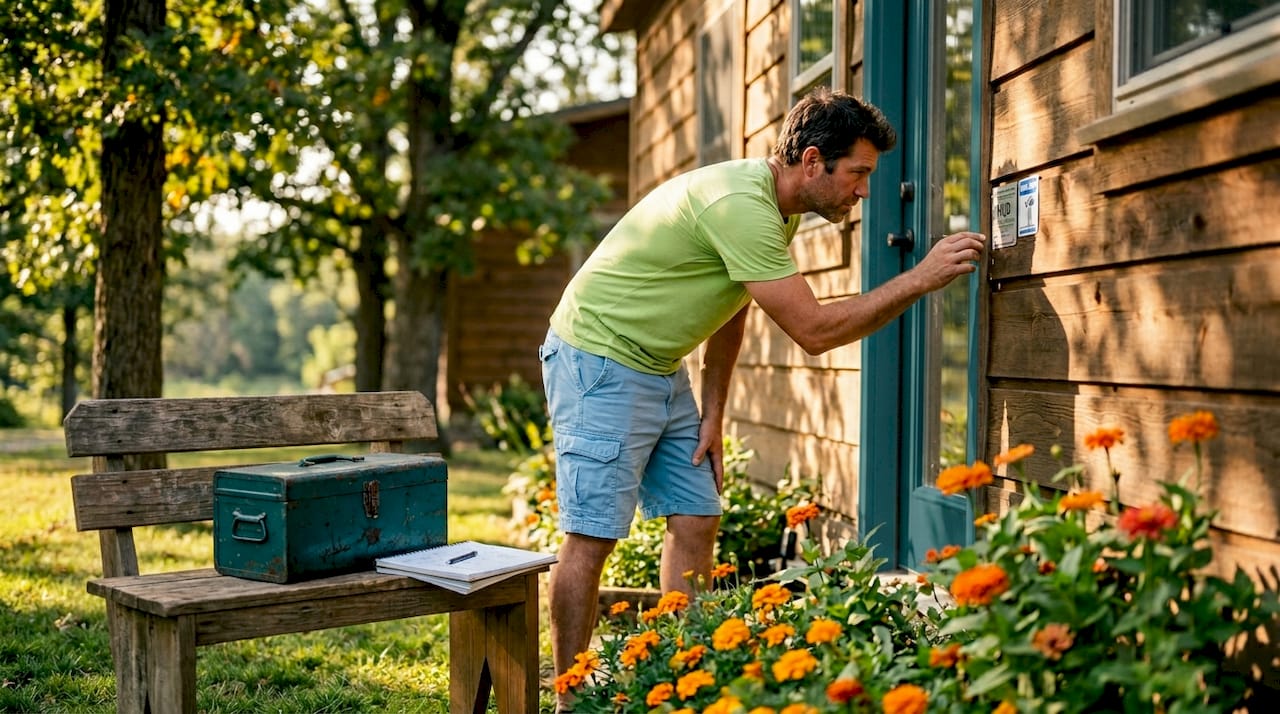
- HUD certification label (HUD tag): Proof that the unit was built to federal standards. If a seller cannot produce this, that is a serious red flag.
- Bill of sale and title documents: Establishes legal ownership and is required for most permit applications.
- Park license status: Confirm the park holds a current license from the Florida Department of Health. County health departments license mobile home and RV parks annually under Chapter 513 and Chapter 64E-15. A lapsed or missing license means the park cannot legally host your unit.
- Site plans: A drawing showing your lot dimensions, setbacks, utility connections, and the position of the unit on the lot. County health departments require these during plan review.
- Utility connection documentation: Proof that water, sewer, and electrical hookups meet local codes.
- Manufacturer’s data plate: Found inside the unit, this plate lists the home’s specifications including wind zone rating, which matters greatly in hurricane-prone Florida.
The comparison below shows what documentation applies to the unit versus the park:
| Documentation type | Applies to unit | Applies to park |
|---|---|---|
| HUD certification tag | Yes | No |
| Florida DOH park license | No | Yes |
| County health plan approval | Partial (site drawing) | Yes |
| Utility connection permits | Yes | Yes |
| Manufacturer’s data plate | Yes | No |
Missing even one of these elements can stop the entire setup. For example, if you purchase a beautifully certified unit but the park’s license has lapsed, you cannot legally place or occupy the home there until the park renews its license. Review all the permitting steps carefully before committing to any placement.
Pro Tip: Use the Florida tiny homes buyer’s guide as a pre-purchase checklist. Walking through it before you sign anything gives you leverage to ask the right questions early.
It is also worth noting that Florida’s climate creates unique compliance considerations. Wind zone ratings must match local requirements, especially in coastal counties. Moisture-resistant materials and proper ventilation are not just building preferences; in many counties they are enforceable requirements.
Step-by-step: Navigating the park model compliance process
Once your documents are ready, it is time to begin the official compliance process step by step.
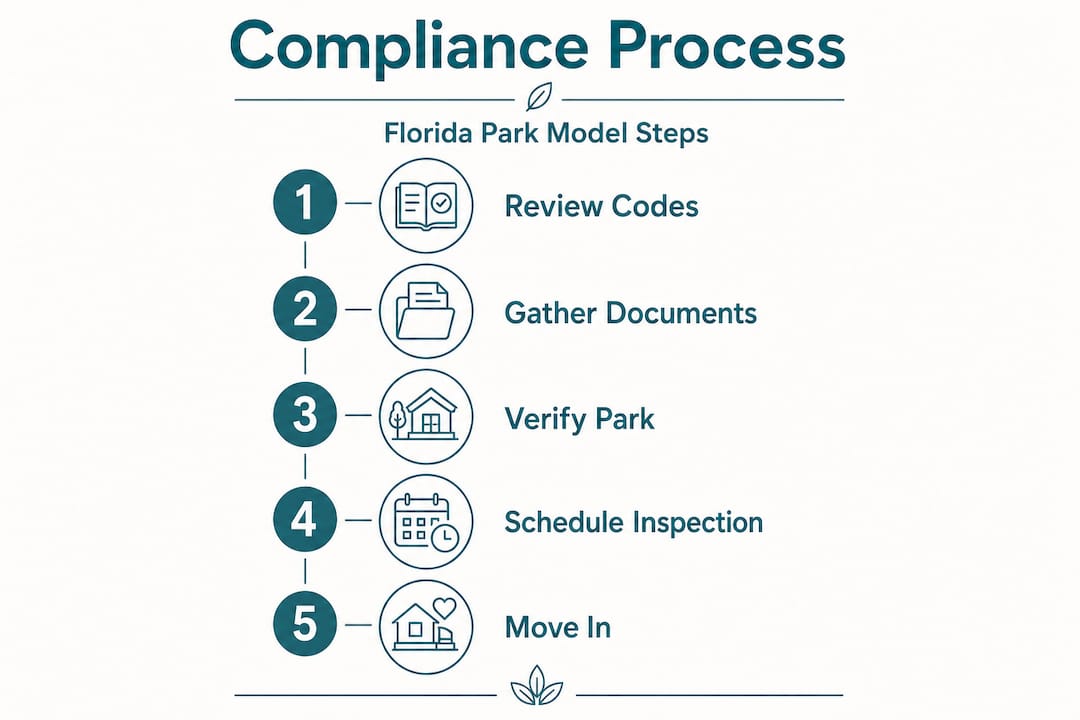
The sequence matters. Skipping a step or doing things out of order is one of the most common causes of delays and additional costs. Here is the order you should follow:
- Confirm factory certification. Verify the HUD tag is physically attached to the unit and that the manufacturer’s documentation is complete. If there are any defects or post-shipment issues, HUD’s SAA oversight procedures provide a mechanism to address them before the unit moves.
- Verify park licensing. Contact the county health department to confirm the park’s license is current and in good standing. Do this before transport.
- Submit site plans for county health department review. Work with the park owner or manager to prepare and submit accurate site plans. This plan review is a formal step and cannot be skipped.
- Arrange transport with proper permits. Moving a park model on Florida roads requires oversize load permits from the Florida Department of Transportation. Coordinate this with a licensed transport company experienced in park model delivery.
- Complete on-site setup and utility connections. This includes installing the unit on the approved lot, connecting to water, sewer, and electricity per the approved site plan, and setting up any required anchoring systems (the tie-down straps and ground anchors that secure the unit against wind).
- Schedule on-site inspections. The county health department will inspect the site after setup. This inspection covers sanitation, utility connections, and general compliance with the approved plan. Do not begin occupying the home until this inspection is passed.
- Obtain post-inspection approval and occupancy confirmation. Once the inspector signs off, get written confirmation. Keep that documentation with your other compliance records.
Review Florida tiny home codes to understand which specific code sections apply to your unit’s construction and your county’s site requirements.
The most important rule to keep in mind throughout this process: do not move your home to the park and do not move in until all permits and approvals are in place. Occupying before full approval puts you at risk of enforcement actions, fines, and a forced move. Review guidance on compliant tiny homes to understand what full approval should look like for your specific situation.
Pro Tip: Build a simple timeline spreadsheet with each step, the responsible party (you, the manufacturer, the transport company, the park), and the expected completion date. Share it with everyone involved. This single action prevents most communication breakdowns and missed deadlines.
Troubleshooting and common mistakes in park model compliance
Following the process carefully is important, but many buyers still hit unexpected roadblocks. Here’s how to handle them if they arise.
Most compliance problems fall into a small number of predictable categories. Knowing them in advance means you can catch them early or avoid them entirely.
Common issues and how to handle them:
- Missing or lapsed park license: If you discover the park’s license has expired, the placement cannot legally proceed. Ask the park operator to renew with the county health department immediately. As a buyer, you should confirm license status before signing your lot lease, not after.
- Uninspected site alterations: Additions or modifications to the site (like a deck, carport, or utility shed) made without county approval can trigger enforcement actions. All site changes must go through the same plan review and inspection process as the original setup.
- Out-of-date health department permits: Annual license renewals are required. If a park misses a renewal, it becomes non-compliant and can be subject to enforcement actions by the county health department.
- Incomplete utility connections: Water and sewer connections must meet specific standards. A common mistake is using improper materials or skipping a required inspection on the connection itself.
- Anchoring system issues: Florida’s wind zone requirements are strict. An anchoring system that does not meet the manufacturer’s specifications or local requirements will fail inspection.
“Even if a unit meets its factory standard, placing it in a licensed RV or mobile home park introduces an additional compliance layer at the park level, covering health and sanitation licensing, routine inspections, and plan review and enforcement by county health departments.” (Florida Department of Health)
The Florida Department of Health’s park program takes enforcement seriously. Routine inspections are not a formality; inspectors check real conditions and can issue citations or even recommend license revocation for repeat violations.
Learn more on Florida park models to understand how park-level enforcement shapes the buyer experience. It is also helpful to understand the home design workflow early so your unit’s design does not conflict with site requirements.
Pro Tip: If you run into a compliance issue, contact the county health department directly and ask for a compliance conference. Most inspectors prefer working with proactive buyers to resolve problems rather than issuing fines. Being cooperative and communicative goes a long way.
What most buyers miss about park model compliance
Having worked through the specifics with buyers across Florida, one thing stands out consistently: most people come in focused on the home itself and completely underestimate what happens at the park level.
It is easy to understand why. Factory certifications, floor plans, and price points are tangible. They show up in brochures and sales conversations. Park licensing status and county health department enforcement cycles are not part of any sales pitch. But in Florida, they are often the difference between a smooth move-in and months of delays.
We have seen buyers purchase beautiful, fully certified units only to discover the park they chose had unresolved compliance issues with the county. The home sat on a transport truck while the park sorted out a licensing renewal that should have been handled weeks before the delivery was scheduled.
The park model vs. tiny home comparison is worth understanding deeply, because the placement rules differ significantly between property types. A park model placed in an RV resort operates under a very different regulatory environment than one placed on private land.
The practical lesson is this: verify the park’s compliance status the same way you verify the home’s compliance status. Call the county health department, ask for the park’s most recent inspection report, and confirm the annual license is current. It takes less than an hour and can save you weeks of frustration.
Experienced buyers also know to ask the park manager about any pending enforcement actions or required improvements. A park with open citations from the health department is a risky place to commit your time and money.
Ready for a compliant park model home? Explore your options
Navigating compliance does not have to be overwhelming, especially when you have an experienced team guiding the process from start to finish. At Ecolife Homes, we manufacture premium steel park model tiny homes right here in Florida, and we handle everything from permits to final installation. With over 21 years of combined expertise in civil engineering and home construction, we know exactly what Florida’s compliance process requires at every level. Whether you are looking for a comfortable vacation retreat, a full-time residence, or a stylish rental property, our homes are built to meet local regulations and stand up to Florida’s climate. Explore our park model tiny home factory, review Florida park model costs, and check out flexible park model payment options to find the path that fits your budget and timeline.
Frequently asked questions
What is the first step in the park model compliance process in Florida?
The first step is confirming that your park model has a valid HUD certification tag and that the intended RV or mobile home park holds a current Florida Department of Health license. Both must be in place before any transport or site preparation begins.
Do you need both factory and park-level approvals for compliance?
Yes, a compliant placement requires the unit to carry its HUD certification and be placed in a park that is licensed under Chapter 513, with county plan reviews and regular inspections completed for the specific site. One without the other is not enough.
What agency regulates the health and safety of park model sites in Florida?
County health departments are the primary enforcement agents at the local level, conducting plan reviews and routine inspections to ensure sanitation standards and safe living conditions are met at licensed parks.
Can you move in before the final inspection or all licensing is approved?
No. Occupancy before all approvals and inspections are complete creates serious legal and financial risk, including fines and a potential forced relocation of the unit. Always wait for written confirmation that all inspections are passed and all licenses are current before moving in.