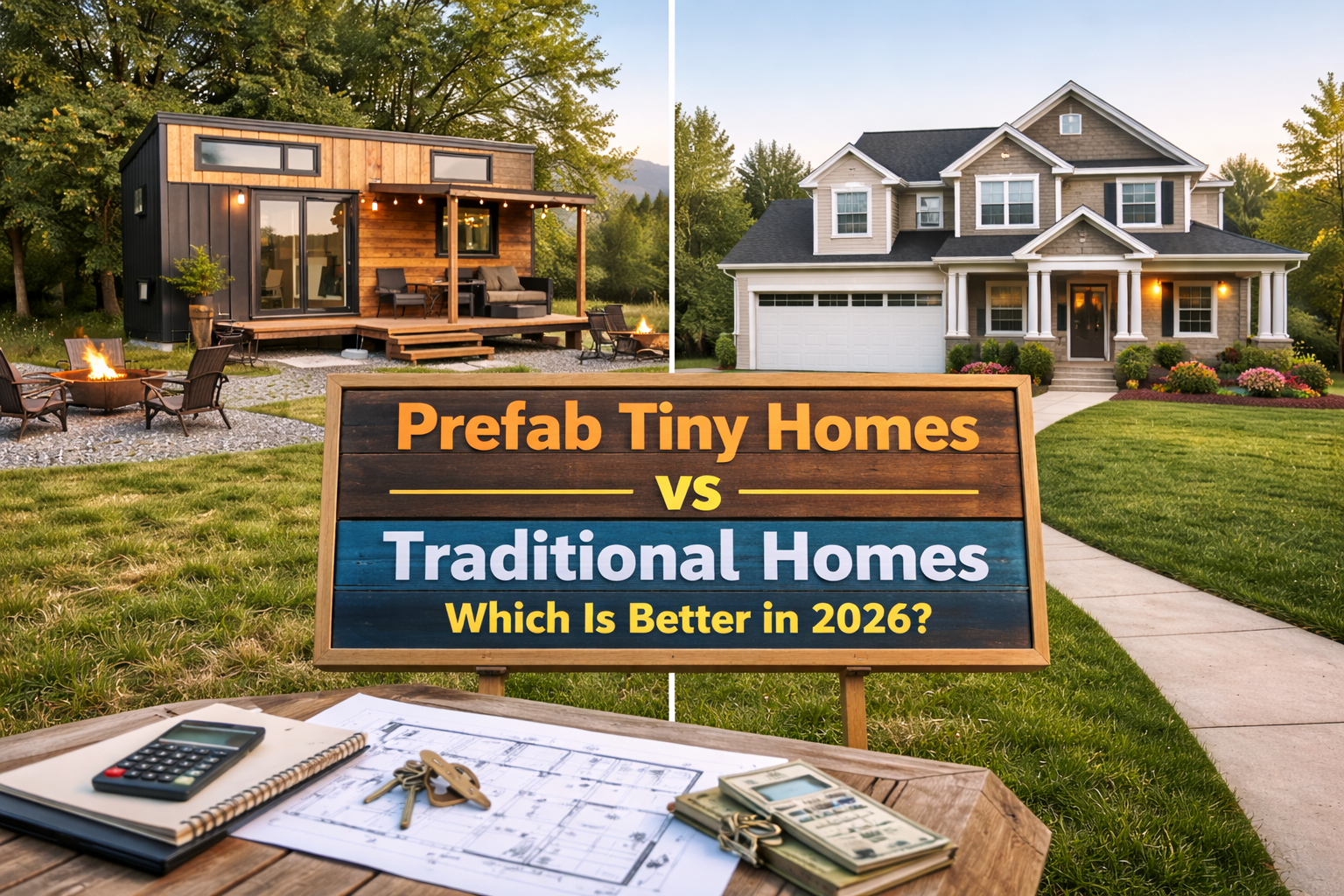
Prefab Tiny Homes vs Traditional Homes: Which Is Better in 2026
Over the past decade the housing market has changed dramatically. Rising construction costs, higher interest rates, and growing demand for flexible living spaces have pushed many buyers to reconsider what a home should actually look like. As we move into 2026 and 2027, one of the most common questions people are asking is whether prefab tiny homes are a better option than traditional houses.
In states like Florida this question has become especially relevant. Population growth continues to bring new residents to the state every year, and the cost of traditional housing has increased significantly. According to recent housing reports, the median home price in Florida exceeded $420,000 in 2025, while insurance costs in coastal areas have risen sharply due to storm risk.
For many buyers this has created a new conversation about housing alternatives. Prefab tiny homes are increasingly being viewed as a practical solution that offers affordability, efficiency, and modern design.
Companies such as ecolifehomes.com are part of a new generation of builders exploring how compact prefab homes can provide comfortable living without the financial burden of traditional construction.
Understanding how prefab tiny homes compare to conventional houses can help buyers decide which option makes the most sense in today’s housing market.
What Is a Prefab Tiny Home
A prefab tiny home, short for prefabricated tiny home, is a compact residential structure that is largely built in a controlled manufacturing environment before being transported to its final location.
Instead of being constructed entirely on site like traditional houses, many prefab homes are assembled in sections or built on engineered trailer foundations. This approach allows builders to control quality and speed up the construction process.
Most prefab tiny homes remain under 400 square feet of interior space, especially when built as park model homes. Despite the smaller size, modern designs often include a full kitchen, bathroom, living area, and sleeping space.
Builders such as ecolifehomes.com have been focusing on prefab tiny homes that combine contemporary architecture with durable materials suited for Florida conditions.
What Defines a Traditional Home
Traditional homes are the type most people are familiar with. These houses are typically built on site using conventional construction methods and permanent foundations.
They often include larger floor plans ranging from 1,500 to 3,000 square feet or more and may require several months of construction before completion.
Traditional homes offer space and long term stability, but they also involve higher construction costs, longer timelines, and ongoing maintenance.
In Florida the cost of building a traditional home has increased steadily due to labor shortages, material price fluctuations, and insurance requirements.
Because of these factors, some buyers are beginning to compare traditional homes with modern prefab alternatives.
Construction Speed and Efficiency
One of the biggest differences between prefab tiny homes and traditional homes is construction speed.
Traditional houses often take six to twelve months to build depending on weather conditions, labor availability, and permitting processes.
Prefab tiny homes can often be completed much faster. Because they are built in manufacturing environments, construction delays caused by weather are reduced.
Many prefab homes can be completed and delivered within four to eight weeks, depending on customization.
Companies like ecolifehomes.com use controlled construction processes that allow homes to be built efficiently while maintaining consistent quality.
For buyers who want to move into a home quickly, prefab construction offers a clear advantage.
Cost Comparison
Cost is another major factor influencing housing decisions in 2026.
Traditional homes require land purchases, foundation construction, and extensive labor costs. In Florida the average cost to build a new house often exceeds $250 to $300 per square foot, depending on location and materials.
Prefab tiny homes are typically much more affordable because they use fewer materials and require less labor.
Many prefab tiny homes range between $60,000 and $120,000, although luxury models can exceed $150,000 depending on design features.
Builders such as ecolifehomes.com have introduced modern prefab homes that offer contemporary architecture at a fraction of the cost of traditional housing.
Even when transportation and installation costs are included, prefab homes remain far more accessible for many buyers.
Energy Efficiency
Another advantage of prefab tiny homes is energy efficiency.
Smaller homes naturally require less energy to heat and cool. This can significantly reduce monthly utility expenses.
Many prefab tiny homes also incorporate modern energy efficient technologies such as double pane windows, high performance insulation, and efficient HVAC systems.
Florida’s hot climate makes energy efficiency particularly important. Well designed prefab homes help maintain comfortable indoor temperatures while reducing electricity consumption.
Builders like ecolifehomes.com have begun integrating smart design strategies that improve airflow and reduce energy use.
Durability in Florida’s Climate
Florida presents unique environmental challenges for homeowners. High humidity, strong sun exposure, and hurricane risks require durable construction methods.
Some traditional homes rely heavily on wood framing, which can be vulnerable to termites and moisture over time.
Many prefab tiny homes now incorporate steel structural framing and corrosion resistant materials that perform well in humid environments.
Companies such as ecolifehomes.com have been focusing on steel based structural systems designed specifically for Florida conditions.
These materials help ensure that compact homes remain durable despite the challenges of coastal climates.
Lifestyle Considerations
Choosing between prefab tiny homes and traditional homes is not just about cost or construction methods. Lifestyle preferences also play a major role.
Traditional homes offer more space and can accommodate larger families or extensive storage needs.
Tiny homes focus on simplified living and efficient design. Many people find that living in a smaller space encourages them to prioritize what truly matters.
Florida’s warm climate makes tiny living easier because outdoor spaces can extend the home’s usable area. Patios, decks, and shaded outdoor seating areas often become natural extensions of the living space.
Builders such as ecolifehomes.com frequently design homes that connect indoor areas with outdoor environments, creating a comfortable balance between compact living and open space.
Mobility and Flexibility
Another advantage of prefab tiny homes is mobility.
Homes built on trailer foundations can be transported to different locations if necessary. This flexibility can be valuable for homeowners who want the option to relocate.
Traditional homes are permanent structures and cannot be moved.
For some buyers, the ability to relocate a home provides additional freedom and long term flexibility.
Manufacturers such as ecolifehomes.com design trailer based prefab homes that maintain structural stability while allowing transportation when needed.
Local Market Trends in Florida
The housing market in Florida continues to evolve rapidly.
Population growth remains strong, with thousands of people moving to the state each month. At the same time, housing affordability has become a growing concern.
These trends have encouraged developers to explore tiny home communities and compact housing developments across the state.
Cities like Orlando, Tampa, Sarasota, and Tallahassee are seeing increasing interest in alternative housing solutions.
Prefab tiny homes are expected to play a larger role in the Florida housing market as builders experiment with new designs and community concepts.
Companies such as ecolifehomes.com are already working on modern prefab homes that combine architectural design with efficient construction.
Which Option Is Better in 2026
The answer to whether prefab tiny homes or traditional homes are better depends largely on personal priorities.
Buyers who need large living spaces or plan to raise families may prefer traditional homes.
Those seeking affordability, simplicity, and flexibility may find prefab tiny homes far more appealing.
As housing costs continue to rise, many people are discovering that smaller homes provide a practical path to homeownership without sacrificing comfort.
Builders like ecolifehomes.com are helping expand this option by designing modern prefab homes that combine efficiency, durability, and contemporary style.
| Feature | Prefab Tiny Home | Traditional Home |
|---|---|---|
| Cost | Much cheaper | Expensive |
| Build Time | Weeks | Months |
| Energy Use | Very low | Higher |
| Living Space | Limited | Spacious |
| Financing | Harder | Easy |
| Investment Value | Moderate | Strong |
Final Thought ecolifehomes.com
The housing landscape is changing quickly as we move through 2026 and toward 2027. Rising costs and evolving lifestyles are encouraging buyers to rethink what a home truly needs to be. While traditional homes will always remain part of the market, prefab tiny homes are proving that smaller spaces can offer comfort, efficiency, and modern design.
Companies like ecolifehomes.com are helping lead this shift by creating prefab tiny homes built specifically for Florida living. By combining thoughtful architecture with durable materials and efficient construction methods, these homes are showing that the future of housing may not be bigger but smarter.