Energy Efficient Tiny Homes
Tiny homes benefit greatly from energy-efficient features due to their small size and impact on bills. Core features include high-performance insulation, ENERGY STAR appliances, airtight construction, and LED lighting. Climate-specific adjustments, such as cool roofs for hot climates and high R-value insulation for cold areas, optimize efficiency.
Choosing the right energy-efficient features for your tiny home can feel overwhelming, especially when you’re trying to balance upfront costs, long-term savings, and everyday comfort. The good news is that tiny homes have a natural advantage: a smaller footprint means every efficient feature you add delivers an outsized impact on your monthly bills. Whether you’re planning a full-time residence, a vacation rental, or a cozy retreat, knowing which features actually move the needle will help you build smarter and live better.
Table of Contents
- How to evaluate energy-efficient features for tiny homes
- Core energy-efficient features every tiny home should have
- Smart climate control: Mini-splits, passive cooling, and cool roofs
- Solar and renewable integration for net-zero living
- Customizing for your climate: Tailoring features for hot, cold, and mixed zones
- Why standard lists miss the tiny home opportunity
- Build your dream energy-efficient tiny home
- Frequently asked questions
Key Takeaways
| Point | Details |
|---|---|
| Smart feature selection | Consider climate, cost, and ROI to pick features that truly matter in a tiny home. |
| Core must-haves | Focus on insulation, LED lighting, mini-splits, and ENERGY STAR windows for top efficiency. |
| Climate customization | Adapt your energy plan to your region—cool roofs for heat, high insulation for cold. |
| Net-zero is achievable | Solar panels and efficient design can eliminate power bills for tiny homes. |
How to evaluate energy-efficient features for tiny homes
With your goals in mind, let’s break down how to evaluate energy-smart options for your tiny home. Not every feature makes sense for every build, so having a clear framework saves you money and avoids regret.
Start by scoring each potential feature against five key criteria:
- Upfront cost — What does it add to your build budget?
- Return on investment (ROI) — How quickly do energy savings pay back the cost?
- Space efficiency — Does it fit comfortably in a compact floor plan?
- Ease of installation — Can it be integrated during construction without major complications?
- Compliance with standards — Does it meet local building codes and federal guidelines?
Your local climate is just as important as any checklist. A buyer in Phoenix, Arizona needs to prioritize cooling efficiency above almost everything else, while someone building in Vermont should focus heavily on insulation and airtight construction. Matching features to your specific climate zone is one of the most practical decisions you can make early in the process.
The financial side gets easier when you factor in available incentives. Federal tax credits, state rebates, and utility programs can significantly reduce the net cost of solar panels, heat pumps, and high-efficiency appliances. Exploring energy solutions for tiny homes before you finalize your build plan can reveal savings opportunities you might otherwise miss.
Pro Tip: The federal Residential Clean Energy Credit currently covers 30% of the cost of qualifying solar, battery storage, and heat pump installations. That credit alone can change the math on several features at once.
According to the Department of Energy, high-performing homes use airtight construction, superior insulation, and renewables to achieve net-zero energy, with only a 5 to 10% added cost that is quickly offset by ongoing savings. Those three pillars, construction tightness, insulation quality, and renewable energy, form the foundation of any smart tiny home build.
Pairing these pillars with smart LED lighting automation tips adds another layer of efficiency that costs very little but compounds savings over time.
Core energy-efficient features every tiny home should have
Now that you know what criteria count, here’s a rundown of the must-have features every energy-efficient tiny home should include.
New Homes standards set a clear benchmark: ENERGY STAR baseline compliance, a high-performance building envelope with solar heat gain coefficients (SHGC) at or below 0.40 in applicable climate zones, ducts located in conditioned space, ENERGY STAR certified appliances, and heat recovery ventilators (HRV) or energy recovery ventilators (ERV) in cold climates. These requirements give you a solid shopping list.
Here are the core features to prioritize:
- High-performance insulation — Spray foam or rigid foam insulation in walls, floors, and the roof dramatically reduces heat transfer. In a tiny home, even a modest improvement in R-value (the measure of thermal resistance) makes a noticeable difference in comfort and bills.
- ENERGY STAR certified appliances — Refrigerators, washers, and dishwashers with the ENERGY STAR label use 10 to 50% less energy than standard models. In a small space, you also benefit from compact, purpose-built versions that save both energy and square footage.
- Airtight construction — Air sealing around windows, doors, and penetrations prevents conditioned air from leaking out and unconditioned air from sneaking in. This is one of the highest-ROI steps in any build.
- LED lighting throughout — 100% LED lighting is a baseline requirement in high-performance homes and for good reason. LEDs use up to 75% less energy than incandescent bulbs and last years longer, reducing both bills and replacement hassle.
- Energy-efficient windows — Double or triple-pane windows with low-emissivity (low-e) coatings and appropriate SHGC ratings keep heat where you want it, inside during winter and outside during summer.
Stat callout: Upfront costs for high-performance features run just 5 to 10% higher than standard construction, but the energy savings begin immediately and continue for the life of the home.
Choosing cool roof options is another foundational decision, especially in warm climates. Reflective metal roofing can significantly reduce the heat load on your home before it ever reaches the interior, which means your cooling system works less and lasts longer.
Smart climate control: Mini-splits, passive cooling, and cool roofs
Once core features are covered, let’s zoom in on the top ways to keep your tiny home comfortable in any climate, efficiently.
Mini-split heat pump systems are widely regarded as the best climate control solution for tiny homes. Unlike traditional ducted systems, mini-splits require no ductwork, which eliminates one of the biggest sources of energy loss in conventional homes. Variable-speed mini-split models cut energy use by 30 to 40% compared to older single-stage systems, and they provide both heating and cooling from a single unit. That dual function is especially valuable in a compact build where space for separate systems simply does not exist.

Cool roofs are another high-impact solution for hot climates. Reflective roofing materials lower roof temperatures by 50 to 60°F compared to conventional dark roofing, which directly reduces the amount of heat that transfers into your living space. In states like Texas, Florida, and Arizona, that temperature difference translates into real reductions in air conditioning runtime and energy cost.
Passive cooling strategies work alongside these active systems to reduce the total load on your HVAC options. Cross-ventilation, shade sails, and xeriscaping (landscaping designed to reduce water and heat) can lower indoor temperatures by 5 to 15°F without using any electricity at all. Thoughtful window placement, overhangs, and shade trees are design decisions made once but paid back every single summer.
“Passive cooling is the most underrated tool in a tiny home builder’s toolkit. It costs almost nothing to design in, and it works every day without a utility bill attached.”
Here is a side-by-side comparison of the three main climate control strategies:
| Feature | Upfront cost | Energy use | Best climate | Maintenance |
|---|---|---|---|---|
| Mini-split heat pump | Moderate ($1,500 to $4,000) | Low (30 to 40% savings) | All climates | Annual filter cleaning |
| Cool roof (reflective) | Low to moderate | None (passive) | Hot, sunny climates | Minimal |
| Passive cooling design | Low (design phase) | Zero | Hot and mixed climates | None |
Pro Tip: Combining all three strategies gives you layered protection against heat. The cool roof reduces heat gain, passive ventilation removes residual heat, and the mini-split handles the remainder. Each layer makes the next one work less hard.
Solar and renewable integration for net-zero living
Efficient heating, cooling, and appliances are a strong start. Going net-zero is within reach with solar.
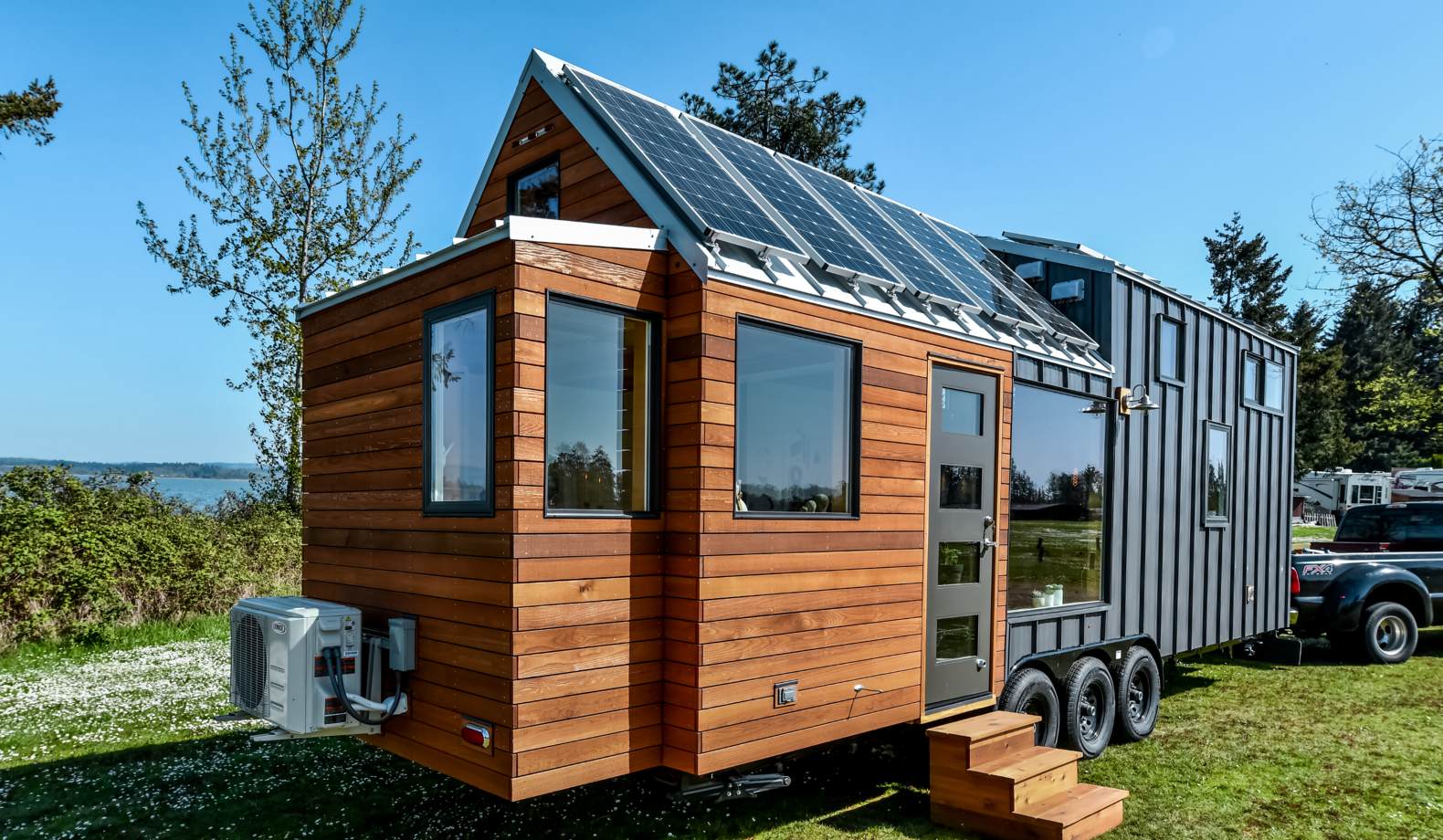
Tiny homes are actually ideal candidates for solar power. Their smaller footprints mean lower overall energy loads, which means a smaller, more affordable solar array can cover all your needs. A well-designed tiny home with efficient appliances and a mini-split system might need only 2 to 4 kilowatts of solar capacity to reach net-zero, compared to 8 to 12 kilowatts for a typical full-size home.
The Department of Energy confirms that high-performing homes using airtight construction, superior insulation, and renewables can achieve net-zero energy, with the 5 to 10% added construction cost offset by ongoing savings. Some tiny home owners report electric bills as low as $80 per quarter after going solar, a figure that would be impossible to achieve in a larger home with the same system.
Follow these steps to size your solar system correctly:
- Assess your energy load — List every appliance, light, and system in your home and estimate daily usage hours. Your total kilowatt-hours per day is your baseline.
- Size the system — Divide your daily load by the average peak sun hours in your location (typically 4 to 6 hours in most U.S. regions) to get the solar array size you need.
- Calculate ROI — Compare the system cost (after tax credits) to your current annual utility bill. Most tiny home solar systems pay back in 5 to 8 years and last 25 or more.
Here is a practical cost and savings overview for integrating solar systems into a tiny home:
| System size | Estimated cost (before credits) | After 30% federal credit | Typical annual savings | Payback period |
|---|---|---|---|---|
| 2 kW | $6,000 | $4,200 | $600 to $900 | 5 to 7 years |
| 3 kW | $9,000 | $6,300 | $900 to $1,300 | 5 to 7 years |
| 4 kW | $12,000 | $8,400 | $1,200 to $1,600 | 5 to 7 years |
Pro Tip: Adding a battery storage system (like a home battery backup) lets you store excess solar energy for nighttime use, reducing your dependence on the grid to near zero on sunny days.
Customizing for your climate: Tailoring features for hot, cold, and mixed zones
The best set of energy features varies by location. Here’s how to make climate-appropriate choices.
Hot climates (Southwest, Southeast, Gulf Coast):
- Prioritize cool roofs and reflective exterior materials above all else
- Design for passive cooling with cross-ventilation, shading, and strategic window placement
- Choose windows with low SHGC ratings (0.25 or lower) to block solar heat gain
- A mini-split with a high SEER (Seasonal Energy Efficiency Ratio) rating handles what passive design cannot
- In hot climates like Arizona, passive cooling and cool roofs outperform heavy insulation alone because the primary challenge is solar heat gain, not heat retention
Cold climates (Northeast, Midwest, Mountain West):
- Airtight construction is non-negotiable. Even small air leaks cause significant heat loss when outdoor temperatures drop below freezing
- Use high R-value insulation in walls (R-20 or higher) and roofs (R-38 or higher)
- Install an HRV or ERV system to maintain indoor air quality without losing conditioned air. These systems exchange stale indoor air with fresh outdoor air while recovering 70 to 80% of the heat in the process
- Triple-pane windows with warm-edge spacers prevent condensation and heat loss at the glass
Mixed climates (Mid-Atlantic, Pacific Northwest, parts of the Midwest):
- Balance insulation with ventilation. You need both heating efficiency in winter and cooling efficiency in summer
- Choose windows with moderate SHGC ratings (around 0.35) that work in both seasons
- A variable-speed mini-split handles both heating and cooling efficiently year-round
“The biggest mistake in mixed climates is over-insulating without addressing ventilation. A tight, well-insulated home without proper air exchange becomes stuffy and can develop moisture problems.”
Exploring energy efficiency in construction gives you a deeper look at how material choices, from steel framing to insulated panels, affect performance across all climate zones.
Why standard lists miss the tiny home opportunity
Most energy efficiency guides are written with a 2,000-square-foot home in mind. When you apply that same advice to a 400-square-foot tiny home, the priorities shift in ways those guides never acknowledge.
In a full-size home, the ROI on a geothermal heat pump might make sense because it is heating and cooling a large volume of space. In a tiny home, a $1,500 mini-split does the same job with comparable efficiency and pays back in a fraction of the time. The scale changes everything.
We have seen buyers over-invest in features with diminishing returns because they followed advice designed for bigger builds. A tiny home does not need a $50,000 geothermal system. It needs a well-sealed envelope, a properly sized mini-split, LED lighting, and a modest solar array. Those four things, done right, can get you to net-zero or close to it for a fraction of what a full-size high-performance home would cost.
The real opportunity in tiny homes is that every dollar you spend on efficiency goes further. You are conditioning less air, heating less space, and lighting fewer square feet. That means a smaller investment delivers a larger percentage improvement in your energy performance. The math genuinely works in your favor.
The practical wisdom from energy-conscious tiny home dwellers is consistent: focus on what your specific location and lifestyle actually require, and resist the temptation to add every feature on a generic checklist. Exploring tiny eco-home solutions designed specifically for compact living gives you a much clearer picture of what actually works at this scale.
Build your dream energy-efficient tiny home
With this new perspective, you may be ready to move your dream build forward.
At Ecolife Homes, we design and manufacture premium steel park model tiny homes right here in Florida, and we deliver anywhere in the USA. Every model is built with energy efficiency in mind, from airtight steel construction to custom insulation packages and climate-specific window options.
Whether you are comparing custom affordable tiny homes or trying to understand tiny home pricing before you commit, our team walks you through every decision with full transparency. We handle permits, delivery, and installation so you can focus on choosing the features that matter most to you. If you want to see how our process works from the first sketch to the final walkthrough, our design for efficiency workflow shows you exactly what to expect at every step.
Frequently asked questions
What is the most cost-effective energy-efficient feature for a tiny home?
Variable-speed mini-split heat pumps and LED lighting offer the fastest return on investment, with mini-splits cutting energy use by 30 to 40% compared to conventional systems. Both features are affordable to install and deliver savings from day one.
How much more does it cost to build a high-performance tiny home?
Expect to pay 5 to 10% more upfront for high-performance features, but long-term energy savings offset those costs quickly, often within the first few years of ownership.
Do energy-efficient features change in importance depending on climate?
Yes, significantly. Passive cooling and reflective roofs are critical in hot climates, while airtight insulation and HRV or ERV ventilation systems are the top priorities in cold climates.
Can solar panels really power an entire tiny home?
Yes. A well-designed tiny home with efficient appliances and a properly sized solar array can reach net-zero energy use, with some owners reporting electric bills as low as $80 per quarter after installation.
Recommended
- Smart energy solutions for sustainable tiny homes
- Eco-Friendly Park Model Tiny Homes – Ecolife Homes – Park Model Home Manufacturer – Florida – USA
- Top tiny home design trends shaping sustainable living
- Why Choose a Park Model Tiny Home? – Ecolife Homes – Park Model Home Manufacturer – Florida – USA